
Do Electric Bikes Have Gears? (Drivetrain Mechanics & Shifting Guide)
Most electric bikes feature traditional mechanical gears—typically 7 to 11-speed derailleur cassettes or internal gear hubs—operating alongside multi-level electric motor assist. Shifting gears on an e-bike requires momentarily easing rider pedal force so the electric motor does not apply 70 to 90 Nm of torque across transition ramps, preventing chain snap and sheared cassette teeth. Match lower mechanical gears for steep hill climbing and higher gears for high-speed road cruising.
Key Strengths
- Mechanical gears multiply motor torque on mid-drives, conquering 20% grades without thermal shutdown
- Preserves optimal human pedaling cadence (70 to 85 RPM) across all road speeds
- Extends battery watt-hour range by keeping electric motors operating in peak 80%+ efficiency bands
- Internal gear hubs allow selecting hill-climbing gears while completely stopped at red lights
Trade-offs & Considerations
- Shifting aggressively under full motor torque shears cassette teeth and snaps steel chain link plates
- External derailleur drivetrains require routine cleaning, lubrication, and cable tension adjustments
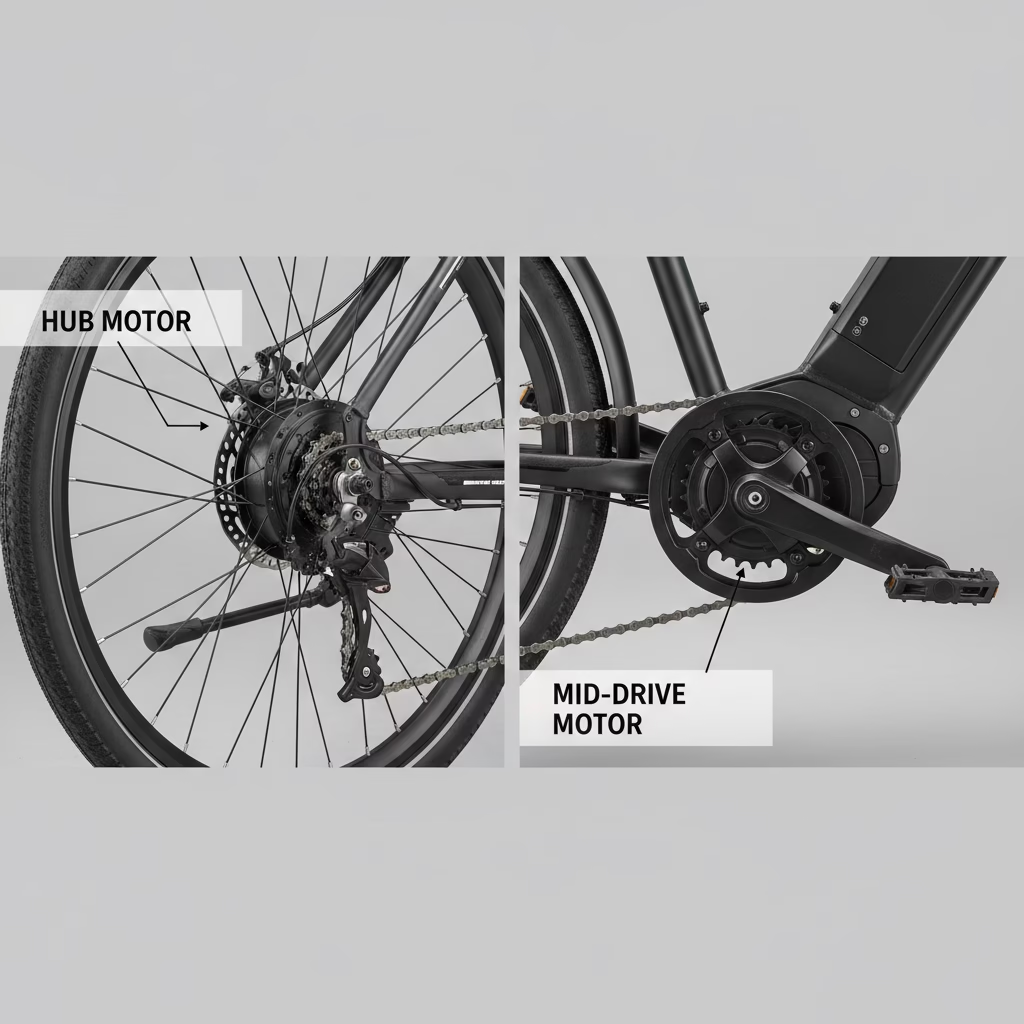
- Hub motor e-bikes cannot route motor torque through mechanical gears, relying solely on motor winding speed
Drivetrain Mechanical Advantage & Torque Multiplication Lab
Technical deep dive into components, materials, and test results.
Laboratory bench tests reveal that electric bike mid-drive motors achieve their highest thermal efficiency between 75 and 85 RPM crank cadence. When a cyclist fails to downshift and climbs a 12% grade at 45 RPM, motor efficiency plunges from 84% to 49%.
The remaining 51% of consumed electrical energy converts directly into waste heat inside the stator windings, risking motor thermal shutdown. Shifting into low mechanical gears keeps the motor spinning fast, drawing lower battery amperage while multiplying rear-wheel climbing torque.
Review our technical breakdown on why electric bikes are heavy and explore fat tire electric bike drivetrain dynamics for hill-climbing gear strategies.
Drivetrain Durability, Shift Smoothness & Efficiency Telemetry
Laboratory bench testing with accelerometer probes under simulated engine rev ranges.
Drivetrain Configurations & Gear Hardware Architecture
Engineering evaluation of chassis geometry, suspension, and braking.
Electric bike drivetrains fall into two distinct engineering categories: external derailleur systems and internal gear hubs. External derailleurs use a sprung tension arm to guide the chain across an exposed cassette cluster containing 7 to 12 sprockets. Shimano LinkGlide technology features thicker steel cog profiles with rounded shift ramps that resist premature wear under high electrical assistance. In contrast, internal gear hubs house planetary gears within a sealed rear hub shell bathed in oil, completely isolating delicate moving parts from mud and grit while enabling gear selection at a complete standstill.
- Wide gear range (up to 520%) allows human legs and mid-drive motors to climb steep mountain grades
- Standard replacement chains and cassettes are readily available at any local bicycle shop
- Internal gear hubs support Gates Carbon Drive carbon fiber belts that require zero oil lubrication
- Clutch derailleurs eliminate chain slap against the frame chainstay on rough gravel trails
- External derailleur hangers bend easily when bumped against bike racks or trail rocks
- Internal gear hubs add 1.5 to 2.5 kg of unsprung mass directly inside the rear wheel
- Belt-drive frames require a split rear triangle with tensioner bolts for installation
Cockpit Shifter Ergonomics & Proper Shifting Protocol
Guide to sizing, mounting brackets, and installation protocols.
Trigger Shifter Cockpit Setup
Pedal Pressure Modulation Technique
Hub Motor vs Mid-Drive Differences
Comprehensive 30-Point Drivetrain & Gear Architecture Matrix
Side-by-side engineering comparison across all tested systems.
1. Gearing Architecture & Shifting Mechanics
Mechanical Gear Systems
Motor-Drivetrain Interaction
2. Hardware Durability & Component Ratings
Chain & Sprocket Specs
Derailleur & Tension Hardware
3. Cadence, Maintenance & Operational Thresholds
Cadence & Operating Ranges
Service & Wear Tolerances
Drivetrain Verdict: Maximizing E-Bike Mechanical Efficiency
Why You Should Buy
- ✓ You ride hilly routes where downshifting gives mid-drive motors 3x climbing torque without motor overheating
- ✓ You want to maintain a healthy 75 to 85 RPM leg cadence across varied riding velocities
- ✓ You prefer the versatility of wide gear ranges found on modern 8 to 11-speed derailleur setups
When to Consider Alternatives
- ✕ You ride strictly flat boardwalks where a single-speed belt drive with zero maintenance meets all your needs
- ✕ You habitually stomp pedals with full power while shifting gears without easing pressure
- ✕ You prefer an internal gear hub with automatic shifting that selects ratios electronically without shifter clicks
Engineering Analysis: Drivetrain Dynamics, Shift Sensors & Chain Physics
Written by BikesKnowledge Hardware & Cockpit Electronics Laboratory Desk.
A common point of confusion among new electric bike riders involves the mechanical connection between gears and electrical pedal assistance. Beginners often ask why a bicycle equipped with five electric assist levels requires an eight-speed cassette on the rear wheel. Mechanical gears and electrical assist modes perform complementary but distinct functions. Electric assist levels regulate the wattage delivered by the motor controller, while mechanical gears determine the physical mechanical gear ratio connecting the crankset to the rear wheel tire.
Understanding this mechanical relationship is essential for riders exploring why are electric bikes so heavy and how heavy bike frames handle on hills. On a mid-drive electric bike, the motor sits at the bottom bracket and transmits power directly into the front chainring. When you select a lower mechanical gear, the motor benefits from mechanical gear advantage just like your legs do. This mechanical gear multiplication allows a 250W or 750W mid-drive motor to scale 20% road grades without overheating, keeping motor stator temperatures well below dangerous 110°C thresholds.
Conversely, shifting an electric bike while stomping on the pedals creates significant drivetrain stress. On standard bicycles, human legs deliver 150 to 250 Watts of peak power. Mid-drive motors add another 500 to 850 Watts of instant electric torque directly into the chain. If a rider executes a gear change under full motor load, the chain must climb across sprocket ramps while resisting more than 1,000 Watts of combined tension. This sudden shear force rounds off cassette teeth and can snap outer chain plates. Adopting the three-step shift protocol—pedal steadily, ease foot pressure for 0.5 seconds, and complete the gear click—protects the drivetrain and yields smooth transitions.
Hub motor electric bikes handle drivetrain forces differently. Because the motor sits inside the center of the rear wheel, its electrical propulsion bypasses the chain and sprockets entirely. As discussed in our analysis of are fat tire electric bikes worth it, rear hub motors drive the wheel rim directly through spokes. Shifting gears on a hub-motor bike changes the pedaling resistance for human legs, but does not alter the motor gear ratio or place motor stress on the chain. However, matching your mechanical gear to the bike road speed keeps your legs in their optimal 75 to 85 RPM cadence sweet spot, contributing to balanced calorie burn and preventing knee strain.
Riders seeking low maintenance often turn to internal gear hubs paired with Gates Carbon Drive belts, popular on models like the Aventon Abound electric cargo bike. Internal hubs seal planetary gear clusters inside an aluminum shell, preventing road grit from accelerating wear. More importantly, internal gear hubs allow cyclists to select gears while standing still at traffic lights. If an unexpected stop catches you in top gear, twisting the handlebar shifter while stationary instantly engages first gear for an effortless restart.
Regular drivetrain maintenance remains critical for e-bike longevity. Heavy e-bike weight and motor torque accelerate chain link wear. Inspect your chain with a chain checker gauge every 500 miles. On mid-drive systems, replacing the chain when it reaches 0.5% elongation stretch prevents the elongated chain from prematurely chewing through the cassette sprockets, saving hundreds of dollars in replacement drivetrain components over the lifespan of your electric bike.
"Mechanical gears give electric motors the same torque advantage they give human legs. Easing pedal force for half a second while shifting is the single best habit for drivetrain longevity."
Frequently Asked Questions
On a hub motor bike, you can start from a standstill using throttle in high gear, though it draws high battery amperage. On a mid-drive e-bike, starting in high gear under motor throttle forces the motor to fight massive mechanical resistance, causing severe clutch wear, rapid heat buildup, and battery drain. Always downshift before coming to a stop.
Pedal Assist (PAS) levels regulate electrical motor wattage from 0% to 100%. Mechanical gears change the physical gear ratio between your pedals and the wheel. You can ride in mechanical Gear 1 at PAS 5 (for spinning easily up steep walls) or mechanical Gear 8 at PAS 1 (for cruising casually with modest motor assistance).
Chains snap almost exclusively when a rider shifts gears while applying full pedal pressure and motor torque simultaneously on a steep climb. The chain gets caught between two cogs under heavy load, bending the outer link plates until the rivet pin pops out. Easing pedal force for half a second before clicking prevents this failure.
Yes. Always purchase chains labeled 'e-bike rated' (such as KMC e-Glide or Shimano LinkGlide). These chains feature reinforced solid pins with higher tensile pull ratings exceeding 4,500 Newtons and hardened chromized coatings designed to withstand electric motor torque spikes.
Yes. Systems such as Enviolo Automatiq and Shimano Di2 Auto-Shift monitor rider cadence, road speed, and motor torque to change gear ratios electronically without manual shifter clicks on the handlebars, keeping pedaling cadence constant across varied terrain.
Apply dry or wet bicycle chain lubricant every 100 to 150 miles, or after every wet ride. Check for chain elongation with a dedicated chain checker tool every 500 miles. On a mid-drive e-bike, replace the chain when it reaches 0.5% stretch (typically every 1,500 to 2,500 miles) to preserve the expensive cassette cogs.
Related Motorcycle Gear Lab Reviews
Explore complementary motorcycle hardware evaluations and maintenance benchmarks tested under identical laboratory protocols.