
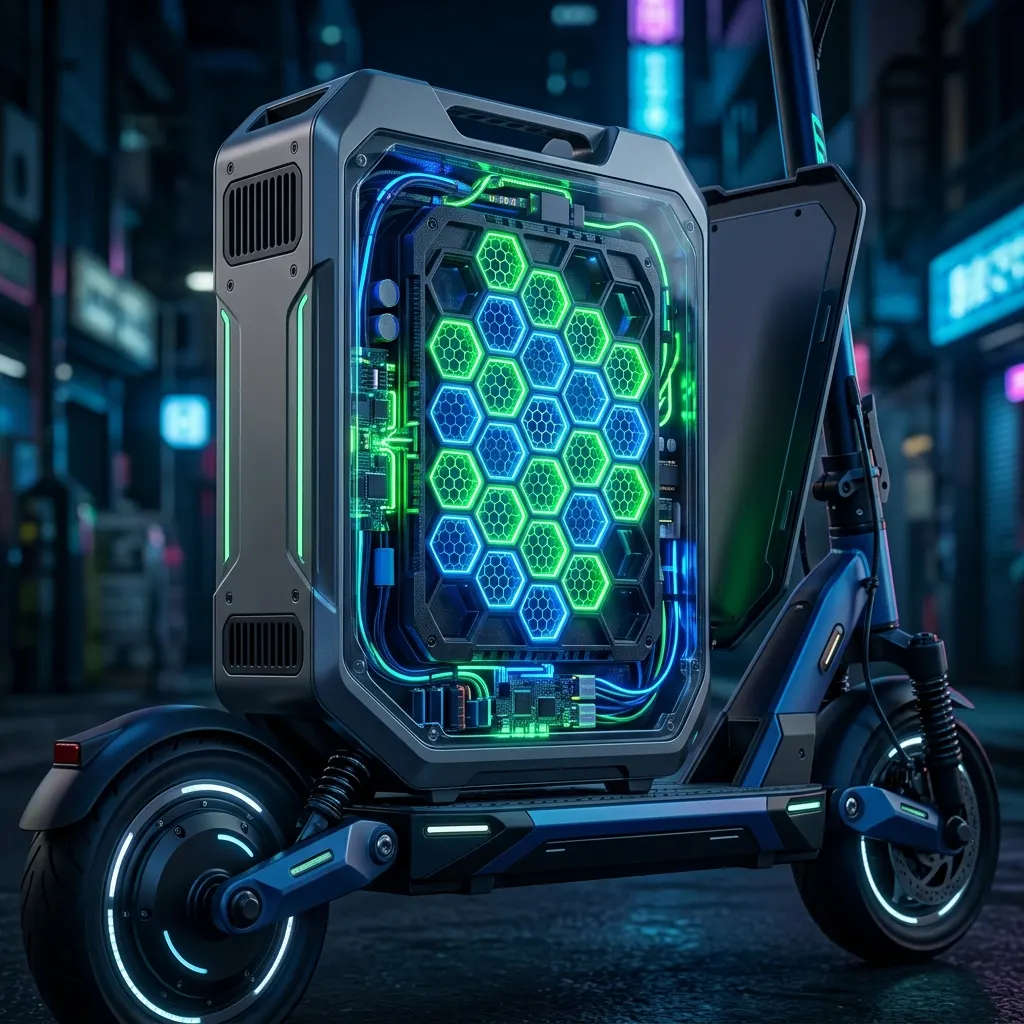
EV BATTERY REPLACEMENT PRICING & CHEMISTRY GUIDE 2026

Electric Bike Battery Replacement Price in Pakistan (2026): Graphene vs Lithium LiFePO4 Cost Guide

Examine replacement battery costs, chemistry longevity, and voltage slabs for electric motorcycles and scooters in Pakistan. Compare Graphene Lead-Carbon, Lithium NMC, and Lithium Iron Phosphate (LiFePO4) across 48V, 60V, and 72V platforms with real-world thermal performance benchmarks under local 45°C ambient summer operating conditions.

9.0/10 Benchmark Battery Price & Chemistry Analysis
#1 Technical Battery Guide for Pakistani EV Riders
Electric Bike Battery Replacement Price in Pakistan (2026): Graphene vs Lithium LiFePO4 Cost Guide
ENTRY GRAPHENE PACK
24,000
PKR 48V 20Ah Replacement
PREMIUM LIFEPO4 PACK
110,000
PKR 72V 30Ah Long-Life
CYCLE LIFE RANGE
350 - 4,000
Full Charge Cycles
VOLTAGE PLATFORMS
48V / 60V / 72V
Standard Local Configurations
THERMAL THRESHOLD
60°C LFP Stable
Summer Heat Tolerance
WARRANTY WINDOW
6 Mo - 3 Yrs
Chemistry-Dependent

Verified Advantages

  • ✓ Comprehensive pricing transparency covering Graphene, Lead-Acid, Lithium NMC, and LiFePO4 chemistries
  • ✓ LiFePO4 packs deliver up to 4,000 charge cycles, providing 6 to 8 years of dependable service life
  • ✓ Direct drop-in compatibility across Yadea, Metro, Crown, Super Power, Road Prince, and MS Jaguar
  • ✓ Substantial 50% to 70% weight reduction when upgrading from Lead-Acid to Lithium packs
  • ✓ Smart BMS integration safeguards cells against overcharging, deep discharge, and thermal runaway

Essential Buyer Considerations

  • ✗ High initial acquisition expense for genuine LiFePO4 battery packs (PKR 110,000 to PKR 145,000 for 72V 30Ah)
  • ✗ Lithium NMC packs require strict ambient cooling and thermal cut-off management during 45°C summer peaks
  • ✗ Widespread presence of uncertified refurbished 18650 cell packs assembled by grey-market retailers
  • ✗ Upgrading from Lead-Acid to Lithium necessitates replacing the stock charger with a CC/CV profile unit

Compare Battery Chemistry Slabs

Review the full 30-point technical matrix comparing cycle lives, pack weights, replacement costs, and brand compatibility across Pakistan.

View Chemistry Matrix
BATTERY CHEMISTRY ANALYSIS

Comparative Analysis: Graphene vs NMC vs LiFePO4

Energy densities, cycle durability, and thermal behavior in Pakistani summer heat.

VRLA Lead-Acid 300 - 400 Cycles (~1 - 1.5 Years)
Graphene (TTFAR) 600 - 800 Cycles (~2 - 2.5 Years)
Lithium NMC 800 - 1,200 Cycles (~3 - 4 Years)
Lithium LiFePO4 2,000 - 4,000 Cycles (~6 - 8 Years)

Discharge Voltage Stability Curve: LiFePO4 vs Graphene vs Lead-Acid

Flat Discharge Plateau vs Premature Voltage Sag
100% SoC 50% SoC 10% SoC

The commercial viability of electric two-wheelers in Pakistan centers primarily on battery chemistry selection. Stock electric scooters sold by Yadea, Metro, and Crown historically shipped with sealed lead-acid or graphene (lead-carbon) battery packs to minimize retail showroom sticker prices. However, lead-acid packs suffer from severe voltage sag once discharged below 50% state-of-charge, causing sluggish top speeds and poor hill-climbing torque.

Upgrading to Lithium Iron Phosphate (LiFePO4) resolves this performance bottleneck. LiFePO4 cells maintain a remarkably flat 3.2V nominal discharge curve across 80% of their capacity, delivering consistent vehicle acceleration until the pack is virtually depleted. Furthermore, LiFePO4 chemistry possesses chemical bonds that remain stable up to 60°C, providing exceptional resistance to thermal degradation during peak Pakistani summer temperatures.

PRICE & CAPACITY SLABS

Replacement Battery Price Slabs by Voltage & Capacity (PKR 2026)

Market retail pricing across 48V, 60V, and 72V replacement packs in Lahore, Karachi, and Rawalpindi.

48V 20Ah Replacement (~0.96 kWh) PKR 24,000 - 32,000
Graphene (LFP: PKR 55,000 - 70,000)
60V 32Ah Replacement (~1.92 kWh) PKR 45,000 - 55,000
Graphene (LFP: PKR 95,000 - 120,000)
72V 30Ah Replacement (~2.16 kWh) PKR 110,000 - 145,000
LiFePO4 with Smart Bluetooth BMS

Chemistry Attribute Radar Matrix

Cycle Life Thermal Density Safety Price/Cycle

Radar scoring for LiFePO4 packs across cycle longevity, summer heat tolerance, energy density, fire safety, and lifetime cost per cycle.

Smart BMS Electronic Protections

Active Cell BalancingStandard
Thermal Cut-Off Sensor65°C Protection
Overcurrent & Short Circuit GuardIntegrated
Bluetooth App TelemetryAvailable
PACK HARDWARE & ENCLOSURE

Battery Enclosure Architecture & Thermal Engineering

Prismatic cells, stainless steel cases, waterproof connectors, and anti-vibration damping.

Electric Bike Battery Replacement Price in Pakistan (2026): Graphene vs Lithium LiFePO4 Cost Guide Hardware Specs
1
2
3
1. Prismatic LFP Cells Laser-welded busbars eliminate loose screw connections.
2. Battery Management Continuous voltage monitoring across each individual series cell.
3. Stainless Steel Case Heavy-duty powder-coated case with silicone weather seals.

Primary Electric Two-Wheeler Platforms Supported

Yadea Pakistan T5, E8S Pro, Ruibin (72V packs)
Metro EV T9, M6 Series (60V / 72V packs)
Super Power EMOTO OTO3 NEXO (76.8V LFP), OTOX DIMEN
70cc Conversions Jolta, Crown, Road Prince conversions
INSTALLATION WORKFLOW

Drop-In Upgrade Guidelines & Charger Compatibility

Step-by-step procedure for converting a lead-acid electric bike to a lithium pack safely.

Conversion Prerequisites

  • Dedicated Charger Replacement: Stock lead-acid chargers deliver uncontrolled pulse charging that damages lithium cells. A CC/CV lithium charger is mandatory.
  • Controller Low-Voltage Cutoff: Verify motor controller minimum voltage cutoff matches the lithium pack discharge limit to prevent sudden power shutdowns.
  • Physical Bay Dimensions: Measure battery compartment clearances. Lithium packs occupy 40% less volume but require secure EVA foam packing.
  • Wiring & Connector Standards: Upgrade main wiring assembly connectors to genuine Anderson SB50 or XT90 anti-spark plugs to withstand 40A continuous draw.

Summer Maintenance Protocols

  • Thermal Resting Interval: Allow the battery to cool for 30 minutes following a long ride before connecting the charger.
  • Avoid Direct Sunlight Charging: Never charge an electric two-wheeler under direct sun during peak afternoon temperatures exceeding 40°C.
  • Storage State-of-Charge: If storing the vehicle unused for more than two weeks, maintain the battery at 50% to 60% charge level.
  • Periodic Cell Health Audit: Use Bluetooth BMS smartphone telemetry once a month to verify individual cell voltage variances remain under 20mV.
30-POINT TECHNICAL MATRIX

30-Point Electric Bike Battery Specification & Price Matrix

Tabular breakdown of chemistries, cell form factors, price slabs, thermal thresholds, and warranties.

BATTERY PACK TELEMETRY
DIGITAL TELEMETRY CONSOLE
Speedometer 48-72V Current Speed (km/h)
RPM Bargraph 60°C Tachometer Band
Gear Position LFP-24 Selected Ratio
Fuel/Battery Level 20-50Ah Available Energy
Riding Mode SMART-BMS Throttle Mapping

Master 30-Point Battery Chemistry & Price Matrix

Part 1: Chemistries & Cycle Durability (Points 1-10)

1. VRLA Lead-Acid Cycle Life300 to 400 full charge cycles (~1 to 1.5 years)
2. Graphene TTFAR Cycle Life600 to 800 full charge cycles (~2 to 2.5 years)
3. Lithium NMC Cycle Life800 to 1,200 full charge cycles (~3 to 4 years)
4. Lithium LiFePO4 Cycle Life2,000 to 4,000 full charge cycles (~6 to 8 years)
5. Lead-Acid Weight (72V 32Ah)38 to 48 kg total curb weight contribution
6. Graphene Weight (72V 32Ah)30 to 38 kg total curb weight contribution
7. Lithium NMC Weight (72V 30Ah)12 to 16 kg total curb weight contribution
8. Lithium LiFePO4 Weight (72V 30Ah)15 to 20 kg total curb weight contribution
9. Weight Reduction Margin55% to 68% weight reduction upgrading to Lithium
10. Deep Discharge ToleranceLFP discharges safely to 10% SoC without cell degradation

Part 2: Replacement Slabs by Voltage (Points 11-20)

11. 48V 20Ah Graphene Pack PricePKR 24,000 to PKR 32,000 (0.96 kWh capacity)
12. 48V 20Ah LiFePO4 Pack PricePKR 55,000 to PKR 70,000 (0.96 kWh capacity)
13. 60V 32Ah Graphene Pack PricePKR 45,000 to PKR 55,000 (1.92 kWh capacity)
14. 60V 32Ah LiFePO4 Pack PricePKR 95,000 to PKR 120,000 (1.92 kWh capacity)
15. 72V 30Ah Graphene Pack PricePKR 55,000 to PKR 68,000 (2.16 kWh capacity)
16. 72V 30Ah Lithium NMC Pack PricePKR 100,000 to PKR 130,000 (2.16 kWh capacity)
17. 72V 30Ah LiFePO4 Pack PricePKR 110,000 to PKR 145,000 (2.16 kWh capacity)
18. 72V 50Ah LiFePO4 Pack PricePKR 175,000 to PKR 220,000 (3.60 kWh capacity)
19. Dedicated CC/CV Charger CostPKR 6,500 to PKR 12,000 (5A to 10A output)
20. Installation & Wiring LaborPKR 2,500 to PKR 4,500 at EV specialty workshops

Part 3: Safety, Thermal Limits & Warranty (Points 21-30)

21. Lead-Acid Thermal LimitSevere sulfation and plate warping above 40°C
22. Lithium NMC Thermal Threshold45°C maximum ambient (requires active thermal monitoring)
23. Lithium LiFePO4 Thermal Stability60°C thermal stability (zero thermal runaway risk)
24. BMS Overcharge Cut-Off3.65V per series cell for LiFePO4 chemistry
25. BMS Low-Voltage Cut-Off2.50V per series cell for LiFePO4 chemistry
26. Graphene Warranty Window6 Months limited replacement warranty
27. Lithium NMC Warranty Window1 to 2 Years manufacturer warranty
28. Lithium LiFePO4 Warranty Window2 to 3 Years official distributor warranty
29. Drop-In Yadea CompatibilityYadea T5, E8S Pro, Ruibin (direct 72V drop-in)
30. Drop-In Metro EV CompatibilityMetro T9, M6 Series (direct 60V/72V drop-in)
EDITORIAL SCORECARD

Comprehensive Buying Decision Matrix

Weighted scores, buyer personas, and practical acquisition guidance for riders across Pakistan.

FINAL VERDICT RATING

Battery Upgrade Verdict: LiFePO4 Delivers Lowest Lifetime Cost

While Graphene packs maintain a lower initial cash barrier, Lithium Iron Phosphate (LiFePO4) proves vastly superior for Pakistani riders. Amortized over 2,000 to 4,000 charge cycles, LiFePO4 costs less than one-third per kilometer compared to replacing lead-acid batteries every 14 months.

9.0 Out of 10.0

Recommended Buyer Profile

Recommended for daily commercial couriers, ride-hailing riders, and commuters traveling over 40 kilometers daily who require uncompromised range, flat voltage delivery, and high heat tolerance.

  • • Heavy-mileage commuters traveling 50+ km daily wanting 6+ years of battery lifespan
  • • Riders seeking consistent top speed without sluggish voltage drop below 50% capacity
  • • Owners in southern Pakistan (Karachi, Multan, Sukkur) operating in 45°C summer heat

When to Consider Alternatives

Casual short-distance neighborhood riders planning to sell the vehicle within 12 months who want to minimize upfront cash expenditure.

  • • Low-mileage riders traveling under 10 km daily where lead-acid packs last 2+ years
  • • Budget-constrained owners with capital reserves under PKR 40,000
  • • Riders unwilling to purchase a dedicated CC/CV lithium charger

Consumer Advisory & Market Transparency

Never purchase unbranded loose lithium cells from grey-market scrap importers. Always demand an authentic warranty certificate, verify Grade-A cell batch codes, and confirm the pack incorporates a certified Smart BMS with temperature sensing probes.

Review Technical Matrix
TECHNICAL EDITORIAL

Electric Bike Battery Engineering, Sourcing & Upgrade Guide

In-depth technical exposition of cell form factors, thermal degradation, BMS calibration, and local workshop testing procedures.

Chemical Comparison: Molecular Stability and Energy Density Differences

Electric vehicle batteries deployed across Pakistan belong to four primary chemical families: Valve-Regulated Lead-Acid (VRLA), Graphene Lead-Carbon, Lithium Nickel Manganese Cobalt Oxide (NCM/NMC), and Lithium Iron Phosphate (LiFePO4). Understanding the atomic differences between these chemistries allows riders to make sound investment decisions when their factory pack degrades.

Standard lead-acid and graphene chemistries utilize heavy lead dioxide positive plates and spongy lead negative plates immersed in sulfuric acid electrolyte. Graphene batteries improve this architecture by infusing nanostructured graphene carbon particles into the negative plate, which curbs sulfation and permits faster charging. However, both variants remain burdened by low specific energy densities of 30 to 45 Wh/kg. In comparison, Lithium Iron Phosphate delivers specific energy densities exceeding 110 to 140 Wh/kg, while Lithium NMC reaches 160 to 220 Wh/kg. For an exhaustive thermal and cell construction analysis, consult our guide on 21700 vs 18650 ebike battery cells thermal and voltage sag characteristics.

Thermal Performance in Pakistani Summers: Heat Dissipation and Degradation

Pakistani summer temperatures routinely exceed 45°C across Punjab and Sindh, creating an exceptionally harsh operating environment for electrochemical storage cells. Battery operating temperatures above 35°C accelerate internal chemical side reactions, generating solid electrolyte interphase (SEI) growth that permanently consumes usable lithium ions.

Lithium NMC cells utilize layered cathode structures that begin releasing oxygen through exothermic decomposition at approximately 150°C to 180°C. If ambient heat combines with rapid high-current hill climbing, NMC packs can enter thermal runaway if unmonitored. In contrast, LiFePO4 features a covalently bonded olivine phosphate crystal structure (PO4) with robust phosphorus-oxygen bonds. This molecular configuration remains chemically stable up to 270°C, eliminating catastrophic fire risks even under severe ambient heat stress. To understand long-term thermal degradation mechanics and maintenance routines, read our guide on maintaining electric bike lithium batteries in summer.

Voltage Slabs Breakdown: 48V, 60V, and 72V Pack Architecture

Replacement battery selection is governed strictly by the operating voltage of the vehicle's motor controller. Electric two-wheelers in Pakistan operate on three primary voltage architectures:

1. 48V Architecture: Composed of 4 lead-acid batteries (12V each) or a 15S/16S LiFePO4 pack. Typical capacity is 20Ah to 24Ah (~0.96 to 1.15 kWh). Used on entry-level commuter scooters with 800W to 1,000W motors. A replacement Graphene pack costs PKR 24,000 to PKR 32,000, while a LiFePO4 pack costs PKR 55,000 to PKR 70,000.

2. 60V Architecture: Composed of 5 lead-acid batteries or a 19S/20S LiFePO4 pack. Capacities range from 24Ah to 32Ah (~1.44 to 1.92 kWh). Common on mid-range scooters like the Metro M6 Series. Graphene replacements cost PKR 45,000 to PKR 55,000, whereas LiFePO4 versions range from PKR 95,000 to PKR 120,000.

3. 72V Architecture: Composed of 6 lead-acid batteries or a 23S/24S LiFePO4 pack. This is the dominant standard for highway-speed models including the Yadea T5 and E8S Pro. A 72V 30Ah LiFePO4 pack (2.16 kWh) costs PKR 110,000 to PKR 145,000 and delivers 75 to 95 km of realistic range. For long-term care recommendations, explore our guide on how to maintain lithium-ion batteries in electric bikes.

Cell Form Factors: Prismatic vs Cylindrical 21700 and 18650 Cells

Beyond chemical composition, the mechanical form factor of internal battery cells governs pack durability over rough Pakistani road surfaces. Custom assemblers in major electronics centers like Hall Road in Lahore and Saddar in Karachi construct packs using two distinct cell form factors: cylindrical cells (18650 or 21700) and large-format prismatic aluminum cans.

Cylindrical cells require hundreds of individual spot-welded nickel strips to connect in parallel and series (e.g., a 72V 30Ah pack assembled from 18650 cells requires over 160 individual spot welds). Road vibrations and pothole impacts can fracture these delicate spot welds, causing sudden capacity drops. In contrast, heavy-duty prismatic cells use large rectangular aluminum enclosures with laser-welded copper busbars and threaded terminal posts. Prismatic cells provide superior vibration resistance, lower internal resistance, and more efficient heat dissipation. For cell engineering comparisons, see our analysis of 21700 vs 18650 e-bike battery cells: thermal performance, voltage sag, and cycle life.

Smart BMS Calibration: Preventing Thermal Runaway and Cell Drift

A lithium battery pack is only as reliable as its Battery Management System (BMS). Unlike lead-acid cells that can tolerate minor overcharging through electrolysis of water, lithium cells suffer irreversible chemical damage if charged above 3.65V (for LFP) or 4.25V (for NMC).

High-grade replacement packs in Pakistan incorporate programmable Smart BMS boards featuring integrated Bluetooth communications. The BMS continuously samples voltage across every series cell group. If any single cell deviates by more than 30 millivolts, active balancing circuits transfer energy from higher-voltage cells to lower-voltage cells. Furthermore, dual negative temperature coefficient (NTC) thermistor probes disengage the charging circuit if pack temperatures exceed 55°C, eliminating risks of battery swelling or thermal runaway.

Local Workshop Upgrade Checklist: Converting Lead-Acid to Lithium Safely

Converting an electric two-wheeler from heavy lead-acid batteries to a modern lithium pack requires specific mechanical and electrical adjustments. First, the technician must strip the heavy stock steel battery retainers and line the compartment with high-density EVA foam dampening pads to prevent the lighter lithium pack from rattling inside the bay.

Second, the technician must verify the controller's undervoltage protection setting. If the controller cutoff voltage is set too high for the lithium discharge curve, the vehicle may trigger low-battery alarms while substantial energy remains in the cells. Finally, the owner must discard the factory lead-acid pulse charger and install a dedicated constant-current/constant-voltage (CC/CV) lithium charger configured strictly to the pack's maximum charging voltage. For readers considering converting conventional gasoline motorcycles, examine our technical guide on the 70cc electric bike conversion kit price in Pakistan with LiFePO4.

Detailed Specifications Reference

Parameter Specification Value Operating Context
Battery ChemistryLithium Iron Phosphate (LiFePO4)Benchmark recommended chemistry
Nominal Cell Voltage3.20V per cellFlat discharge curve characteristics
Rated Cycle Longevity2,000 to 4,000 cyclesMaintains 80% original capacity
72V 30Ah Pack Weight16.5 kg totalVersus 42 kg for equivalent Lead-Acid
72V 30Ah Price SlabsPKR 110,000 - 145,000Grade-A Prismatic with Smart BMS
Maximum Charge Rate0.5C to 1.0C continuousFast-charge compatible (2 to 3 hrs)
Thermal Operating Range-10°C to +60°CFull tolerance for Pakistani summers
Distributor Warranty2 to 3 Years officialCovers capacity degradation below 75%

Estimated Lifecycle & Operational Expenses

Initial Pack Investment PKR 125,000 72V 30Ah LiFePO4 Average
Lifetime Usable Range 160,000 km Based on 2,000 Cycles @ 80 km
Amortized Battery Cost PKR 0.78 / km 3x Cheaper Than Lead-Acid Per KM

Frequently Asked Questions

How much does an electric bike replacement battery cost in Pakistan in 2026?

Replacement battery prices depend on chemistry and voltage. A basic 48V 20Ah Graphene pack costs PKR 24,000 to PKR 32,000, a 60V 32Ah Graphene pack costs PKR 45,000 to PKR 55,000, while a long-life 72V 30Ah LiFePO4 pack with Smart BMS costs PKR 110,000 to PKR 145,000.

What is the lifespan of Graphene batteries compared to Lithium LiFePO4?

Graphene lead-carbon batteries generally deliver 600 to 800 charge cycles, providing approximately 2 to 2.5 years of commuter use. Lithium Iron Phosphate (LiFePO4) delivers 2,000 to 4,000 charge cycles, lasting 6 to 8 years under identical daily commuting conditions.

Can I replace my scooter's lead-acid battery with a lithium battery?

Yes, lithium battery packs serve as drop-in upgrades for stock lead-acid electric scooters. However, you must install a matching CC/CV lithium charger and verify your motor controller undervoltage settings match the lithium pack discharge cutoff.

How do high summer temperatures affect electric motorcycle batteries in Pakistan?

Ambient heat above 40°C accelerates internal plate sulfation in lead-acid batteries and increases thermal stress in Lithium NMC packs. Lithium Iron Phosphate (LiFePO4) remains chemically stable up to 60°C, making it the most resilient chemistry for Pakistani summer heat.

Why should I avoid buying assembled 18650 battery packs from scrap markets?

Grey-market assemblers often harvest degraded 18650 cells from scrap laptop or solar batteries with mismatched internal resistances. These packs lack certified Smart BMS protection, drift out of balance quickly, and pose severe fire hazards.

What charger should I use when upgrading to a lithium battery pack?

You must use a dedicated CC/CV (constant-current / constant-voltage) lithium charger configured specifically for your pack's series cell count. Never use a stock lead-acid charger, as its desulfation voltage spikes can destroy lithium cells.

Electric Bike Battery Replacement Price in Pakistan (2026): Graphene vs Lithium LiFePO4 Cost Guide PKR 24,000 – PKR 220,000 Dashboard
Specs Matrix