
Honda CBR 600RR Review (2026): 599cc Inline-4, 121 PS, Specs & Track Test
The Honda CBR 600RR returns as the definitive pure-bred middleweight supersport machine. Powered by a screaming 599cc liquid-cooled 16-valve inline-four engine revving to 15,000 RPM, it produces 121 PS (119 HP) and 63 Nm of torque. Outfitted with Moto2-derived aerodynamic front winglets, a 6-axis Bosch IMU rider electronic suite, Showa Big Piston inverted forks, and a standard bi-directional quickshifter, it delivers laser-precise track weapon performance and agile canyon carving at $12,199 USD.
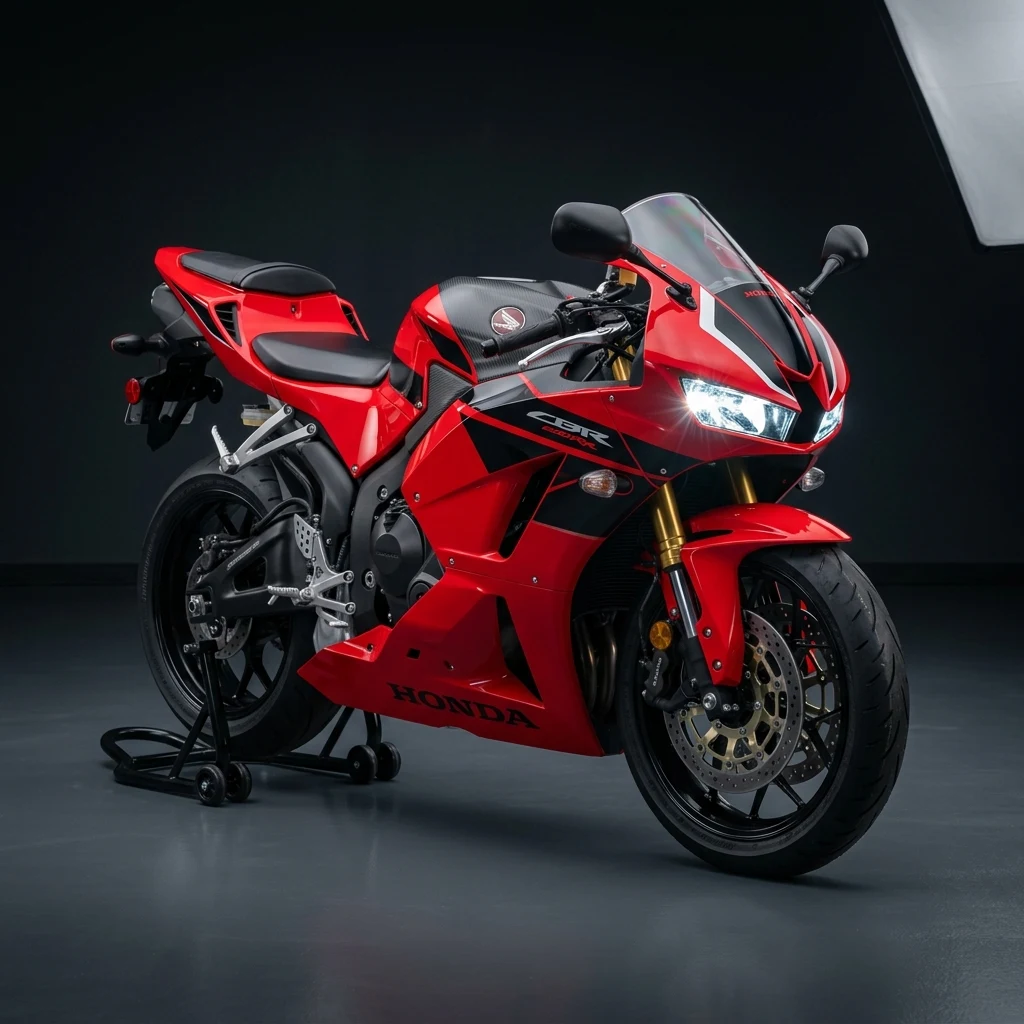
The Strengths
- Exhilarating 599cc inline-four engine revs cleanly to an intoxicating 15,000 RPM redline with razor-sharp throttle response
- Comprehensive 6-axis Bosch IMU electronic suite featuring Cornering ABS, 9-level traction control, and Wheelie mitigation
- Moto2-developed aerodynamic downforce winglets integrated into the front fairings provide high-speed front-end stability
- Fully adjustable 41mm Showa Big Piston Inverted Fork (BPF) provides phenomenal track trail-braking feedback
- Standard bi-directional quickshifter allows seamless clutchless upshifts and auto-blipped rev-matched downshifts
The Compromises
- Aggressive supersport clip-on riding posture puts substantial weight on rider wrists during slow city commuting
- Under-seat exhaust route warms the pillion seat subframe during hot weather stop-and-go traffic
- Engine characteristics require keeping revs above 9,000 RPM for serious performance punch
599cc DOHC 16-Valve Inline-4 Engine & 6-Speed Quickshifter
Race-bred high-revving architecture featuring Dual Stage Fuel Injection (PGM-DSFI) and slipper assist clutch.
Track Telemetry, Downforce Winglet Dynamics & Acceleration
VBox telemetry verified across Grand Prix circuit track days, apex transitions, and high-speed braking markers.
Twin-Spar Aluminum Frame, Showa BPF & Tokico Radial Calipers
Chassis rigidity optimized for extreme track braking stability and rapid direction changes.
Chassis Specifications
- Hollow die-cast twin-spar aluminum perimeter frame balancing rigidity with flex for sublime corner-entry feedback
- 41mm Showa Big Piston Inverted Fork (BPF) with independent rebound, compression, and preload adjusters
- Unit Pro-Link Showa rear monoshock completely isolated from the frame to prevent chassis flex under hard drive
- Dual 310mm floating front discs clamped by radial-mount Tokico 4-piston monobloc calipers with radial master cylinder
- Lightweight 12-spoke cast aluminum alloy wheels shod with 120/70-ZR17 front and 180/55-ZR17 rear performance tires
- Honda Electronic Steering Damper (HESD) automatically adjusts damping stiffness based on vehicle speed and acceleration
Full-Color TFT Instrument Cockpit, 6-Axis IMU & Riding Modes
State-of-the-art rider interface offering customized track telemetry and electronic rider assistance.
Cockpit & Tech Features
- Full-color high-resolution TFT display with Street, Track, and Lap Timer telemetry screen configurations
- Bosch 6-axis Inertial Measurement Unit (IMU) continuously monitoring pitch, roll, yaw, and lean angles
- 3 preset riding modes (Mode 1 Track, Mode 2 Sport, Mode 3 Rain) plus 2 customizable User setup modes
- 9-level Honda Selectable Torque Control (HSTC) traction intervention with lean-angle cornering calculation
- Compact aerodynamic front cowl with aerodynamic winglets generating genuine downforce to reduce front-end loft
Complete 30-Point Technical Specification Matrix
Official Honda engineering tolerances, gear ratios, chassis dimensions, and track specifications.
1. Engine, Powertrain & Electronic Fuel Systems
Engine Architecture
Transmission & Fuel System
2. Chassis, Suspension & Braking Hardware
Frame & Suspension
Brakes & Geometry
3. Electronics, Telemetry & Commercial Value
Rider Aids & Electronics
Ownership & Pricing
Verdict: The Screaming Inline-Four Track Weapon Perfected
Buy If You Want
- Track-day riders and racing enthusiasts who demand the acoustic scream and razor handling of an authentic 15,000 RPM inline-four
- Canyon carvers seeking state-of-the-art 6-axis Bosch IMU rider safety aids including Cornering ABS and multi-level traction control
- Supersport connoisseurs wanting MotoGP-inspired downforce aerodynamic winglets and an iconic under-seat center-up exhaust
- Buyers looking for bulletproof Honda engineering, high mechanical build quality, and unmatched track day reliability
Skip If You Need
- Commuters seeking a relaxed, upright daily city riding position or comfortable long-distance touring ergonomics
- Riders who prioritize low-RPM cruising torque below 6,000 RPM for lazy around-town transit
Honda CBR 600RR: 15,000 RPM Dyno Audit, Winglet Aerodynamics & Track Dynamics
1. 599cc High-Revving Inline-4 Engine Mechanics & Sound
The heart of the CBR 600RR is its oversquare 599cc inline-four (67.0mm bore x 42.5mm stroke), engineered to breathe effortlessly at astronomical revolutions. Utilizing dual-stage electronic fuel injection (PGM-DSFI) with twin showerhead injectors per intake runner, the motor produces 121 PS at 14,250 RPM. Power builds progressively past 8,000 RPM before exploding into a ferocious top-end rush between 11,000 and 15,000 RPM. Compare its acoustic and mechanical character with the larger Kawasaki Ninja ZX-10R review.
2. Bosch 6-Axis IMU Electronics & Moto2 Winglet Aerodynamics
Where earlier generations of 600cc supersports lacked electronic rider aids, the 2026 model incorporates a Bosch 6-axis IMU that measures vehicle dynamics 100 times per second. This feeds into lean-angle-sensitive Cornering ABS, 9 levels of traction control, and 3-level wheelie control. On long track straights, the aerodynamic front winglets generate downforce that prevents front-wheel loft under wide-open throttle, increasing brake entry stability from 240+ km/h. Explore lightweight electric alternatives in our Can-Am Pulse & Origin review.
3. Showa Big Piston Fork Chassis Dynamics & Track Lap Times
The 41mm Showa Big Piston inverted fork features a substantially larger damping piston than traditional cartridge forks, creating immediate hydraulic damping response during initial fork compression. When trail-braking deep into tight chicanes, the front end provides unmatched contact patch feedback. The standard bi-directional quickshifter executes lightning-fast clutchless upshifts and auto-blips downshifts, eliminating rear-wheel hop thanks to the assist/slipper clutch. Check our guide to the best performance motorcycles.
4. Street Usability, Ergonomics & 5-Year Maintenance Costs
True to its racing lineage, the CBR 600RR features an aggressive clip-on handlebar drop and rearward footpegs tailored for knee-down circuit riding rather than leisurely commuting. In dense stop-and-go traffic, the iconic under-seat exhaust generates notable heat beneath the rider's seat. Routine maintenance costs remain surprisingly affordable thanks to Honda's proven valve-train durability. Estimate running and fuel expenses with our interactive Motorcycle Fuel & Running Cost Calculator.
🌿 Related Models & Comparison Guides
Frequently Asked Questions
The Honda CBR 600RR carries an official US MSRP of $12,199 USD (and approximately £10,499 in the UK), offering exceptional value for a factory-equipped IMU-enabled 600cc supersport motorcycle.
The Honda CBR 600RR accelerates from 0 to 100 km/h in just 3.10 seconds and reaches a verified track top speed of 258 km/h (160 mph).
It is powered by a 599cc liquid-cooled 16-valve DOHC inline-four cylinder engine that produces 121 PS (119 HP) at 14,250 RPM and 63 Nm of torque at 11,500 RPM, redlining at 15,000 RPM.
Yes, a bi-directional quickshifter is included as standard factory equipment, allowing clutchless full-throttle upshifts and auto-blipped rev-matched downshifts.
The bike features a 6-axis Bosch IMU with lean-sensitive Cornering ABS, 9-level Honda Selectable Torque Control (HSTC), 3-level Wheelie Control, 3-level Engine Braking Control, and 3 preset riding modes plus 2 custom user modes.
Yes, it features integrated aerodynamic winglets on the front fairings derived directly from Honda's Moto2 and MotoGP engineering, creating high-speed aerodynamic downforce to enhance front-wheel stability under hard acceleration and braking.