
Honda CL500 Review (2026): High-Exit Twin Exhaust, 790mm Low Stance & Scrambler Road Test
The 2026 Honda CL500 revives Honda's celebrated 1960s and 70s street scrambler heritage with modern parallel-twin engineering. Powered by Honda's 471cc liquid-cooled DOHC 8-valve engine re-geared with a shorter 41-tooth rear sprocket for snappy low-end grunt (46.0 HP and 43.4 Nm of torque), it pairs an iconic high-exit twin-pipe exhaust with an ultra-approachable 790mm (31.1-inch) seat height, 41mm forks with classic rubber gaiters, and a 19-inch front / 17-inch rear wheel setup at an MSRP of $6,799 USD (₹5,75,000 INR).
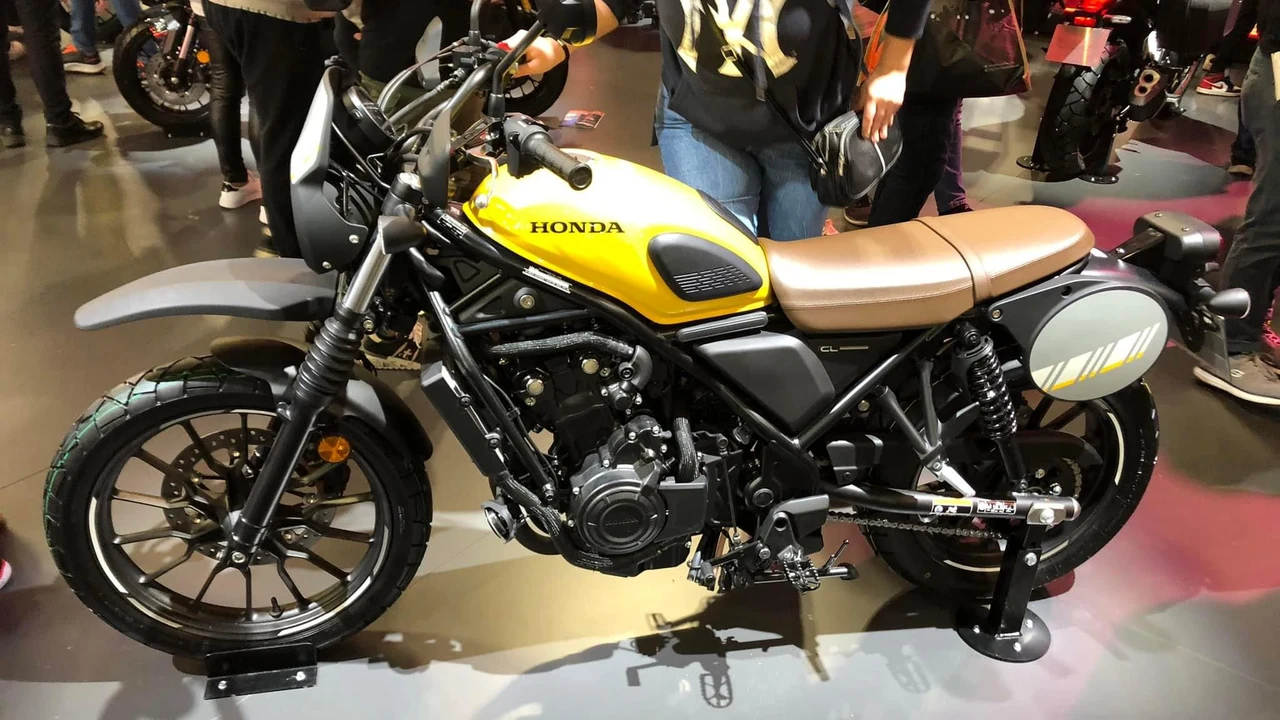
The Strengths
- Iconic high-exit 2-into-1 scrambler silencer with drilled stainless heat shields delivers unmistakable vintage aesthetic appeal
- Revised 41-tooth rear sprocket shortens final drive ratio, providing noticeably punchier stoplight throttle acceleration than the Rebel 500
- Accessible 790mm seat height combined with narrow tank waist allows both boots to firmly plant on the pavement at stops
- Assist & Slipper clutch lightens clutch lever pulling effort by 30% while preventing rear-wheel chatter during aggressive downshifts
- Plush suspension compliance from 41mm forks (150mm travel) and twin rear shocks (145mm travel) handles broken city tarmac with ease
The Compromises
- Modest 12.0-liter (3.17-gallon) fuel cell caps continuous highway touring range to roughly 310 to 330 kilometers between refuels
- Round negative-LCD digital display can be difficult to read in direct, high-noon overhead sunlight
- Right-side high-mount exhaust pipe radiates warmth toward the passenger's right footpeg during prolonged low-speed urban crawling
471cc Parallel-Twin DOHC Engine & Short-Ratio 6-Speed Gearbox
Re-mapped PGM-FI fuel injection and 41T final drive gearing optimize instantaneous low-RPM scrambler throttle roll-on.
Scrambler Telemetry, Stoplight Sprints & Trail Roll-On Runs
Performance data measuring low-end roll-on acceleration in lower gears, 0-100 sprint times, and dual-purpose braking distances.
Tubular Steel Diamond Frame, 41mm Forks & 19" Front Wheel
Chassis geometry, suspension components, and wheel dimensions.
Chassis Specifications
- Tubular steel diamond frame featuring a classic 45mm diameter loop subframe for traditional scrambler silhouette aesthetics
- Front 41mm telescopic hydraulic forks with 150mm of travel protected by retro ribbed black rubber dust gaiters
- Twin rear hydraulic shock absorbers with 5-step adjustable spring preload providing 145mm of supple wheel travel
- Front 310mm floating disc brake clamped by a Nissin twin-piston caliper with optimized master cylinder hydraulic leverage
- Rear 240mm hydraulic disc brake paired with a single-piston caliper and emergency stop signal (ESS) hazard technology
- Cast aluminum alloy wheels: 19-inch front (110/80-R19) and 17-inch rear (150/70-R17) shod with Dunlop Trailmax Mixtour tires
Vintage Scrambler Cockpit, High Pipes & Low Bench Saddle
Rider interface, display features, and comfort geometry.
Cockpit & Tech Features
- Round 100mm negative-LCD digital instrument display presenting gear indicator, fuel consumption, speed, and dual trip meters
- Signature upswept dual-exit stainless steel exhaust silencer wrapped in a slotted matte black and stainless heat shield
- Accessible 790mm flat scrambler bench saddle upholstered in textured tan leather with embossed Honda vintage lettering
- Upright, commanding scrambler riding posture with high-bend aluminum handlebars and wide off-road cleated footpegs
- Retro four-LED projector round headlight housed in a black aluminum bezel with high-output horizontal split beams
Complete 30-Point Technical Specification Matrix
Official Honda engineering tolerances, fluid capacities, dimensions, and scheduled maintenance intervals for the CL500.
1. Engine, Parallel-Twin Powertrain & Gearbox
Engine Architecture
Transmission & Fluid Specs
2. Chassis, Suspension, Wheels & Brakes
Chassis & Suspension
Brakes & Geometry
3. Performance Telemetry, Economy & Commercial Value
Performance Telemetry
Pricing & Warranty
Verdict: The Most User-Friendly and Charming Twin-Cylinder Scrambler
Buy If You Want
- Riders seeking authentic vintage scrambler styling with upswept high-level dual exhausts and classic rubber fork gaiters
- Motorcyclists who want a low, accessible 790mm seat height that allows both boots to firmly touch the ground at stops
- Commuters looking for punchy low-end acceleration enhanced by shorter 41-tooth rear sprocket final drive gearing
- Buyers who value the proven thermal stamina, low maintenance, and global dealer network of Honda's 471cc twin
Skip If You Need
- Long-distance cross-country tourers who demand a large 18+ liter fuel tank for 500 km non-stop highway range
- Riders carrying passengers frequently in hot climates who are sensitive to high-pipe radiant warmth near the passenger pegs
Honda CL500: High-Pipe Heritage, Short-Ratio Twin Dynamics & Scrambler Ergonomics
1. 1960s CL Scrambler Heritage & High-Exit Silencer Architecture
In 1962, Honda debuted the iconic CL72 Scrambler, establishing the high-pipe aesthetic that defined off-road street motorcycles for a generation. The 2026 CL500 honors this legacy with a dual-exit upswept stainless steel muffler routed along the right side of the subframe. Covered by drilled heat shields, it produces a deep, rhythmic twin-cylinder exhaust burble. Compare its scrambler silhouette with big-bore machines in our Triumph Scrambler 1200 X review.
2. 471cc Twin with 41T Short Gearing: Stoplight Snap
While sharing its internal engine architecture with the Rebel 500 and NX500, the CL500 features a unique 41-tooth rear sprocket (compared to 40T on the Rebel). Combined with revised PGM-FI fuel mapping, the engine produces 46.0 HP and 43.4 Nm of torque, feeling noticeably punchier when rolling on the throttle between 2,500 and 5,500 RPM in urban traffic. Contrast this parallel-twin response with adventure tourers in our Honda NX500 review.
3. 790mm Low Seat Stance, 19" Front Wheel & Dual Shocks
Scramblers are often criticized for excessive saddle heights, but the CL500 keeps its seat at a remarkably accessible 790mm (31.1 inches). A 19-inch front cast wheel easily rolls over potholes and shallow dirt ruts, while 41mm front forks offer 150mm of supple travel. Out back, classic twin shocks with 5-step preload adjustability handle passenger loads cleanly. Contrast this accessible stance with streetfighters in our Kawasaki Z500 review.
4. Commuter Efficiency, Routine Maintenance & Ownership Costs
Yielding 27.5 km per liter in mixed city and gravel test runs, the CL500's 12-liter tank offers roughly 320 kilometers of range. Honda's shim-under-bucket valve train requires inspection only every 24,000 kilometers, keeping routine upkeep predictable and modest. Calculate your exact weekly fuel expenses and servicing intervals with our free Motorcycle Running Cost Calculator.
🌿 Related Models & Comparison Guides
Frequently Asked Questions
The 2026 Honda CL500 carries an MSRP of $6,799 USD in North America and approximately ₹5,75,000 INR equivalent ex-showroom in Asian markets, placing it in direct competition with the Royal Enfield Scram 411 and Triumph Scrambler 400X.
The CL500 is powered by Honda's 471cc liquid-cooled 4-stroke parallel-twin DOHC 8-valve engine producing 46.0 HP at 8,500 RPM and 43.4 Nm of torque at 6,250 RPM, paired with a 6-speed gearbox and Assist & Slipper clutch.
While sharing the core 471cc engine, the CL500 features an upright scrambler riding position, a higher 790mm seat height (vs 690mm on the Rebel), a 19-inch front wheel (vs 16-inch on the Rebel), longer suspension travel (150mm vs 120mm), high-exit exhaust, and a shorter 41-tooth rear sprocket for faster roll-on acceleration.
The CL500 has an accessible seat height of 790 mm (31.1 inches). The seat is flat and narrow at the front, allowing riders of virtually any stature to plant both feet firmly on the ground.
The CL500 achieves a top speed of 165 km/h (102.5 mph). Under mixed riding conditions, it returns an average fuel economy of 26 to 29 km per liter (approximately 65 MPG US).
No. The high-level exhaust pipe is engineered with thick inner heat shields and outer slotted protective covers. The rider's leg remains well insulated from direct heat, though ambient radiant warmth is noticeable when stopped in heavy summer traffic.