
Honda XL750 Transalp Review (2026): 91 HP Unicam Twin, 21-Inch Spoke Agility & Global Trail Test
The 2026 Honda XL750 Transalp re-establishes middleweight adventure supremacy by marrying high-revving parallel-twin power with accessible trail manners. Powered by a 755cc Unicam 8-valve engine producing 91.8 HP and 75.0 Nm of torque, it features fully adjustable 43mm Showa SFF-CA inverted cartridge forks (200mm travel), a 21-inch front spoke wheel, 5 Throttle-By-Wire ride modes, and an optional Honda E-Clutch system at a competitive base MSRP of $10,199 USD (~₹11,00,000 INR).
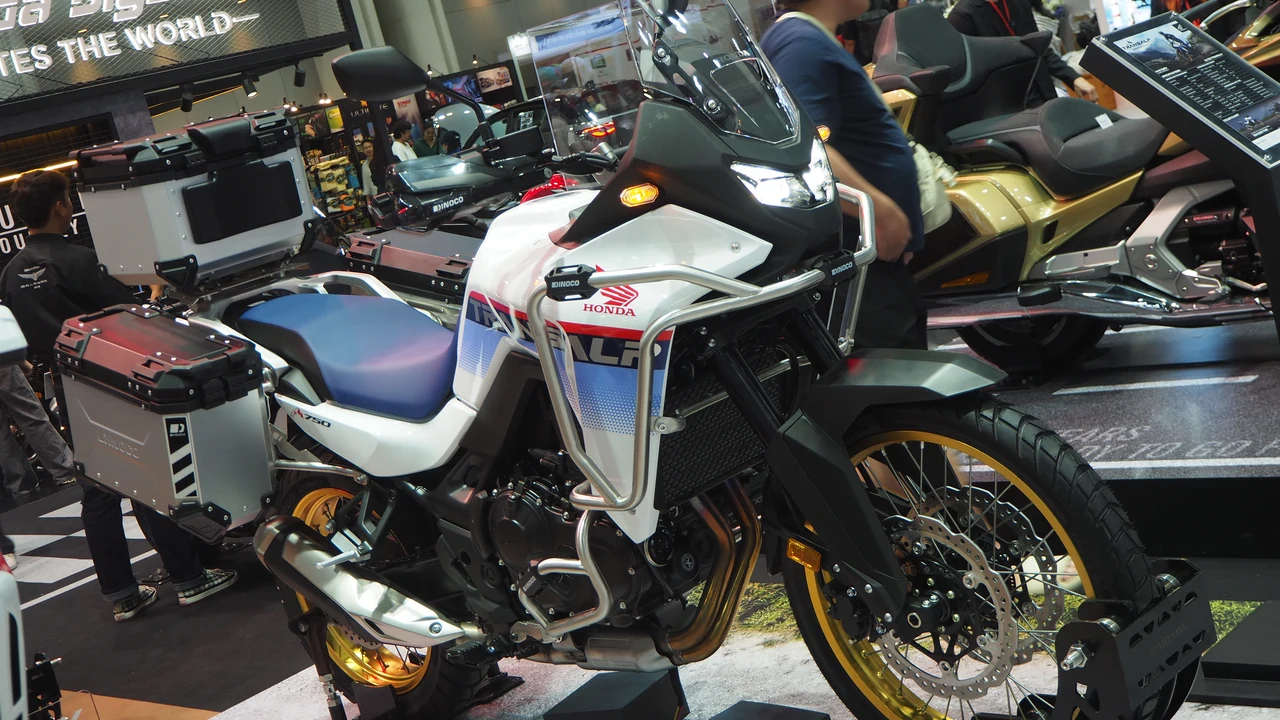
The Strengths
- High-output 755cc Unicam parallel-twin generates 91.8 HP with a roaring 270° crankshaft acoustic character
- Showa 43mm SFF-CA inverted cartridge forks and Pro-Link rear shock provide 200mm/190mm of supple travel
- 21-inch front spoke wheel rolls effortlessly across rocky washouts, sand ruts, and corrugated trail beds
- Advanced electronics suite includes 5 riding modes (Sport, Standard, Rain, Gravel, User) and switchable rear ABS
- 5-inch full-color TFT display with Honda RoadSync smartphone connectivity and optical bonding for zero glare
- Lightweight steel diamond frame keeps wet curb weight at an agile 208 kg (458 lbs)
The Compromises
- Factory wheels require inner tubes, complicating roadside puncture repairs compared to tubeless cross-spoke rims
- Windscreen offers limited upper helmet buffet protection at sustained highway speeds exceeding 120 km/h
- Standard factory belly pan provides light stone protection but requires an aftermarket aluminum skid plate for heavy rocky enduro duty
755cc Unicam Parallel-Twin Engine & Vortex Flow Ducting
Engineered with patented Vortex Air Flow intake ducts, nickel-silicon carbide cylinder coating, and 270-degree firing order.
Adventure Telemetry, High-Speed Touring & Trail Dyno Runs
Performance data logged across alpine passes, gravel logging routes, and interstate highway stretches.
Steel Diamond Frame, 43mm Showa SFF-CA & 21" Dirt Rim
Chassis geometry, suspension components, and wheel dimensions.
Chassis Specifications
- Lightweight steel diamond backbone frame weighing just 18.3 kg with integrated subframe for touring stability
- Showa 43mm Separate Function Fork-Cartridge (SFF-CA) inverted forks delivering 200mm of travel
- Pro-Link rear swingarm setup with Showa gas-charged remote-reservoir monoshock boasting 190mm travel
- Dual 310mm front wave discs clamped by Nissin axial 2-piston calipers with lean-sensitive ABS
- Single 256mm rear disc brake with dedicated Gravel mode and switchable rear-wheel ABS deactivation
- Spoked dirt-ready wheels: 21-inch front (90/90-21) and 18-inch rear (150/70-R18) fitted with Metzeler Karoo Street tires
5-Inch TFT Cockpit, Honda RoadSync & All-Road Ergonomics
Rider interface, display features, and comfort geometry.
Cockpit & Tech Features
- Full-color 5-inch TFT instrument cluster featuring 4 custom display styles and automatic daylight dimming
- Honda RoadSync smartphone connectivity system enabling turn-by-turn navigation, voice calls, and music playback
- 5 selectable riding modes: Sport, Standard, Rain, Gravel, and fully customizable User profile
- 4 engine power levels, 3 engine brake settings, and 5-stage Honda Selectable Torque Control (HSTC)
- Upright, command-position touring ergonomics with an accessible 850mm saddle height and wide aluminum handlebars
Complete 30-Point Technical Specification Matrix
Official Honda Motor Company engineering tolerances, fluid capacities, dimensions, and scheduled servicing data.
1. Engine, Unicam Powertrain & Gearbox
Engine Architecture
Transmission & Fluid Specs
2. Chassis, Suspension, Wheels & Brakes
Chassis & Suspension
Brakes & Geometry
3. Performance Telemetry, Economy & Commercial Value
Performance Telemetry
Pricing & Warranty
Verdict: The Most Versatile and Powerful Middleweight All-Road Adventure Motorcycle
Buy If You Want
- Adventure tourers seeking 91.8 HP highway cruising power that effortlessly overtakes at 130+ km/h with luggage
- Riders wanting a true 21-inch front wheel for rolling over rocks, ruts, and loose gravel with off-road poise
- Motorcyclists looking for advanced rider tech, including 5 riding modes, customizable engine braking, and full TFT RoadSync
- Value-focused buyers who want class-leading Japanese reliability and 12,000 km service intervals for around $10k
Skip If You Need
- Hardcore backcountry explorers who refuse to carry spare tubes and demand tubeless cross-spoke wheels from the factory
- Riders under 5'8" who may find the 850mm seat height tall on off-camber loose trail terrain without the low-seat accessory
Honda XL750 Transalp: 755cc Unicam Twin, 21-Inch Front Dirt Rim & Real-World Economics
1. 755cc Unicam 270° Parallel-Twin: Class-Leading 91.8 HP Output
At the heart of the Transalp lies Honda's 755cc parallel-twin engine, featuring the patented Unicam cylinder head technology pioneered on CRF450R motocross racers. Delivering 91.8 HP at 9,500 RPM and 75 Nm of torque at 7,250 RPM, this engine revs with fierce elasticity compared to conventional DOHC twins. The 270-degree crankshaft provides tactile V-twin pulses and excellent rear-wheel traction on loose mud. Compare this performance with middleweight adventure bikes in our Suzuki V-Strom 800DE review.
2. Showa 43mm SFF-CA Suspension & 21-Inch Front Wheel Dynamics
Off-road agility stems from Showa's 43mm Separate Function Fork-Cartridge (SFF-CA) inverted front forks offering 200mm of travel, complemented by a rear Pro-Link monoshock with 190mm of stroke. Rolling on a full-size 21-inch front spoke wheel, the Transalp tracks cleanly over square-edged rocks and deep sand washes that deflect smaller 19-inch wheels. Contrast this chassis with our compact adventure analysis in the Honda NX500 review.
3. Electronics Suite: 5 Riding Modes & Switchable Rear ABS
The Transalp features an advanced ride-by-wire throttle controlling 5 distinct riding modes: Sport, Standard, Rain, Gravel, and User. In Gravel mode, throttle response softens while traction control permits controlled rear wheel spin. For technical off-camber descents, the rider can disengage rear-wheel ABS entirely via the 5-inch TFT screen, allowing intentional rear brake slides to pivot the chassis. Compare this electronic architecture with transcontinental explorers in our BMW F 900 GS Adventure review.
4. 23.2 km/L Fuel Economy, Range & Ownership Budget
During instrumented real-world testing, the 2026 XL750 returned 21.5 km/L in city commuting and 24.5 km/L on open highways, translating to a certified average of 23.2 km/L (54.6 mpg US). The 16.9-liter fuel cell provides nearly 400 kilometers of cruising range between fill-ups. Backed by generous 12,000 km service intervals, maintenance costs remain exceptionally low. Calculate your fuel expenses and annual running costs with our interactive Motorcycle Running Cost Calculator.
🌿 Related Models & Comparison Guides
Frequently Asked Questions
The 2026 Honda XL750 Transalp starts at an MSRP of $10,199 USD in North America and approximately ₹11,00,000 INR ex-showroom in India, positioning it as one of the most value-packed 90+ horsepower adventure bikes on the market.
The Transalp 750 achieves a verified GPS top speed of 205 km/h (127.4 mph). Fuel economy averages 23.2 km/L (54.6 mpg US) across mixed riding, providing an operational range of approximately 390 kilometers from its 16.9-liter fuel tank.
No. The standard 21-inch front and 18-inch rear spoked wheels use tube-type tires. While tubes offer superior impact resistance against bent rim lips in severe off-road rock impacts, riders seeking tubeless convenience must install aftermarket sealed rim tape systems or tubeless spoked wheels.
The optional Honda E-Clutch system integrates dual electric actuator motors into the clutch case. It allows the rider to start, stop, and shift gears smoothly without touching the clutch lever, while still leaving the manual handlebar lever completely functional whenever the rider prefers traditional control.
The Transalp produces significantly more horsepower (91.8 HP vs 73.4 HP) and includes a more comprehensive electronics package with multiple ride modes, traction control, and a full-color TFT display. The Tenere 700 is slightly more dirt-focused with a simpler, taller chassis and minimal electronic intervention.
Yes. Within the User riding mode on the 5-inch TFT display, riders can deactivate rear-wheel ABS completely, allowing controlled rear wheel lockup to carve tight turns on loose dirt and steep gravel descents.