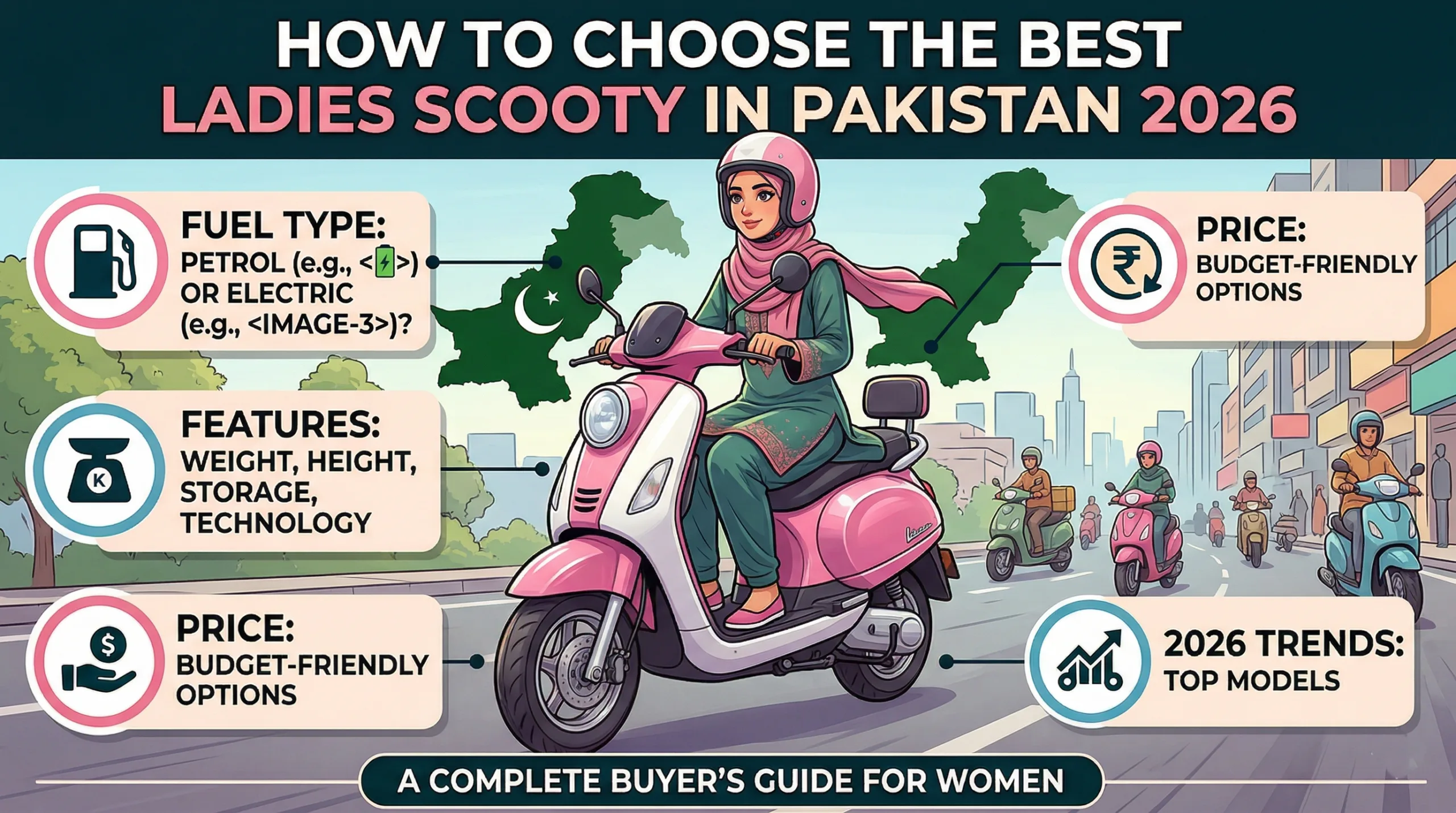
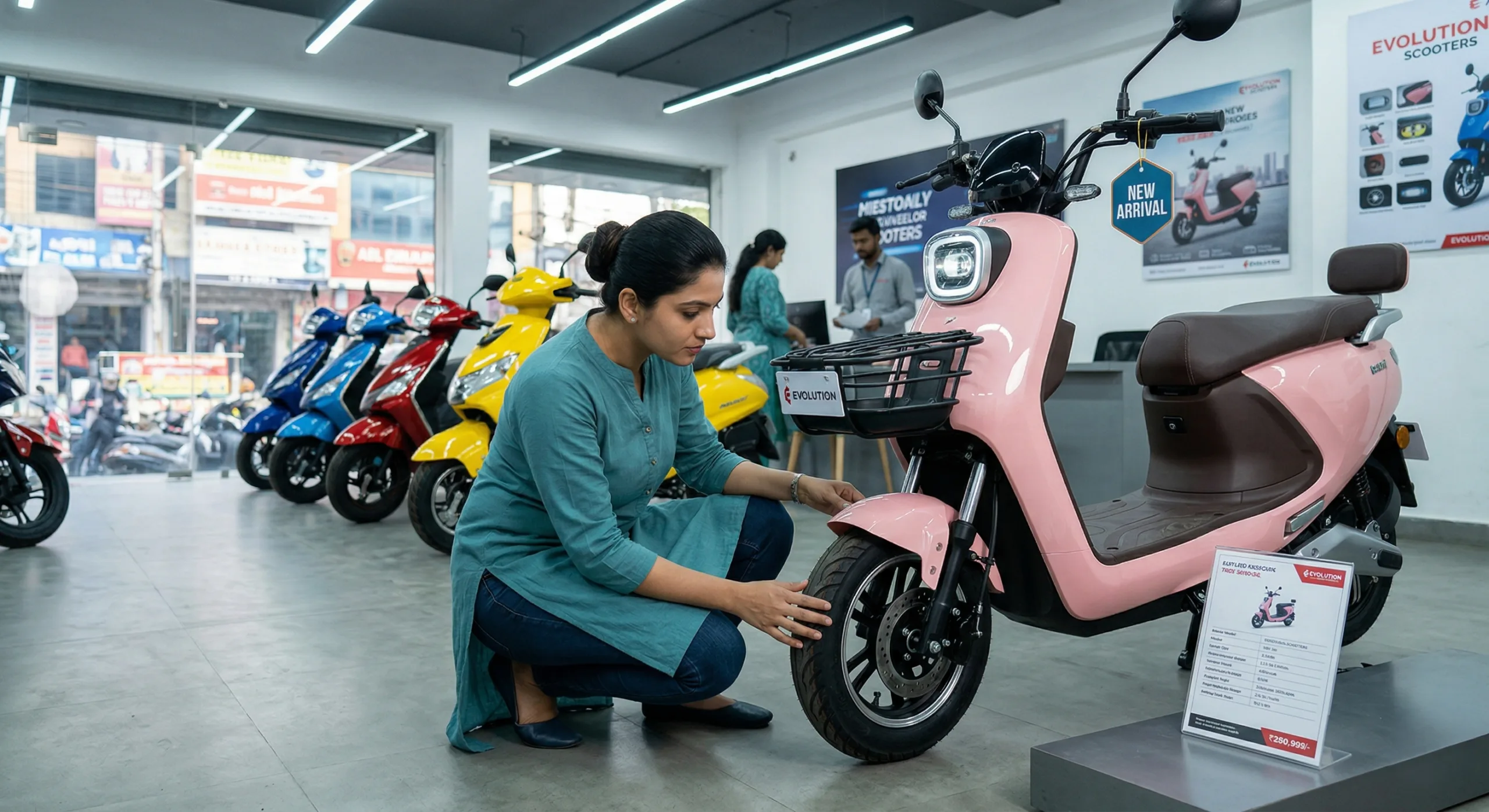
Purchasing Context: Buying your first scooty — or upgrading to a better one — should be exciting. But walk into a dealership in Karachi, Lahore, or Islamabad without a plan, and the sheer number of choices can quickly become overwhelming.
Target Audience: This guide cuts through all the noise. Whether you are a student looking for an affordable daily commuter, a working woman who needs something reliable for 50 km a day, or a first-time rider, the questions below will lead you to the exact right scooty for your life in 2026.
Step 1 — Petrol or Electric?
Start Here.
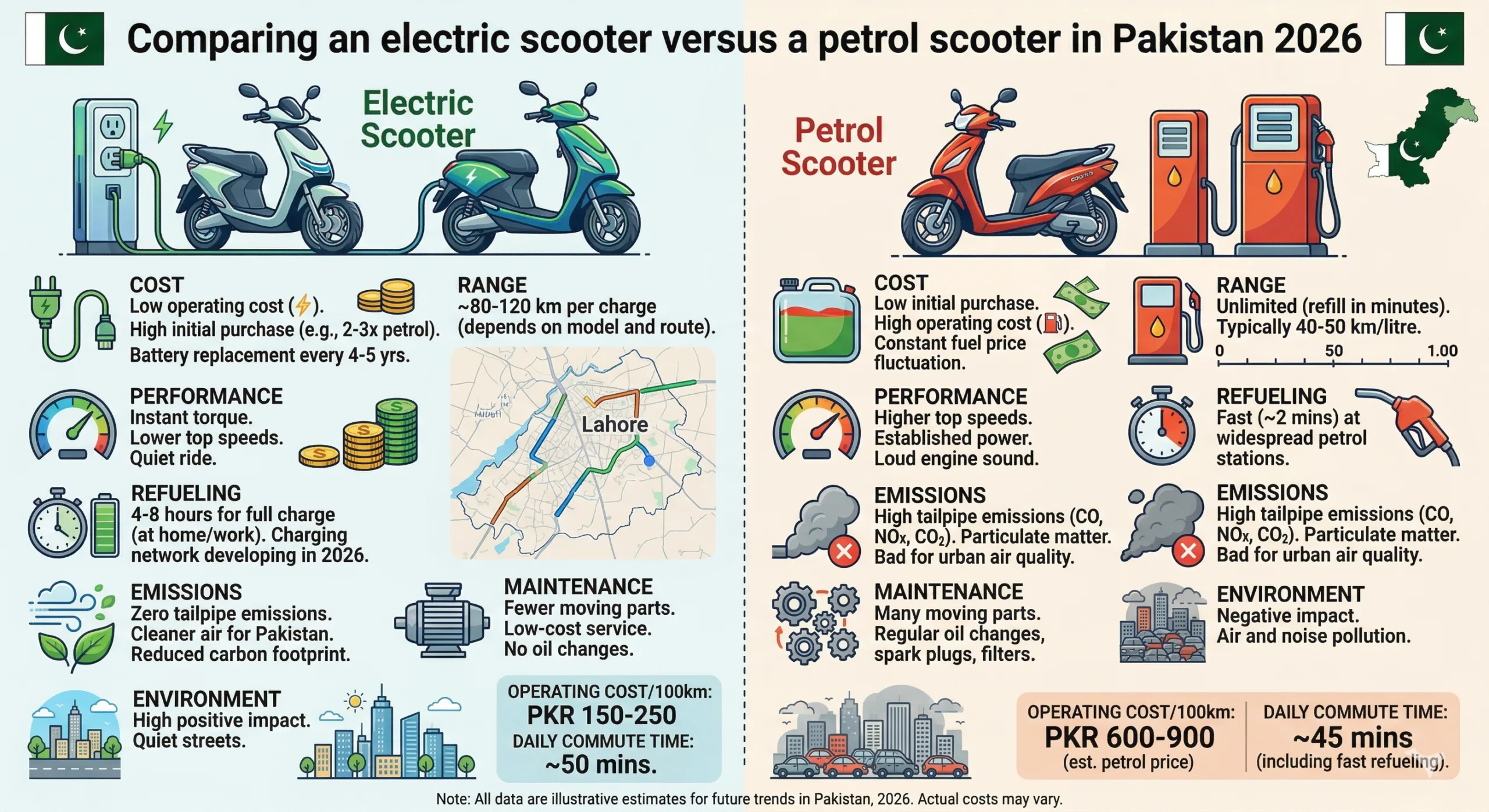
Primary Decision: The first and most structurally important decision you will make is whether to buy a traditional petrol scooty or a new electric one. Everything else flows logically from this one choice.
Choose a Petrol scooty strictly if:
- Budget Constraints: Your budget is strictly under PKR 130,000 and you want a fundamentally reliable, brand-name used model.
- Range Requirements: You consistently ride more than 100 km in a single outing without secure access to a charging point.
- Infrastructure: You live in an area suffering from highly frequent load shedding or unreliable voltage electricity.
- Usage Style: You travel extensively between cities or comfortably on fast intercity roads regularly.
- Refuelling: You strongly prefer the raw psychological simplicity of refuelling at any petrol pump in under two minutes flat.
Choose an Electric scooty structurally if:
- Daily Commute: You commute a highly predictable 40–100 km per day strictly within the city limits.
- Charging Access: You have safe access to a standardized power socket at home or securely at your workplace.
- Operating Costs: You want to dramatically reduce running costs — electric scooties typically cost radically less than PKR 1 per km to run.
- Ride Quality: You want a whisper-quiet ride with absolutely zero vibration and no underlying engine noise.
- Maintenance Routine: You are comfortably fine with adopting a 5–7 hour overnight charging routine.
The fierce economics of electric: if you ride precisely 40 km every single day, a modern electric scooty will directly save you approximately PKR 4,000–6,000 per month in raw fuel costs comprehensively compared to a petrol equivalent. At that massive savings rate, the mathematically higher upfront showroom cost of an electric model is typically fully recovered seamlessly within 12–18 months.
Step 2 — Understanding Engine Size
(Petrol Scooties)
Mechanical Importance: If you are choosing a petrol model, the engine size — measured in cubic centimetres (cc) — is the most important mechanical specification to understand.
49cc – 70cc (Entry-Level)
Best For: Beginners, short localized trips under 20 km, and riders prioritizing the lightest possible two-wheeler. While fuel-efficient (60–70 km/l), they are limited in top speed and hill-climbing power.
100cc (Most Popular for Ladies)
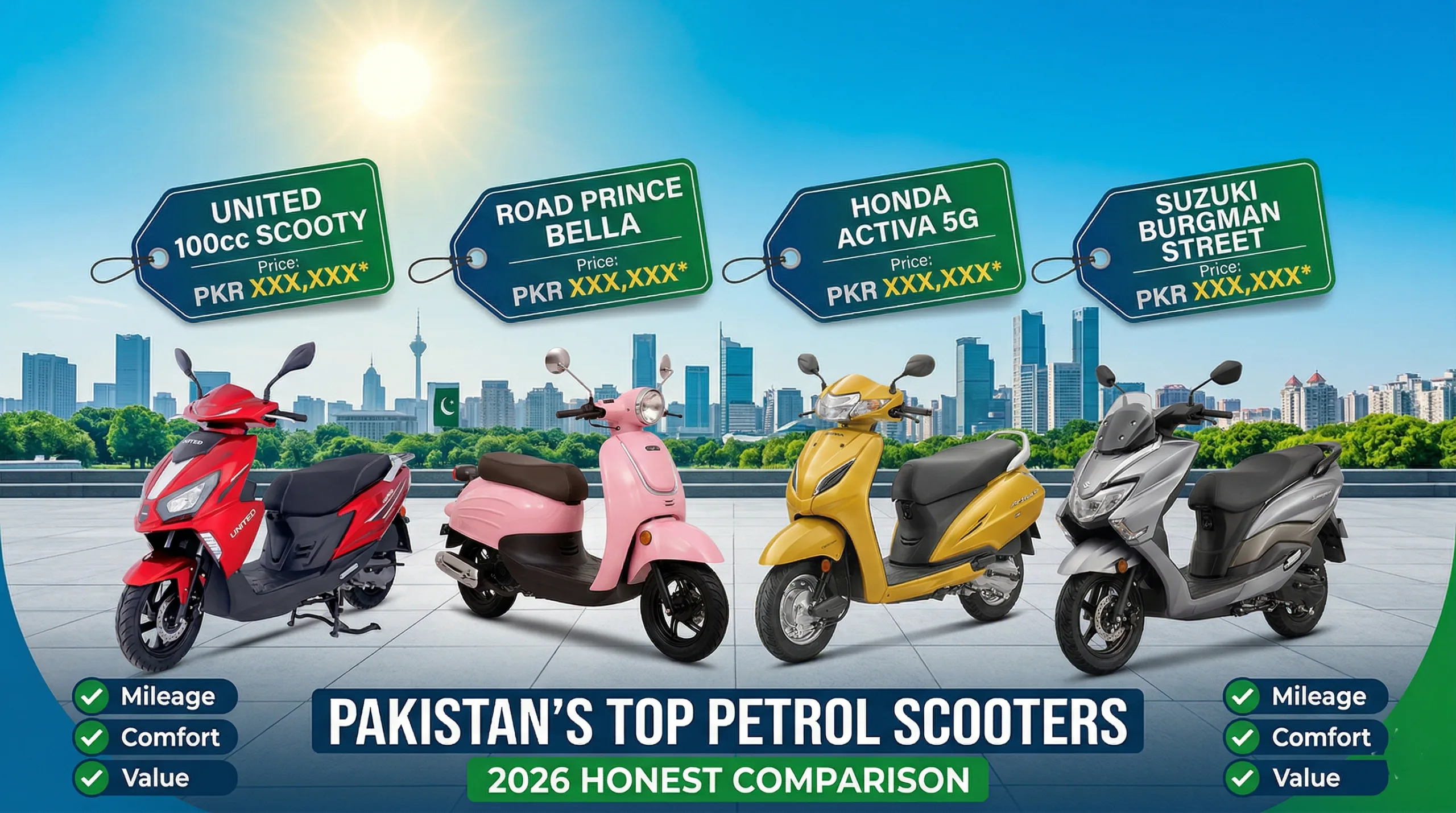
Performance Balance: The 100cc segment is the sweet spot for Pakistani riders, offering more torque and top speed than 70cc models while remaining lightweight. Notable models include the United 100cc scooty, Honda Dio, and Honda Activa 5G.
125cc (Premium Petrol)
Target Use: Experienced riders tackling commutes up to 80 km on faster major roads.
Step 3 — Understanding Motor Power
(Electric Scooties)
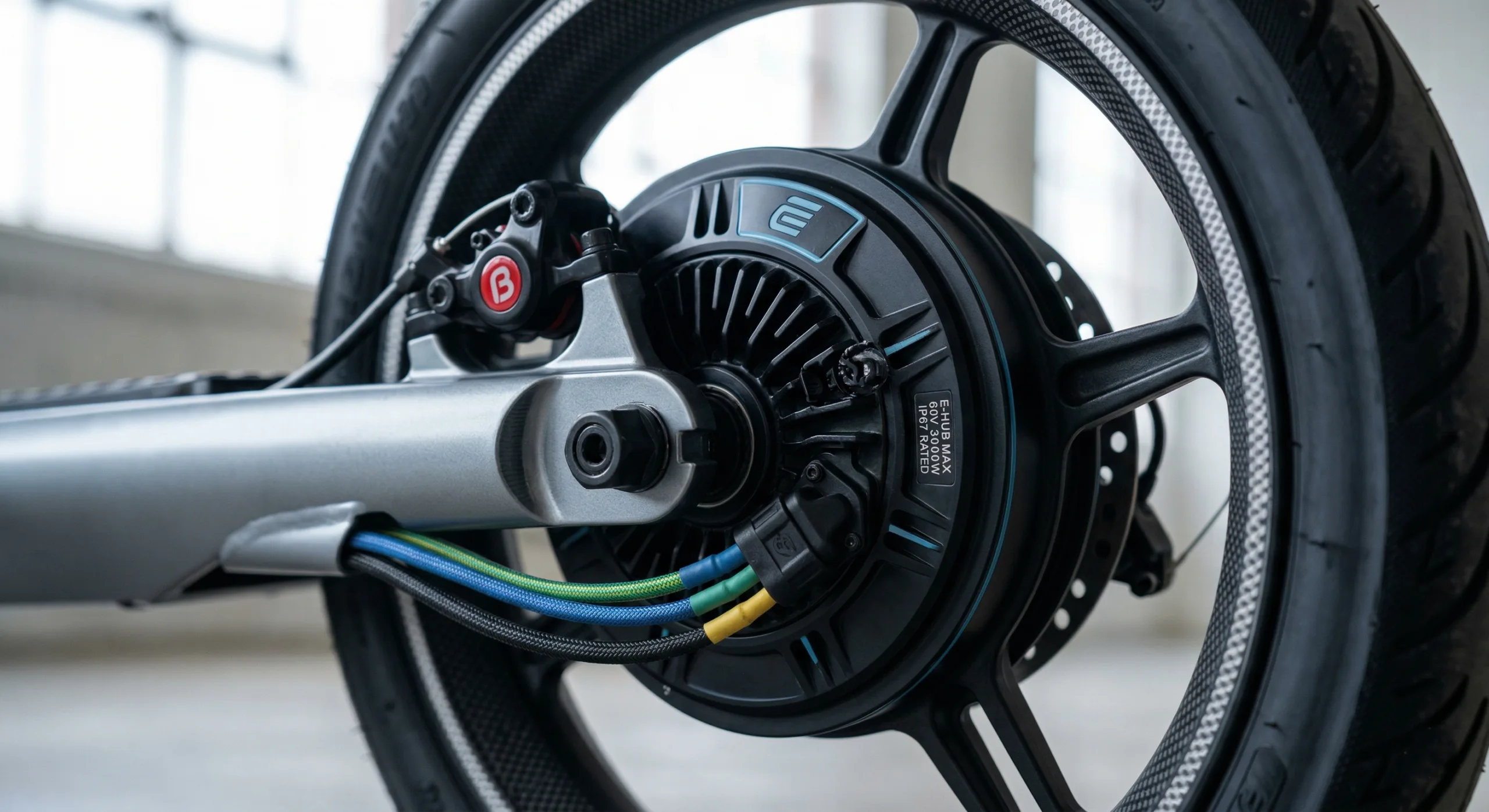
Motor Measurement: For EVs, wattage (W) dictates real-world performance.
Under 600W
Capabilities: Entry-level motors suited for short city trips under 40 km and speeds up to 40 km/h. Limited hill-climbing ability.
600W – 1200W (Most Common Range)
Efficiency: The ideal urban choice, delivering 45–55 km/h and responsive acceleration. Examples include Evee Mito Plus, OKLA ONYX, and the Metro T9.
1500W – 2000W (High Performance)
Premium Power: Designed for longer, mixed-condition commutes and steep inclines.
Step 4 — Seat Height and Weight:
The Two Numbers That Matter Most
Maximum Acceptable Seat Height
- Under 5'0": Look for seat heights at or below 725 mm.
- 5'0" to 5'4": Most standard models (725–760 mm) are suitable.
- Above 5'4": Most standard ladies scooties will fit comfortably.
Controlling Kerb Weight
Recommendation: To ensure safety and ease of handling in traffic or when parking, aim for a weight under 110 kg. Most popular models fall in the 90–108 kg range.
Step 5 — Battery Type
(Electric Scooties Only)
Lead-Acid Batteries
Pros & Cons: While cheaper, these are heavier, require frequent charging, and have shorter lifespans (1.5–2 years). They are best for budget-conscious buyers with light usage needs.
Lithium-Ion and Graphene Batteries
Modern Standard: These offer faster charging (4–6 hours), 3–5 year lifespans, and are often removable for indoor charging—a major convenience for apartment dwellers.
Step 6 — Mandatory Features Checklist
- Self-start: Ensure the model includes a reliable electric ignition system.
- Storage: Verify that the under-seat cargo compartment can fit a helmet and personal items.
- Tyres: Prioritize factory tubeless tyres for easier puncture repair.
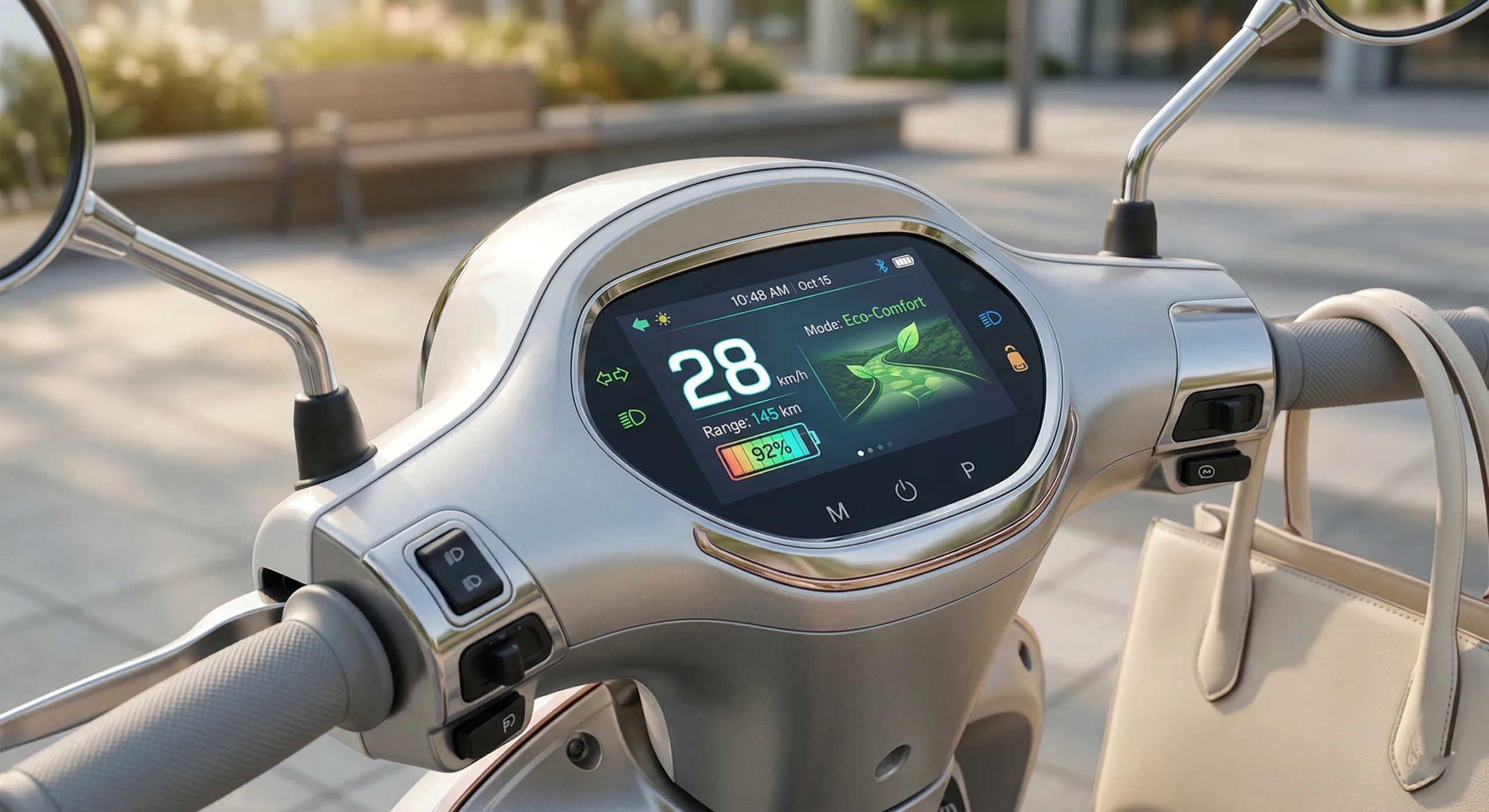
- Dashboard: A digital display is standard for mid-to-high range models to monitor speed and charge.
- Braking: Prefer hydraulic front disc brakes for significantly better stopping power.
The Complete Pre-Purchase Checklist
- Confirm petrol vs. electric based on daily distance.
- Match engine displacement/motor wattage to your usage.
- Verify seat height suits your leg length.
- Confirm weight is under 110 kg.
- Check battery chemistry (Li-ion/Graphene preferred).
- Verify if the battery is removable.
- Confirm a minimum 12-month manufacturer warranty.
Frequently Asked Questions — Buyer's Guide
Which scooty is best for female students in Pakistan in 2026?
The Honda Dio is the top petrol pick for reliability, while the Evee Mito Plus and OKLA ONYX lead the electric segment.
Is an automatic scooty reliably easy to learn for a complete beginner?
Yes, all modern scooties are fully automatic with no gear shifting, making them highly intuitive for beginners.
What is a good daily mileage (range) for an electric scooty?
70–100 km is ideal. If you commute 40 km or less, entry-level models suffice; for 60–80 km, choose models with higher capacity like the OKLA ONYX.
What licence do I need to ride a scooty in Pakistan?
A standard motorcycle driving licence (Category B) covers all scooties, including electric models.
How long does it take to charge an electric scooty?
Standard chargers take 5–7 hours. Premium models or fast-chargers can reduce this to 1.5–4 hours.
What should I check when buying a used scooty?
Petrol: Check for leaks and engine health. Electric: Verify battery cycle count and remaining warranty.
Ready to browse the models?
Head straight over to our highly detailed Best Ladies Scooty Price in Pakistan 2026 Directory or read our CM Punjab Pink Scooty Scheme Guide to understand government subsidies.