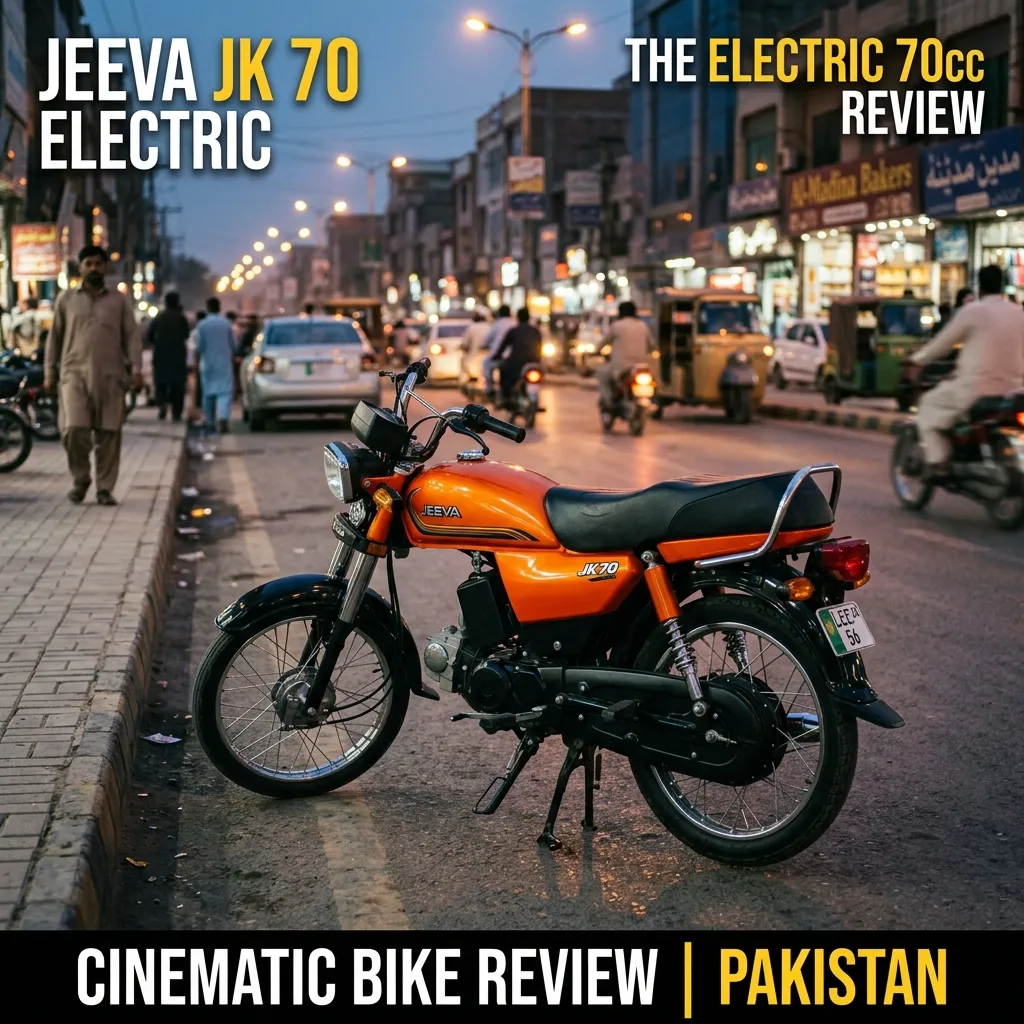
Independent Technical Review
Introduction to the Jeeva JK 70 Electric Bike Review
Market Context: Finding a reliable and affordable daily ride has become highly important for commuters across Pakistan. Our comprehensive Jeeva JK 70 Electric Bike Review aims to analyze how this lightweight electric bike performs under local road conditions. With fuel prices fluctuating constantly, many riders are actively searching for a reliable escape from gas stations.
Vehicle Purpose: This electric bike enters the market as a practical alternative to the traditional petrol-powered 70cc utility bikes. It is designed to match the utility of classic commuters while completely eliminating the need for gasoline, engine oil, or spark plugs.
Design, Styling, and Aesthetic Appeal
Body Configuration: The overall body styling of this electric bike resembles a compact, modern scooty with elements of a light commuter frame. This design makes it highly accessible for both male and female riders in Pakistan. The body is wrapped in lightweight plastic fairings that give it a sleek and aerodynamic appearance.
Ergonomics & Visuals: The step-through design allows riders to mount and dismount the vehicle without any struggle. The modern front headlight cluster and integrated turn signals provide a highly contemporary aesthetic compared to outdated round headlight designs.
💡
Highlight: The step-through frame design significantly improves rider accessibility, making it an excellent choice for a wide demographic of daily commuters.
Powertrain: At the heart of this vehicle is a quiet, efficient Brushless DC (BLDC) hub motor mounted directly in the rear wheel. This motor eliminates the need for drive chains or drive belts, reducing operational noise to a bare minimum. The power delivery is instant, which is a major benefit of electric propulsion over internal combustion engines.
Performance Specs: The vehicle achieves a decent top speed of 55 km/h. This top speed is perfect for urban streets, residential areas, and daily school or office commutes. Since there are no gears, the acceleration remains smooth and continuous from a complete stop up to its maximum speed.
Comparative Note: While petrol riders worry about the declining fuel average in pakistan, electric bike riders focus on battery efficiency and power management. If you want to compare other high-end options with higher power ratings, you can read our MS Jaguar E-150 Review 2026 to see what a premium model offers.
Battery Technology, Range, and Charging Time
Battery Chemistry: This model is equipped with a 60V 23Ah graphene battery pack that provides reliable power storage. Graphene batteries offer a longer lifespan and better temperature resistance than older lead-acid alternatives, making them ideal for the hot summer climate in Pakistan.
Operational Range: The real-world range per charge is approximately 65 to 75 kilometers. This range is more than sufficient for a typical daily commute across major cities like Karachi, Lahore, or Islamabad.
Charging Specs: The charging time for a full battery cycle ranges between 5 to 6 hours using a standard household wall outlet. The smart charger included with the bike automatically cuts off power once the battery is full to prevent overcharging.
Running Cost Comparison: Petrol vs. Electric
Economic Impact: The main reason most buyers switch to electric bikes is the highly attractive running cost. Riding a traditional petrol-powered 70cc motorcycle costs multiple rupees per kilometer when factoring in fuel and frequent engine oil changes. In contrast, charging this electric motorcycle costs a fraction of that amount on your monthly electricity bill.
Tools for Comparison: To calculate your exact personal savings based on your daily commuting route, you can use our interactive Bike Cost Calculator. For mid-tier comparison, our MS Jaguar E-125 Review provides excellent insights into mid-range utility and cost-to-benefit ratios.
Chassis, Braking, and Ride Comfort
Structural Integrity: The chassis is constructed from high-tensile steel tubing designed to handle the bumpy streets of Pakistani cities. The front telescopic fork suspension works in tandem with dual rear shock absorbers to damp out vibrations from potholes and uneven asphalt.
Safety Features: Safety is addressed through a hydraulic front disc brake and a reliable rear drum brake. This setup provides adequate stopping power even when riding in wet weather conditions.
Tires & Weight: The tubeless tires reduce the risk of sudden deflations, and the light curb weight of 72 kg makes the Jeeva JK 70 highly agile and easy to park. Those looking for a modern scooter style might also enjoy reading our Yadea Epoc-H Review 2026.
Resale Value in Pakistan and Market Acceptance
Secondary Market: The resale value in pakistan for electric vehicles is still in its early stages of development. Since the battery is the most expensive component, the secondary market value depends heavily on the health of its battery pack.
Market Trends: As battery testing technology becomes more common in Pakistan, used electric bike transactions are expected to become much safer and more transparent for buyers. Another high-quality electric option is explored in the Yadea GT30 Review 2026.
How to Maintain Your Jeeva JK 70
Maintenance Philosophy: Maintaining an electric bike is incredibly simple because there are very few moving parts. You do not have to worry about clutch cables, gearboxes, or engine overheating.
- Keep tire pressure at the recommended level to maximize range.
- Clean the bike with a damp cloth; avoid high-pressure water near electronics.
- Avoid parking in direct, harsh sunlight to protect battery health.
- Follow standard charging cycles to avoid deep discharges.
- Regularly check brake fluid levels and pad wear.
💡
Highlight: Avoid using high-pressure water sprayers when cleaning your bike to ensure the electronic components and battery casing remain protected from moisture ingress.