Ola
Ola S1 X 2kWh Review 2026: Price, Range, & Ownership in India
Highly affordable ex-showroom price Very low running costs compared to petrol scooters Practical real-world range for city commutes Essential smart features and app connectivity
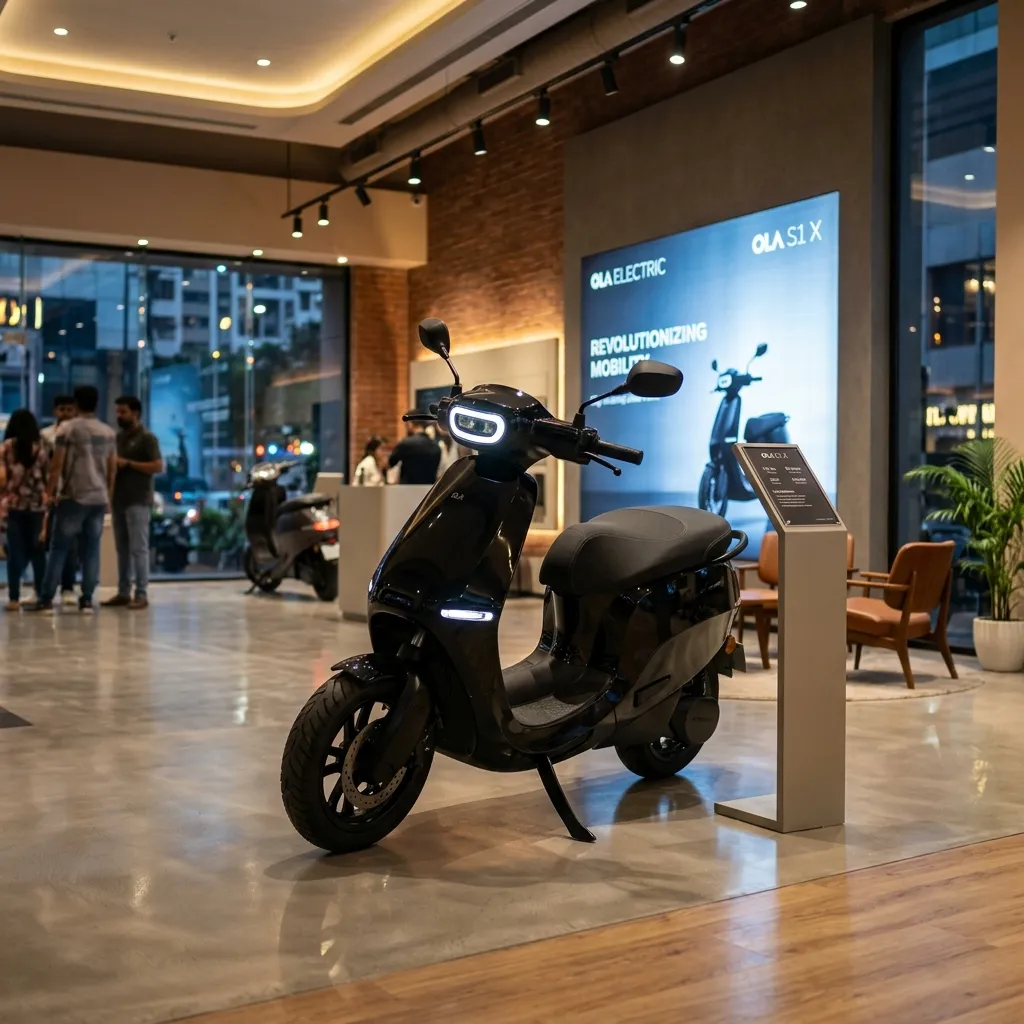

Highly affordable ex-showroom price Very low running costs compared to petrol scooters Practical real-world range for city commutes Essential smart features and app connectivity
Market Context: The electric vehicle market in India is witnessing rapid expansion, and at its forefront is Ola Electric with its diverse S1 range. Among its most accessible offerings is the Ola S1 X 2kWh, designed for the masses. This comprehensive review explores why it has become a strong contender for urban commuters seeking an economical and efficient ride.
Strategic Positioning: Positioned as an entry-level model, the Ola S1 X 2kWh aims to democratize electric mobility. It promises a blend of practical performance, smart features, and affordability, making it particularly appealing to a wide demographic across Indian cities.
Pricing Overview: The ex-showroom price for the Ola S1 X 2kWh in Delhi starts at Rs. 84,999. Prices can vary slightly depending on the city, as different states have varying RTO charges and road taxes, impacting the final on road price.
Cost Estimation: It is important for potential buyers to factor in these additional costs. Many online platforms and dealerships provide a Bike Cost Calculator to help estimate the exact on-road price in your specific city.
Government Incentives: The Indian government's FAME-II (and potentially FAME-III in 2026) subsidies, along with specific state government incentives, play a significant role in reducing the effective purchase price—sometimes as low as Rs. 69,999 in some regions. Always inquire about the latest electric scooter subsidy benefits available in your state.
Variant Comparison: When comparing with other Ola S1 variants, the S1 X 2kWh is the most affordable. It focuses on delivering core electric mobility benefits without unnecessary frills, catering to a budget-conscious audience.
Power Metrics: The Ola S1 X 2kWh is powered by a competent hub motor, delivering a peak power of 6 kW and a maximum torque of 22 Nm. This configuration provides brisk acceleration, with a claimed top speed of 90 km/h.
Range Expectations: While the company claims 108 km, the real-world range typically settles around 80-90 km. Factors like riding style and pillion weight influence mileage in India.
Charging Logistics: The 2 kWh battery takes approximately 4 hours and 50 minutes to charge from 0 to 80% using a standard home charger.
Riding Modes: The scooter offers three distinct performance settings:
Aesthetic Design: The scooter sports a minimalist design, utilizing a physical key and a basic LCD instrument cluster to maintain price accessibility while retaining the signature Ola aesthetic.
Smart Connectivity: Despite the entry-level positioning, it includes:
Construction: The 2026 model year demonstrates improved fit and finish compared to early iterations. The frame is robust, providing a stable foundation for the scooter.
Durability: Panels are primarily plastic, which is typical for the segment. Ola has made significant strides in reinforcing product quality based on customer feedback to ensure longevity on varied road conditions.
Ergonomics: The riding posture is upright and comfortable, supported by an adequately padded seat and a flat floorboard that provides extra utility for luggage.
Handling: With a kerb weight of just 105 kg, the scooter is highly maneuverable in congested traffic. The turning radius is compact, facilitating easy navigation through tight urban spaces.
Braking Hardware: The setup includes a front disc brake and rear drum brake, providing sufficient stopping power for urban environments.
Safety Note: The scooter does not feature ABS. Riders should practice emergency braking to understand the vehicle's limits. The 90/90-12 tyres provide reasonable grip, though caution is advised in wet conditions.
App Integration: The Ola Electric app acts as a digital key, offering remote lock/unlock functionality and providing data on ride statistics, battery status, and charging history.
Security Features: Geo-fencing alerts and anti-theft notifications provide significant peace of mind for daily Indian usage.
Service Model: Ola Electric provides a doorstep service facility in many cities. Maintenance requirements are inherently lower than petrol scooters due to fewer moving parts.
Long-term Considerations: While the battery is covered by a 3-year/40,000 km warranty, the eventual battery replacement cost remains a factor for long-term owners to monitor.
Market Comparison: When compared to popular petrol options like the TVS Jupiter 110 2026 or Honda Activa 7G 2026, the S1 X 2kWh offers vastly superior running costs.
Competitive Set: The model faces pressure from:
While standard technical sheets present ideal laboratory testing conditions, actual urban commuting requires direct road telemetry. Here is our direct road-test review for the OLA S1 X:
Dealership access and parts maintenance cost shape the long-term utility of the vehicle:
Ola's service network in India is expanding, offering doorstep service in many major cities. While parts are proprietary, the warranty covers major components. Customers report mixed experiences, but the service is generally accessible.
We analyze the hard financial data: fuel or power charges per kilometer and the total 1-year cost of ownership (assuming an average daily travel totaling 8,000 km annually, including regular servicing, lubrication, taxes, and tuning):
| Vehicle Model | Efficiency Rate | Real Cost per KM |
|---|---|---|
| OLA S1 X | Real-world Commute | Rs. 0.20 / KM |
Comparative comparison: Ola S1 X 2kWh (Rs. 0.20/KM) vs Petrol Scooter (Rs. 2.50/KM).
| Vehicle Model | Annual Run | Total Annual Cost |
|---|---|---|
| OLA S1 X | 8,000 km | Rs. 1,600 |
"I ride this daily for my office commute, and the savings on petrol are incredible. It's a fantastic value for money electric scooter." — Priya Sharma, Software Engineer, Bangalore
The Ola S1 X 2kWh is ideal for urban commuters seeking an affordable, eco-friendly ride with decent range for daily errands and short-to-medium distance travel. It's a great choice for first-time electric scooter buyers looking for basic smart features and low running costs. Those needing high performance, long-distance touring, or premium build quality might want to explore higher-end alternatives.
The Ola S1 X 2kWh is an excellent value proposition for urban Indian commuters prioritizing affordability and low running costs in 2026. It delivers a practical electric mobility solution with decent performance and essential smart features, making it a smart switch for many.
The on road price of the Ola S1 X 2kWh varies by city due to different RTO charges, insurance, and state subsidies. While the ex-showroom price in Delhi is Rs. 84,999, the final on road price can range from approximately Rs. 89,000 to Rs. 95,000 depending on your location and applicable government incentives. It's recommended to check with your local Ola dealership for the precise figure.
Government subsidies like FAME-II (and potential FAME-III in 2026) and specific state incentives significantly reduce the final purchase price. These subsidies are typically applied at the dealership level, bringing down the effective cost to the customer. Depending on the state and prevailing subsidy schemes, the price can drop considerably, making the scooter even more economical for buyers. Always confirm the latest applicable subsidies.
The battery is the most expensive component of an electric scooter. While the Ola S1 X 2kWh battery is covered by a 3-year/40,000 km warranty, its replacement cost post-warranty can be a significant expense. As of 2026, the estimated battery replacement cost could range from Rs. 30,000 to Rs. 40,000, though this is subject to market prices and technological advancements. Battery costs are expected to decrease over time.
Common highlights of the Ola S1 X 2kWh ownership experience in India include incredibly low running costs, hassle-free daily commutes, and the convenience of smart features via the app. Challenges often involve initial adaptations to electric vehicle charging routines, occasional software glitches (though largely improved), and varied experiences with service center response times, which Ola is actively working to standardize across its growing network.