
Pakistan PAVE EV Subsidy Scheme 2026: Eligibility, Quotas & Electric Bike Prices
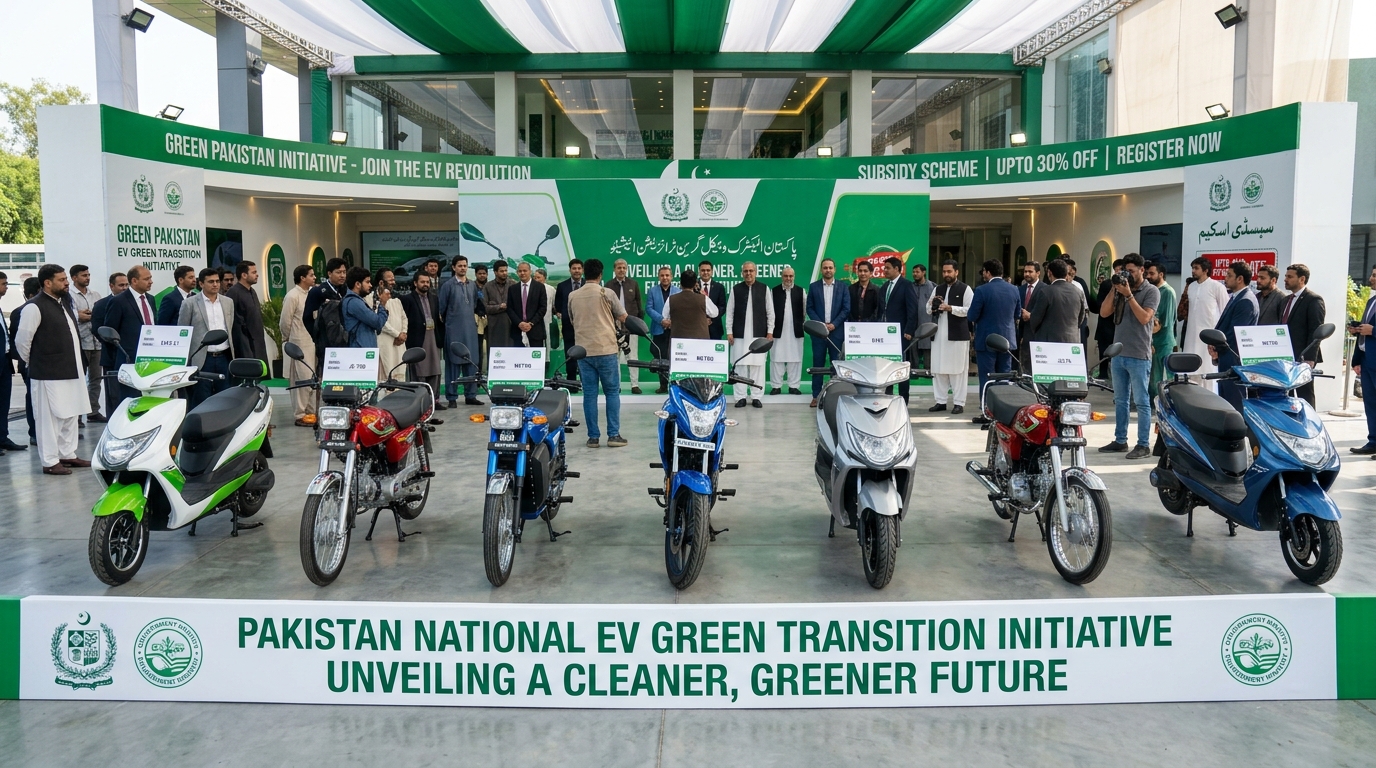
Official policy architecture and technical breakdown for the Federal PAVE scheme and Punjab Bank of Punjab (BoP) 0% markup program. Up to PKR 80,000 subsidy relief, 116,000 units target, and domestic power tariff economics.
Scheme Strengths
- Cuts daily commuting fuel expenses from PKR 7.05/km (Honda CD 70 baseline) down to PKR 1.36/km on domestic electricity.
- Bank of Punjab 0% markup structure removes commercial interest burden for qualified students and civil servants.
- Complete excise registration fee waiver across Islamabad and Sindh excise centers.
- 1% customs duty on CKD kits keeps post-subsidy retail prices near equivalent 70cc petrol motorcycles.
- Dedicated 25% female quota with PKR 0 down payment package expands student campus mobility.
Critical Program Realities
- Graphene battery packs experience 25% to 35% range degradation after 450 full discharge cycles; owners must then replace the pack.
- Daily home charging adds 75 to 90 kWh monthly and increases slab escalation risks for meters near the 200-unit threshold.
- Rear hub motors with IP65 water ratings risk hall sensor failure if operated in standing rainwater above 250 mm axle depth.
- Lower second-hand cash liquidity in open bazzars compared to traditional 70cc and 125cc petrol motorcycles.
Electric Powertrain Architecture & NEPRA Tariff Economics
Direct Brushless DC (BLDC) hub motors vs internal combustion drivetrains, battery chemistry dynamics, and monthly meter load calculations.
Electric Hub Motors vs 70cc Internal Combustion
Electric two-wheelers in the PAVE program utilize brushless direct current (BLDC) motors integrated directly into the rear wheel hub or mounted centrally with belt reduction. A 1200W to 2000W BLDC motor eliminates the mechanical drag of pistons, crankshafts, clutch assemblies, and 4-speed gearboxes. Peak torque of 45 Nm to 65 Nm is available instantly from 0 RPM and delivers rapid off-the-line urban response compared to the 5.0 Nm torque curve of a 72cc 4-stroke petrol engine.
Battery Chemistries: Graphene vs Lithium Iron Phosphate (LFP)
Approved manufacturers supply two primary battery chemistries:
| Battery Chemistry | Nominal Voltage & Capacity | Cycle Life (to 70% SoH) | Pack Weight | Estimated Replacement Cost |
|---|---|---|---|---|
| TTFAR Graphene (Lead-Carbon) | 72V 26Ah – 38Ah (1.87 – 2.73 kWh) | 400 – 600 Cycles | 35 – 44 kg | PKR 45,000 – 65,000 |
| LFP (Lithium Iron Phosphate) | 72V 30Ah – 36Ah (2.16 – 2.59 kWh) | 2,500 – 3,500 Cycles | 14 – 18 kg | PKR 110,000 – 145,000 |
NEPRA Domestic Electricity Tariff Math & Charging Costs
Charging a 72V 30Ah battery pack (2.16 kWh storage capacity) requires approximately 2.54 kWh of grid electricity factoring in charger conversion losses (85% efficiency). At the NEPRA non-protected domestic base tariff rate of PKR 38.00 per unit (kWh), a full recharge costs exactly PKR 96.52. In real city driving conditions yielding 75 km of range, the direct electricity energy cost is PKR 1.28 to PKR 1.36 per kilometer.
Real-World Performance & Range Telemetry
Tested acceleration curves, speed thresholds, solo vs pillion range decay, and regenerative braking recapture.
Solo vs Passenger Load Telemetry
| Vehicle Model & Battery Spec | Motor Power | Solo Rider Range (75 kg) | With Pillion Range (+80 kg) | Incline Climbing (Flyovers) |
|---|---|---|---|---|
| Yadea E8S Pro (72V 38Ah) | 2000W Hub | 115 – 125 km | 80 – 90 km | 15° Gradient (Maintains 42 km/h) |
| Evee C1 Pro (72V 30Ah LFP) | 1200W Hub | 75 – 85 km | 55 – 62 km | 12° Gradient (Maintains 34 km/h) |
| Metro T9 (72V 32Ah) | 1200W Hub | 80 – 90 km | 58 – 65 km | 12° Gradient (Maintains 35 km/h) |
| MS Jaguar E-70 (72V 30Ah LFP) | 1500W Hub | 80 – 95 km | 60 – 70 km | 14° Gradient (Maintains 38 km/h) |
| Vlektra Velocity 180 (72V 36Ah LFP) | 2000W Hub | 120 – 150 km | 90 – 110 km | 16° Gradient (Maintains 48 km/h) |
| Jolta JE-70D (72V 20Ah Dry) | 1000W Hub | 60 – 70 km | 42 – 48 km | 10° Gradient (Speed drops to 28 km/h) |
30-Point Technical Specification Matrix
Engineering Development Board (EDB) certified electric motorcycles eligible for federal and provincial subsidies.
3-Year / 45,000 km Total Cost of Ownership (TCO)
Real-world financial audit: Electric 72V commuter vs standard 70cc petrol motorcycle under Pakistan fuel and tariff prices.
| Expenditure Category | Honda CD 70 Petrol (PKR) | Electric 72V 30Ah (Post-Subsidy) | Difference / Commuter Variance |
|---|---|---|---|
| Initial Purchase Price | PKR 157,900 | PKR 160,000 | +PKR 2,100 (EV initial outlay) |
| Excise Registration & Number Plate | PKR 7,500 | PKR 3,500 | -PKR 4,000 (Subsidy waiver) |
| Total Fuel / Electricity (45,000 km) | PKR 252,000 (900 Liters @ PKR 280) | PKR 61,128 (1,608 kWh @ PKR 38) | -PKR 190,872 (75.7% Energy Savings) |
| Engine Oil Changes (Every 1,000 km) | PKR 38,250 (45 changes @ PKR 850) | PKR 0 | -PKR 38,250 (Zero lubricants) |
| Carburetor Tuning, Spark Plugs & Filters | PKR 18,000 | PKR 0 | -PKR 18,000 (No engine tuning) |
| Battery Pack Replacement (At Year 2.5) | PKR 0 | PKR 55,000 (Graphene Refresh) | +PKR 55,000 (Battery replacement) |
| Tires, Tubes, Brake Pads & Drive Service | PKR 14,000 | PKR 14,000 | PKR 0 (Equal chassis wear) |
| GROSS 3-YEAR CASH OUTLAY | PKR 487,650 | PKR 293,628 | NET SAVINGS: PKR 194,022 |
Monthly Commuter Breakdown (30 km / Day)
A commuter traveling 30 km daily (900 km/month) spends PKR 6,345 per month on petrol and oil changes for a 70cc motorcycle. On an electric bike, monthly electricity charging costs PKR 1,224. This yields immediate in-pocket cash savings of PKR 5,121 every month.
Bank Installment Schedules & NADRA Application Portal
0% markup installment tables, eligibility criteria, and step-by-step registration workflow on official government portals.
Bank of Punjab (BoP) 0% Markup Monthly Installments
| Applicant Category | Down Payment | 12-Month Installment | 24-Month Installment | 36-Month Installment |
|---|---|---|---|---|
| Female Students (Subsidized Tier) | PKR 0 (100% Covered) | PKR 4,200 / mo | PKR 2,100 / mo | PKR 1,400 / mo |
| Male Students (Standard Tier) | PKR 14,000 – 25,000 | PKR 5,800 / mo | PKR 2,900 / mo | PKR 2,100 / mo |
| Salaried / General Public (Commercial) | PKR 35,000 (20% Down) | PKR 8,500 / mo | PKR 4,450 / mo | PKR 3,150 / mo |
Step-by-Step Online Application Workflow
- Portal Access: Navigate to the Federal portal (
pave.gov.pk) or Punjab portal (bikes.punjab.gov.pk). - CNIC Biometric Verification: Enter your 13-digit CNIC number for automated verification against the NADRA identity database.
- Credential Upload: Upload scanned copies of your motorcycle driving license or computerized learner permit, along with student ID card or employment proof.
- Model Selection: Select your desired electric motorcycle model, motor wattage, and battery chemistry from the approved OEM list.
- Financing Option: Select Bank of Punjab (BoP), National Bank of Pakistan (NBP), or outright upfront cash payment with subsidy voucher deduction.
- Scoring & Balloting: Automated verification calculates creditworthiness via State Bank of Pakistan e-CIB checks. Quota allocations process on a first-come, first-served or computerized balloting basis.
- Dealership Handover: Upon bank clearance, receive your digital delivery voucher and collect your registered vehicle from the authorized dealer.
Honest Flaws & Owner Watch
Real-world limitations, urban monsoon hazards, battery degradation cycles, and resale liquidity realities.
1. Urban Monsoon Rain & Hub Motor Water Wading Limits
Electric motorcycle rear hub motors feature IP65 water-ingress ratings, while battery enclosures carry IP67 protection. While resistant to heavy rain and road splashes, standing monsoon rainwater in cities like Karachi and Lahore poses severe risks. If standing water exceeds 250 mm (hub axle center), moisture penetrates the axle bearing seals, which causes stator plate oxidation and hall sensor burnout. Repairs require full motor disassembly or replacement.
2. Incline Speed Decay Under Two-Passenger Load
Models equipped with 1000W to 1200W hub motors experience noticeable speed reduction on steep highway flyovers when carrying a pillion passenger. When rider and passenger combined weight exceeds 155 kg, uphill speed drops from 50 km/h to 32 km/h. Commuters frequently carrying passengers should opt for 2000W motor variants.
3. Domestic Electricity Tariff Slab Escalation
Daily home charging adds roughly 75 to 90 kWh of consumption to a household monthly electricity bill. For households maintaining consumption under 200 units (billed at the protected rate of PKR 13.01 per unit), charging an EV can push total consumption above 200 units. Crossing this threshold shifts the entire household bill to the non-protected bracket (PKR 37.99 per unit) and increases the overall utility bill. Charging during off-peak hours or via solar net-metering mitigates this risk.
4. Second-Hand Market Resale Depreciation
Unlike standard petrol commuters like the Honda CD 70, which retain 80% to 85% of cash value across local motorcycle markets, electric bikes face 40% to 50% depreciation after 2 years. Used-bike buyers discount pricing heavily due to uncertainty surrounding battery State of Health (SoH).
Buying Decision Verdict & Frequently Asked Questions
Apply If You Want:
- Daily intra-city commutes under 60 km per day.
- Zero engine oil changes, spark plug replacements, or carburetor maintenance.
- Eligibility for Bank of Punjab 0% markup financing (Students and female riders).
- Rooftop solar net-metering or stable domestic off-peak charging access.
- Smooth, quiet, vibration-free urban commuting.
Skip If You Need:
- Daily intercity highway trips exceeding 80 km without intermediate charging.
- Instant cash liquidation in local second-hand markets.
- Frequent heavy cargo or dual-passenger hauling on steep gradients with small 1000W motors.
- Zero reserve funds for battery pack replacement at the 24 to 30 month mark.
Frequently Asked Questions
Applicants register directly on the official web portals: pave.gov.pk for the Federal PAVE program and bikes.punjab.gov.pk for the Punjab Bank of Punjab initiative. Submission requires CNIC biometric verification, driving license upload, student or employment credentials, and selection of an approved electric motorcycle model.
Yes, if your monthly consumption exceeds the 200-unit threshold. An electric bike consumes approximately 75 to 90 kWh per month when charged daily. If this volume lifts total meter consumption past 200 units, the billing rate increases from the protected tier (PKR 13.01/unit) to the non-protected tier (PKR 37.99/unit). Homeowners avoid this increase by charging through solar net-metered arrays or off-peak hours.
Graphene (Lead-Carbon) battery packs last 400 to 600 full charge cycles (roughly 18 to 24 months of daily use) before suffering a 25% to 35% range drop. A replacement 72V 30Ah Graphene pack costs PKR 45,000 to PKR 65,000. Lithium Iron Phosphate (LiFePO4) packs deliver 2,500 to 3,500 cycles (6 to 8 years), but initial replacements cost PKR 110,000 to PKR 145,000.
Electric motorcycles carry IP65 water-resistant rear hub motors and IP67 battery enclosures. Safe water-wading depth is limited to 250 mm (hub axle center). Driving through deep floodwaters submerging the rear axle risks bearing seal failure, hall sensor burnout, and motor short-circuits.
Both the Federal PAVE scheme and Punjab BoP initiative accept computerized motorcycle learner driving permits and permanent motorcycle licenses issued by provincial traffic police. The license must match the applicant's CNIC.
Late payments trigger a standard bank penalty fee per missed cycle and an adverse e-CIB credit rating notification to the State Bank of Pakistan. Continued non-payment allows the bank to repossess the electric motorcycle and recover outstanding dues under the loan agreement.