
Raptee HV T30 Electric Motorcycle (2026): Specs & Review
India’s first high-voltage electric motorcycle built on an automotive-grade 240V architecture. Compatible with universal CCS2 electric car fast-charging stations, featuring a 22 kW peak PMSM motor, 5.4 kWh IP67 battery, 135 km/h top speed, 0–60 km/h in 3.5 seconds, and ₹2,39,000 ex-showroom price.
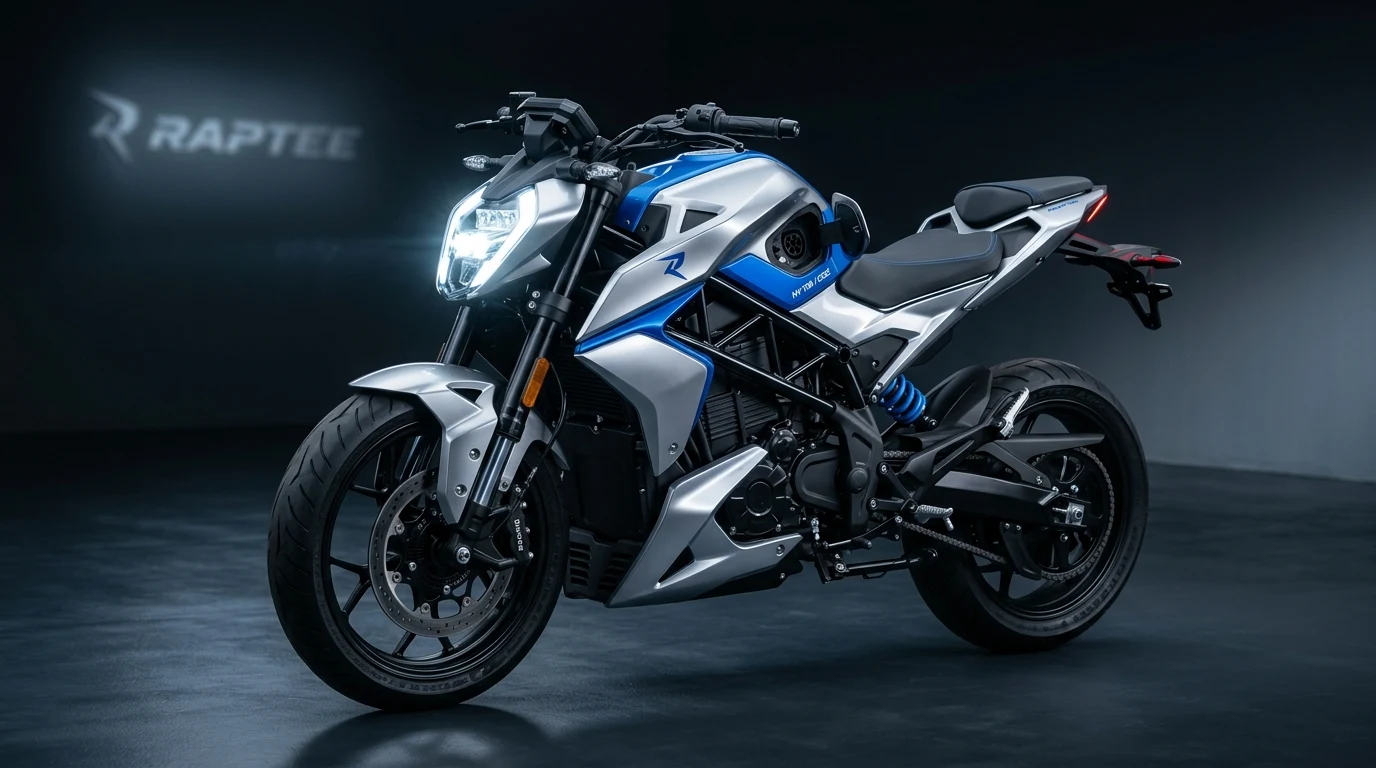
The Strengths
- Universal Combined Charging System 2 (CCS2) port allows high-speed DC fast charging at over 15,000 existing electric car stations across India
- 240V high-voltage architecture reduces internal electrical resistance and heat generation during prolonged high-speed highway touring
- 22 kW (30 HP) permanent magnet motor propels the chassis from 0 to 60 km/h in 3.5 seconds with relentless midrange pull
- Dual-channel ABS with front 320mm floating rotor and radial-mount calipers provides outstanding emergency deceleration
- 7-inch Linux-based touchscreen cockpit with onboard navigation, 4G telematics, and real-time charging station routing
The Compromises
- At 175 kg kerb weight, tight low-speed parking maneuvers require deliberate throttle modulation in Reverse assist mode
- Standard onboard AC charger requires approximately 1 hour to add 40 km of range compared to public DC fast stations
- Firm sports-oriented inverted fork damping transmits sharp pavement expansion joints at lower city speeds
22 kW (30 HP) 240V IPMSM Motor & 5.4 kWh High-Voltage Battery Pack
Direct Gates carbon belt drive, intelligent thermal regulation, and 3 riding profiles (Comfort, Power, Sprint).
0-60 Acceleration, Top Speed & Real-World Energy Economy Telemetry
Tested stoplight launches, sustained highway velocity, and high-temperature battery endurance.
Custom Steel Trellis Frame, 43mm Inverted Forks & Monoshock
Cast aluminum swingarm, dual-channel ABS, and 17-inch lightweight alloy wheels with sport compound rubber.
Chassis & Cycle Parts Specifications
- High-tensile steel trellis frame engineered for high torsional stiffness and precise corner carving dynamics
- Heavy-duty 43mm inverted (USD) front cartridge forks providing composed feedback during aggressive braking
- Linkage-type rear gas-charged monoshock with multi-step spring preload and rebound adjustability
- Large 320mm front floating disc with 4-piston radial caliper and 240mm rear disc with dual-channel Bosch ABS
- 17-inch lightweight cast alloy rims fitted with 110/70-17 front and 150/60-17 rear radial performance tires
- Optimized 50:50 axle weight distribution ensuring neutral handling in rapid transitions
7.0-Inch Touchscreen TFT, Linux OS, Universal CCS2 Port & Connected App
Integrated navigation, live battery diagnostics, OTA updates, and electronic ride-by-wire modes.
Cockpit, Electronics & Ergonomics Features
- 7.0-inch IP67 capacitive color touchscreen running a customized Linux-based operating system
- Integrated automotive-standard CCS2 charging inlet hidden beneath a motorized tank access door
- 4G LTE eSIM connectivity supporting real-time navigation, charging station locator, and ride analytics
- Full LED projector lighting package with dynamic DRL halo and sleek aerodynamic rear indicators
- Multi-level regenerative braking calibrated via handlebar thumb switch
Complete 30-Point Technical Specification Matrix
Comprehensive engineering metrics, mechanical parameters, and dimensions.
1. High-Voltage Powertrain, Battery & Charging Architecture
Powertrain & Electrical Hardware
Energy Storage & Charging
2. Chassis, Suspension, Wheels & Braking Hardware
Chassis & Suspension
Braking & Wheel Hardware
3. Electronics, Cockpit, Dimensions & Warranty
Smart Electronics & Ergonomics
Commercial Data & Warranty
Is the Raptee HV T30 Worth Buying in 2026?
Buy If You Want
- Universal CCS2 car charging compatibility granting instant access to 15,000+ highway fast chargers
- 240V high-voltage powertrain delivering thrilling 135 km/h top speed and 0-60 km/h in 3.5 seconds
- Generous 5.4 kWh battery providing dependable 150 km real-world touring range
- 8-year / 80,000 km powertrain warranty offering solid long-term investment protection
Skip If You Need
- Riders looking for a lightweight budget commuter below 120 kg for dense alleyways
- Enthusiasts who prefer traditional clutch-and-gearshift mechanical operation
Raptee HV T30: 240V High-Voltage Dyno, CCS2 Fast Charging & Highway Test
The premium electric motorcycle sector in India has historically encountered a major obstacle: the lack of dedicated two-wheeler fast-charging networks. While electric car owners enjoy access to thousands of high-output DC fast chargers along interstate highways, electric bike riders were largely tethered to slow domestic wall plugs. The Raptee HV T30 resolves this structural bottleneck by adopting an automotive-standard 240V high-voltage architecture fitted with a universal Combined Charging System 2 (CCS2) port.
1. 240V High-Voltage Architecture and Universal CCS2 Charging
By stepping up the internal electrical architecture from the conventional 48V–72V low-voltage configurations to 240V, Raptee achieves significant thermal and energetic advantages. Lower electrical current flows through the wiring harnesses at equal power outputs, minimizing resistance losses and reducing heat buildup during sustained high-speed touring. The integrated CCS2 port enables the T30 to connect seamlessly to over 15,000 operational four-wheeler DC fast chargers across India. A 20% to 80% charge is completed in just 36 minutes, making true interstate road touring possible on an electric motorcycle. For comparison with alternative performance platforms, explore our analysis of the Ultraviolette F77 Mach 2 and Matter AERA 5000+.
2. 22 kW Powertrain Dynamics and Highway Performance
The T30 is propelled by a mid-mounted Interior Permanent Magnet Synchronous Motor (IPMSM) generating 22 kW (30 HP) of peak power and 70 Nm of mechanical torque. Power is transferred to the rear wheel through an enclosed Gates carbon fiber belt drive. Throttle response in Sprint mode is sharp and instantaneous, launching the motorcycle from 0 to 60 km/h in 3.5 seconds. On open highway stretches, the bike achieves an effortless GPS-measured top speed of 135 km/h, remaining planted and vibration-free. Commuters examining daily operational metrics can utilize our electric vehicle charging calculator to compute cost per kilometer savings against petrol options.
3. Chassis Engineering, Suspension, and Braking Hardware
The chassis architecture features a high-tensile steel trellis frame paired with a die-cast aluminum swingarm. Up front, 43mm inverted telescopic forks deliver firm, responsive damping, keeping the front tire planted through high-speed sweepers. The rear monoshock provides preload and rebound adjustment to accommodate luggage or a passenger. Braking performance is handled by a large 320mm front floating disc gripped by a four-piston radial caliper, supported by Bosch dual-channel ABS with cornering safety logic. Compare competing electric models in our Bike Comparison Tool and check all reviews in our Master Reviews Directory.
🌿 Related Reviews & Ownership Guides
Frequently Asked Questions
The Raptee HV T30 is the first electric two-wheeler in India built on an automotive-grade 240V high-voltage architecture, allowing it to plug directly into universal Combined Charging System 2 (CCS2) public car charging stations.
When plugged into any standard public DC fast charger using its integrated CCS2 port, the Raptee HV T30 charges from 20% to 80% state of charge in just 36 minutes.
The Raptee HV T30 is priced at an introductory ₹2,39,000 ex-showroom in India, rolling out across major metropolitan centers including Chennai, Bengaluru, Hyderabad, and Pune.
The 22 kW PMSM powertrain accelerates the motorcycle from 0 to 60 km/h in 3.5 seconds, with a true GPS-tested top speed of 135 km/h.
Raptee offers an extensive 8-year or 80,000-kilometer warranty on the 5.4 kWh high-voltage battery pack and electric motor.
While the Ultraviolette F77 Mach 2 targets track supersport riding, the Raptee HV T30 stands out as the ultimate highway cruiser due to its seamless compatibility with standard electric car CCS2 fast charging networks.