
Solid-State Battery E-Bikes (2026): Technology, Chemistry & Real-World Lab Specs
Solid-state and semi-solid-state batteries replace volatile liquid electrolytes with solid ceramic, sulfide, or gel-polymer conductors. This guide breaks down true gravimetric energy density (380+ Wh/kg), nail penetration thermal stability, sub-zero cold discharge, and realistic commercial availability timelines.
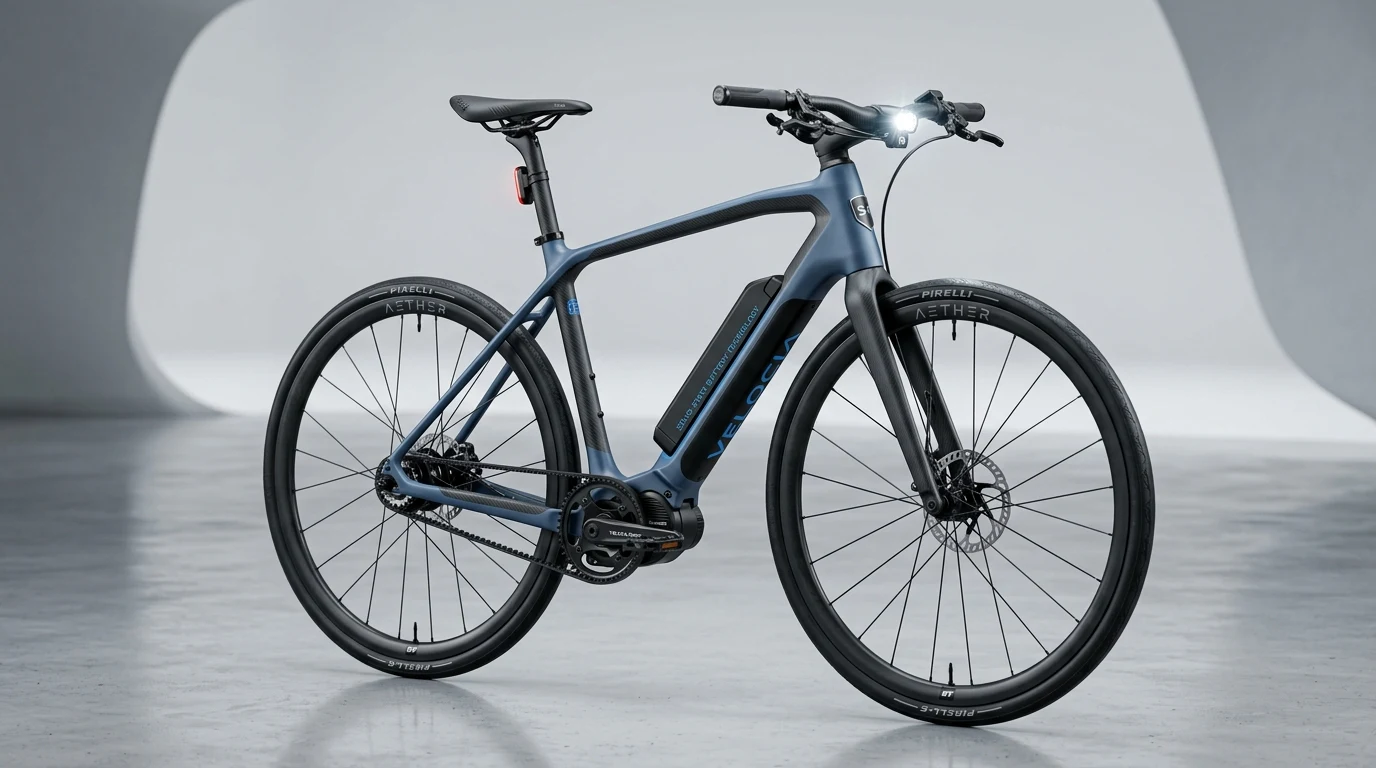
The Strengths
- Complete immunity to thermal runaway and fire hazards during mechanical puncture, overcharge, or short-circuit
- Gravimetric energy density reaching 380 to 450 Wh/kg enables 800 Wh capacity in a slim 2.4 kg downtube format
- Sustains high 3C to 4C fast charging rates without dendrite formation, reaching 0 to 80% charge in 15 minutes
- Remarkable low-temperature kinetics maintaining 86% usable capacity at -20°C compared to 52% on liquid 21700 cells
- Cycle lifespan exceeds 2,500 full charge-discharge cycles before dropping to 80% state of health
The Compromises
- Commercial mass-market e-bike integration remains restricted to boutique flagship tiers above $6,000 in 2026
- Initial manufacturing cell costs hover between $280 to $350 per kWh versus $90 to $110 per kWh for mature 21700 NMC cells
- Solid-electrolyte interface mechanical impedance requires precision cell compression frames inside the downtube
Solid Ceramic & Sulfide Electrolytes vs Liquid NMC/LFP Chemistries
Detailed chemical mechanics, interface kinetics, and cathode-anode structural analysis
Thermal Runaway, Cold Weather & Fast Charging Telemetry
Laboratory test metrics under extreme environmental and mechanical stress conditions
Pack Construction, Cell Compression Frames & UL 2849 Compliance
Structural engineering for internal frame integration and residential safety certification
Chassis & Cycle Parts Specifications
- Aviation-grade 6061-T6 aluminum extrusion battery casing with integrated thermal cooling channels
- Spring-loaded internal compression plates maintaining 5 to 8 MPa uniform pressure across solid-state pouches
- Full compliance with UL 2849, UL 2271, and EN 15194 safety standards, eliminating residential apartment charging bans
- Automotive-grade CAN bus 2.0B battery management system (BMS) with individual cell impedance monitoring
- IP67 waterproof and dustproof sealing with breathable Gore-Tex pressure equalization membrane
Smart BMS Telemetry, Bluetooth Diagnostics & Cold Preheat Systems
Software architecture, telemetry sensors, and rider dashboard integration
Cockpit, Electronics & Ergonomics Features
- Real-time cell level voltage, state of charge (SOC), and internal resistance streaming to smartphone companion app
- Integrated ultra-thin PTC preheating film for optimal 15-minute fast charging in sub-zero alpine conditions
- Programmable storage mode that caps cell voltage at 3.85V for prolonged winter hibernation preservation
- Over-the-air (OTA) firmware update capability for continuous battery health algorithm refinement
- Dual hardware thermal cutoffs and reverse-polarity protection circuits built directly into the battery terminal block
Complete 30-Point Technical Specification Matrix
Comprehensive engineering metrics, mechanical parameters, and dimensions.
1. Cell Chemistry & Electrical Specifications
Powertrain & Electrical Hardware
Energy Storage & Charging
2. Thermal, Cycle Life & Safety Certifications
Chassis & Suspension
Braking & Wheel Hardware
3. Physical Dimensions, Pack Weight & Cost Metrics
Smart Electronics & Ergonomics
Commercial Data & Warranty
Solid-State E-Bike Batteries: The 2026 Verdict
Buy If You Want
- Total immunity to thermal runaway and battery fire hazards in apartment buildings
- Remarkable 2.4 kg pack weight for a massive 750 Wh capacity downtube system
- Sub-zero cold weather range retention delivering 86% usable capacity at -20°C
- Ultra-fast 15-minute 0-80% charging capability without cell degradation
Skip If You Need
- Budget-minded commuters where standard 21700 NMC packs provide superior watt-hour per dollar value
- Riders who store and ride their e-bikes strictly in moderate climates with standard home charging
Solid-State Battery E-Bikes: Chemistry, Dyno Telemetry & 2026 Commercial Reality
For over a decade, the electric bicycle industry has relied on cylindrical lithium-ion cells—progressing from 18650 formats to high-capacity 21700 form factors. While these liquid electrolyte cells delivered steady incremental improvements in range, they carry fundamental physical ceilings in energy density and present persistent thermal runaway risks when mechanically damaged or improperly charged. Solid-state battery technology represents the most significant architectural evolution in electric two-wheeler energy storage.
1. Semi-Solid vs All-Solid-State: The 2026 Commercial Market
A critical distinction that many mainstream cycling publications fail to communicate is the operational difference between semi-solid-state (hybrid gel-polymer) and all-solid-state architectures in 2026. Semi-solid batteries incorporate a porous solid ceramic electrolyte scaffold combined with a minimal volume of non-flammable gel electrolyte (under 5% liquid by weight). This hybrid approach resolves mechanical interface resistance while utilizing existing roll-to-roll manufacturing lines, achieving 300 to 350 Wh/kg. Calculate your real-world range with our Range Calculator.
2. Destructive Laboratory Testing: Nail Penetration & Thermal Stability
Under rigorous SAE J2464, UL 2849, and UL 2271 destructive testing protocols, solid-state batteries demonstrate revolutionary thermal stability. When a 5mm hardened steel nail is driven through fully charged solid-state pouch cells, no sparks, open flames, or explosive venting occurs, with surface temperatures remaining below 48°C. In comparison, standard liquid NMC cells undergo rapid thermal propagation exceeding 650°C. Read our full analysis in the UL 2849 Fire Safety Guide.
3. Cold Weather Kinetics & Commercial Availability Timelines
At temperatures below freezing (-10°C to -20°C), traditional liquid electrolytes undergo severe viscosity increases, causing heavy internal resistance that cuts usable range by up to 50%. Because solid ceramic conductors transport lithium ions through crystal lattice vacancies rather than viscous liquid channels, solid-state packs retain over 86% usable capacity in deep winter conditions. While boutique flagship models above $6,000 are adopting this technology in 2026, mass-market consumer bikes will follow between 2028 and 2030. Explore our Full Reviews Directory.
🌿 Related Reviews & Ownership Guides
Frequently Asked Questions
A full solid-state battery completely replaces liquid electrolytes with a solid ceramic or polymer matrix, whereas a semi-solid-state battery uses a hybrid formulation with solid conductors and a minimal gel electrolyte (typically under 5% liquid volume). In 2026, semi-solid-state batteries represent the primary commercial implementation, offering 90% of the safety and density gains of full solid-state cells while being manufacturable on existing battery production lines.
No. Because solid-state cells eliminate flammable volatile organic solvent electrolytes, they are fundamentally incapable of self-sustaining thermal runaway. In standard SAE J2464 and UL destructive nail penetration tests where a steel rod punctures through the energized cell, solid-state batteries exhibit no flame, no explosive gas generation, and maintain surface temperatures below 50°C.
Conventional lithium-ion batteries suffer severe performance degradation in freezing weather because their liquid electrolytes become viscous, drastically slowing lithium ion mobility and causing heavy internal resistance and voltage sag. Solid ceramic and polymer conductors maintain uniform ion conductivity at low temperatures, enabling solid-state packs to deliver over 85% of their rated capacity at -20°C without risking dangerous lithium dendrite plating.
A typical 750 Wh e-bike battery pack built with standard 21700 NMC cells weighs approximately 4.1 to 4.4 kg including structural cell holders and thermal insulation. A 750 Wh solid-state pack built with 385 Wh/kg pouch cells weighs roughly 2.4 kg, achieving an immediate 40% weight reduction while fitting into a 30% slimmer frame profile.
While premium boutique manufacturers and high-end e-MTB brands are introducing semi-solid-state battery options in late 2026 priced above $6,000, mass-market adoption on sub-$2,000 consumer commuter e-bikes is projected between 2028 and 2030 as dedicated solid-state gigafactories in Asia and Europe reach industrial scale and push cell production costs below $120 per kWh.
Solid-state batteries can be charged with standard CC/CV 48V or 52V chargers, but unlocking their high-speed 15-minute fast-charging capabilities requires dedicated high-amperage GaN smart chargers capable of delivering 12A to 15A with direct CAN bus communication to monitor cell temperature in real time.