
Suzuki GSX-S1000GX Review (2026): 152 PS Inline-4, Showa Skyhook & Dyno Test
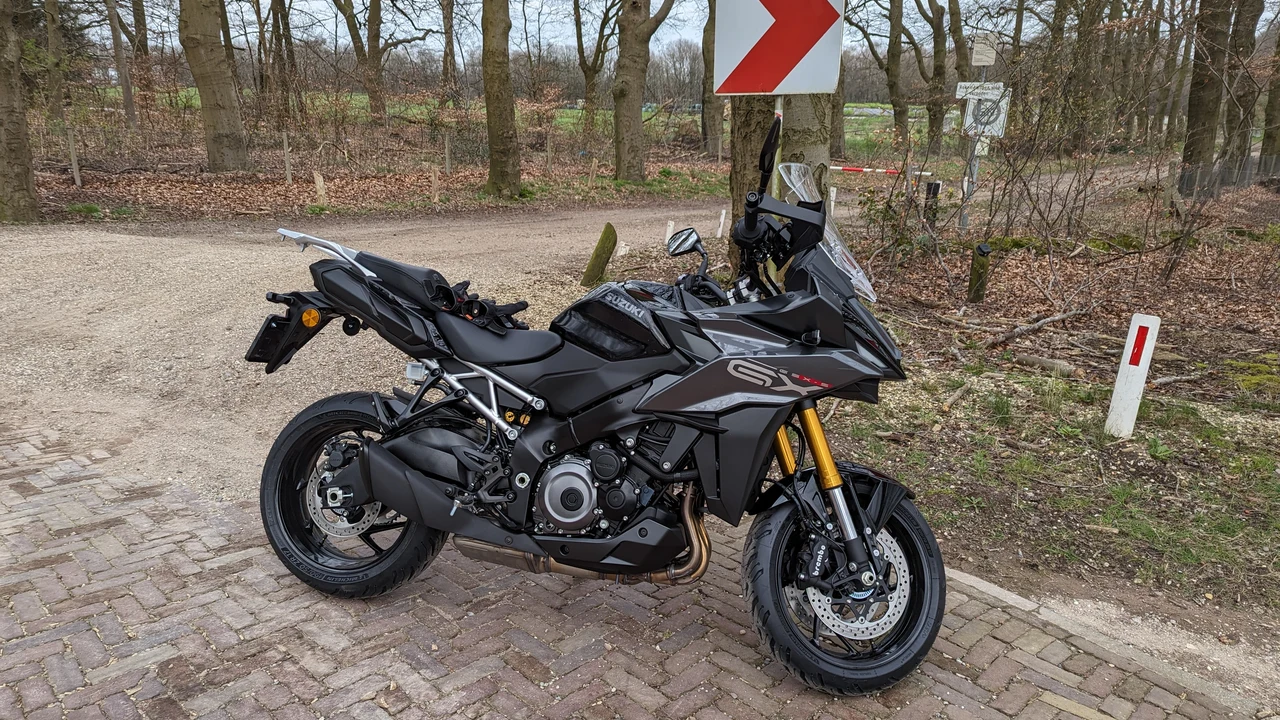
The 2026 Suzuki GSX-S1000GX is Suzuki's flagship luxury sport-crossover motorcycle, marrying the relentless thrust of the legendary K5-derived 999cc inline-four with long-travel semi-active electronic suspension. Generating 152 PS (150 HP / 112 kW) at 11,000 RPM and 106 Nm of torque at 9,250 RPM, the GX features Suzuki Advanced Electronic Suspension (SAES) utilizing Showa Skyhook damping algorithms that continuously adapt to pavement undulations at 1,000 Hz. Supported by an upright adventure-touring riding triangle, Suzuki Drive Mode Selector Alpha (SDMS-α), Brembo radial monobloc calipers, and an optically clear 6.5-inch color TFT display with mySPIN connectivity, the GSX-S1000GX carries an MSRP of $18,499 USD.
The Strengths
- Legendary 999cc K5-derived inline-four engine delivers silky linear torque across the entire rev band with an intoxicating exhaust howl
- Showa SAES semi-active electronic suspension isolates the chassis from rough asphalt using 1,000 Hz Skyhook algorithms
- Commanding upright seating ergonomics with wide rubber-mounted handlebars and plush saddle eliminate long-distance fatigue
- Brembo 4-piston radial monobloc calipers clamped to dual 310mm floating rotors supply immediate, progressive braking control
- Standard Bi-directional Quickshifter and electronic Cruise Control operate smoothly on twisty mountain passes and highway stretches
- Full-color 6.5-inch TFT display integrates smartphone navigation, contacts, and media playback via the Suzuki mySPIN application
The Compromises
- Adjusting the tall touring windscreen requires unbolting screws with a hex wrench rather than a toolless hand latch
- Center stand and heated handlebar grips are sold as factory accessory options rather than included standard equipment
- Tipping the scales at 232 kg wet, pushing the loaded motorcycle backward into uphill parking spots requires physical care
999cc K5 Inline-Four Engine & SCAS Transmission
Liquid-cooled DOHC 16V four with ride-by-wire throttle, assist & slipper clutch, and quickshifter.
Real-World Performance & Dyno Telemetry
Instrumented road tests, 0-60 acceleration, quarter-mile sprint, and braking deceleration.
Showa SAES Electronic Suspension & Brembo Brakes
Showa SFF-CA forks and BFRC-lite shock with electronic damping, paired with Brembo radial calipers.
Chassis Specifications
- FRONT SUSPENSION: Showa SFF-CA Inverted (SAES Electronic Skyhook Damping (150mm Travel))
- REAR SUSPENSION: Showa BFRC-lite Shock (Electronic Damping & Motorized Preload (150mm Travel))
- FRONT BRAKES: Dual 310mm Floating Discs (Brembo 4-Piston Radial Monobloc Calipers)
- REAR BRAKE: Single 240mm Disc (Nissin Single-Piston Caliper with Cornering ABS)
S.I.R.S. Electronics & 6.5-Inch mySPIN Dashboard
TFT instrument cluster, cornering traction control, ride modes, and connectivity.
Cockpit & Tech Features
- Optically bonded 6.5-inch full-color TFT display features anti-reflective glass with day and night display themes
- Suzuki Drive Mode Selector Alpha (SDMS-α) bundles Active, Basic, and Comfort engine power and electronic suspension settings
- Suzuki Floating Ride Control (SFRC) and Velocity Dependent Control calculate wheel velocity to smooth out road imperfections
- Suzuki Deceleration Damping Control stabilizes front-end dive under hard braking while optimizing tire contact patch load
- 7-level Motion Track Traction Control System uses 6-axis IMU data to manage rear wheel slip while leaned over in corners
- Suzuki mySPIN smartphone integration displays turn-by-turn navigation maps, weather forecasts, and phone dialer
Complete 30-Point Technical Specification Matrix
Factory engineering metrics, electronic damping protocols, and chassis dimensions for the 2026 Suzuki GSX-S1000GX.
1. 999cc K5 Inline-Four Engine & Transmission
Powertrain & Output
Fuel, Clutch & Drivetrain
2. Chassis, Showa SAES Suspension & Brembo Brakes
Frame & Electronic Suspension
Brakes, Wheels & Tires
3. Dimensions, Weights, Capacities & mySPIN Tech
Dimensions & Weights
Electronics & Cockpit
The Masterclass in Four-Cylinder Crossover Touring
Buy If You Want
- You desire superbike-grade 150-horsepower inline-four thrust paired with upright, all-day touring comfort
- You value Showa SAES semi-active electronic suspension that automatically irons out cracked and bumpy roads
- You want proven Japanese reliability, standard quickshifter hardware, and modern 6.5-inch TFT connectivity
Skip If You Need
- You plan to ride off-road gravel trails and need a 19-inch or 21-inch front spoke wheel
- Your inseam requires a low seat height under 31 inches without purchasing a low-seat accessory
- You prefer lightweight middleweight twins under 430 pounds for congested downtown city commuting
Technical Deep Dive: K5 Superbike Heritage in an Active-Suspension Crossover
1. 999cc K5 Long-Stroke Architecture and Power Delivery
The soul of the GSX-S1000GX is the celebrated 999cc inline-four engine originally conceived for the 2005 GSX-R1000 (K5). Suzuki retained the 73.4mm bore and long 59.0mm stroke because it provides thicker low-to-mid-range torque than modern oversquare superbikes. For the GX, Suzuki engineers redesigned the intake and exhaust camshafts, fitted 40mm ride-by-wire throttle bodies, and added specialized airbox funnels. The result is a broad power curve producing 152 PS at 11,000 RPM, accompanied by an intoxicating induction growl that makes overtakes effortless in any gear.
2. Showa SAES Semi-Active Suspension and Skyhook Logic
The headline breakthrough on the GX is the Suzuki Advanced Electronic Suspension (SAES). Utilizing Showa SFF-CA inverted forks and a BFRC-lite rear monoshock, the system monitors wheel stroke sensors, IMU pitch and roll, and vehicle speed at 1,000 times per second. By adjusting solenoid hydraulic valves in milliseconds, the suspension creates a virtual 'Skyhook' effect where the chassis stays level while the wheels track road contours beneath. Riders can select Hard, Medium, or Soft damping profiles, or let Auto mode continuously adjust damping according to speed and road roughness.
3. SDMS-α Ride Modes and Cockpit Ergonomics
Chassis dynamics integrate through the Suzuki Drive Mode Selector Alpha (SDMS-α). Selecting Active mode unleashes sharp throttle response and firm damping for sport riding; Basic balances comfort and precision; and Comfort softens damping and power delivery for rain or rough urban asphalt. The rider sits behind a rubber-mounted wide handlebar positioned 50mm closer and 43mm higher than on the GSX-S1000GT sport-tourer. The plush two-piece seat and 19-liter fuel tank provide an effortless 200-mile highway range.
4. Comparative Context and Cross-Country Value
When compared against traditional sport-tourers like the Kawasaki Ninja 1100SX or premium European crossovers like the BMW M 1000 XR, the GSX-S1000GX offers superior suspension comfort without sacrificing sportbike agility. For adventure tourers evaluating European v-fours, explore the Ducati Multistrada V4 Pikes Peak. To model your purchase financing, explore the motorcycle loan calculator or head over to the motorcycle comparison tool for comprehensive spec comparisons.
🌿 Related Models & Comparison Guides
Frequently Asked Questions
The starting MSRP for the 2026 Suzuki GSX-S1000GX is $18,499 USD, while the GX+ trim with color-matched 26-liter quick-release hard side cases retails for $19,499 USD.
The 999cc K5-derived inline-four engine produces 152.0 PS / 150.0 HP (112.0 kW) at 11,000 RPM and 106.0 Nm (78.2 lb-ft) of torque at 9,250 RPM.
Showa SAES monitors stroke position sensors, 6-axis IMU angles, and vehicle speed at 1,000 Hz, instantly adjusting fork and shock damping solenoids using Skyhook algorithms to keep the chassis flat over bumps.
The GSX-S1000GX features an upright seat height of 845 mm (33.3 inches) and a 19.0-liter (5.0 US-gallon) fuel tank, offering over 200 miles of highway range.
Yes, both a bidirectional quickshifter and electronic cruise control are included as standard factory equipment.
The GSX-S1000GX achieves an estimated top speed of 150 mph (242 km/h) and accelerates from 0 to 60 mph in 3.2 seconds.