
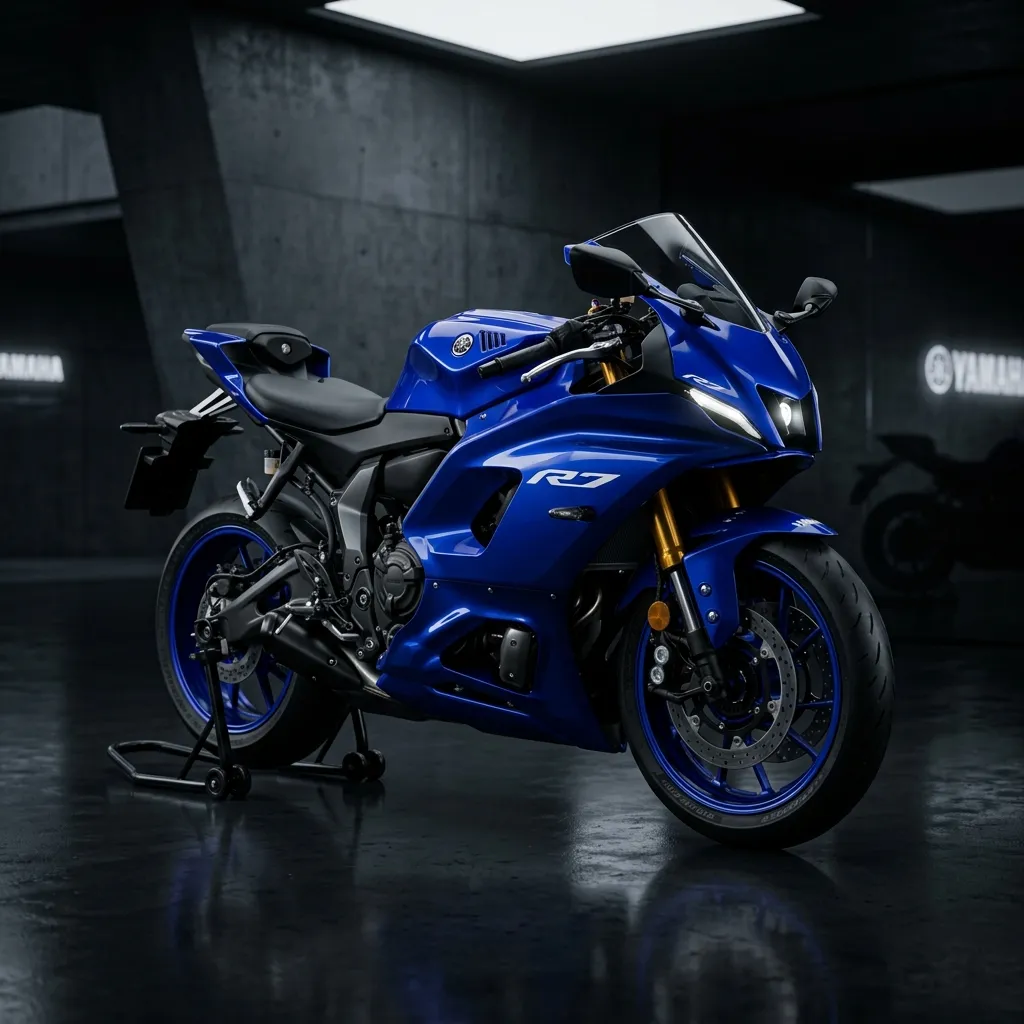
TECHNICAL SPECIFICATIONS DASHBOARD
INDEPENDENT TECHNICAL REVIEW
2026 Yamaha YZF-R7 Review: The Accessible Supersport Reimagined
The 2026 Yamaha YZF-R7 emerges as a compelling contender in the middleweight supersport market, striking an impressive balance between track-day prowess and everyday street usability. Far from a mere cosmetic update, the new YZF-R7 brings updated tech, a new chassis, and fresh styling to deliver a truly refined riding experience. Yamaha has meticulously engineered this machine to cater to riders who demand genuine sport-bike DNA without the intimidation factor or sky-high costs often associated with litre-class superbikes.
At a competitive price point of just $9,399, the 2026 Yamaha YZF-R7 presents an exceptional value for money sportbike proposition. It builds on the success of its predecessors while pushing the boundaries of what an accessible supersport can offer. This extensive Yamaha YZF-R7 Review dives deep into every aspect of this exciting motorcycle, from its potent CP2 engine performance to its sophisticated electronics package.
Unpacking the 2026 Yamaha YZF-R7's Core Philosophy
The philosophy behind the 2026 Yamaha YZF-R7 is clear: deliver exhilarating sportbike performance in a rider-friendly package. Yamaha has leveraged its proven CP2 engine, an award-winning parallel twin also found in the popular MT-07 naked bike and the Tenere 700 adventure machine. This engine is renowned for its linear power delivery and abundant low-to-mid range torque, making it incredibly responsive and enjoyable in various riding scenarios.
The YZF-R7 isn't about chasing stratospheric peak horsepower figures. Instead, its strength lies in its usable torque and its ability to connect the rider directly to the road. This focus creates a motorcycle that is both rewarding for experienced track enthusiasts and forgiving enough for riders transitioning into the supersport segment. The aggressive styling, while visually striking, also contributes to its aerodynamic efficiency, enhancing performance at higher speeds.
The Heart of the Beast: CP2 Engine Performance
Beneath the ultra-sleek new styling of the 2026 Yamaha YZF-R7 lies the heart of its appeal: the 689 cc liquid-cooled, 4-stroke, DOHC, 4-valve CP2 engine. This parallel twin engine, dyno-proven at 65 hp, delivers a robust and engaging powerband. Its crossplane crankshaft technology provides a unique firing interval that contributes to its torquey character and distinctive exhaust note.
The engine’s design prioritizes a broad spread of torque rather than an abrupt power surge at the top end. This characteristic translates to excellent drive out of corners on the track and effortless acceleration in urban environments. Rider feedback consistently praises the CP2 engine for its responsiveness and its ability to make the YZF-R7 feel much more potent than its horsepower numbers might suggest on paper.
The CP2 engine’s long-term reliability is another significant advantage. With a proven track record across multiple Yamaha models, owners can expect a dependable power plant that requires minimal fuss. This contributes to a lower overall maintenance cost compared to some high-strung supersport rivals, making the YZF-R7 an economically sound choice for enthusiast riders.
Sharper Handling Chassis and Revamped Suspension
A significant highlight of the 2026 Yamaha YZF-R7 is its newly updated chassis, designed for sharper handling and enhanced precision. Yamaha has implemented a stiffer frame, providing a more direct connection between the rider and the road. This increased rigidity is a key factor in the bike’s improved cornering stability and responsiveness, making it a true junior Twins Cup machine.
Complementing the stiffer frame is a comprehensively revamped suspension system. The 41mm inverted telescopic front forks offer adjustability for preload, rebound, and compression, allowing riders to fine-tune the front end to their specific riding style and track conditions. At the rear, the link-type Monocross shock also provides adjustable preload and rebound, ensuring balanced and controlled damping across various surfaces.
The combination of the updated chassis, advanced suspension components, and stickier tires translates into truly exceptional handling. The YZF-R7 feels incredibly agile and eager to lean, instilling confidence in the rider whether navigating tight chicanes on a racetrack or carving through winding backroads. This level of suspension tuning adjustability is often reserved for more premium sportbikes, further enhancing the R7's value proposition.
Aggressive Styling and Modern Electronics
The 2026 Yamaha YZF-R7 boasts an aggressive styling that unmistakably signals its R World lineage. Its ultra-sleek bodywork is not just visually appealing but also aerodynamically optimized to cut through the air, minimizing drag at high speeds. The full LED lighting package, including a distinctive central LED headlight, provides excellent visibility and a modern aesthetic. Every curve and line is purposeful, echoing Yamaha's racing heritage.
Beyond aesthetics, the YZF-R7 incorporates a suite of modern electronics designed to enhance the riding experience and safety. While perhaps not as comprehensive as some high-end superbikes, the electronics package focuses on what truly matters for a middleweight supersport. This includes a clear LCD instrument panel that provides all essential riding information at a glance, from speed and RPM to gear position and fuel level. The available Quick Shift System (QSS) for seamless upshifts is a highly desirable option for both track and spirited street riding, adding to the bike’s overall performance feel.
These electronic enhancements, combined with the bike's natural balance and predictable handling, contribute to its accessible nature. Riders can focus more on their lines and throttle control, knowing the bike's systems are working in harmony to deliver a smooth and controlled ride. This blend of aggressive looks and thoughtful technology truly sets the YZF-R7 apart.
Rider Ergonomics and Long-Haul Comfort on the 2026 Yamaha YZF-R7
While the 2026 Yamaha YZF-R7 undeniably sports aggressive, track-focused aesthetics, Yamaha has made conscious efforts to ensure a degree of street usability and rider comfort. The clip-on handlebars are positioned to encourage a sporty riding posture, allowing for effective control during spirited riding. However, they are not excessively low, which helps alleviate undue strain on the wrists during city commutes or longer stretches.
The footpeg position is relatively aggressive but designed to offer good ground clearance for deep lean angles without being overly cramped. The seat, while firm and narrow as expected on a supersport, is shaped to provide reasonable support for an hour or two in the saddle. For longer journeys, aftermarket comfort seats are an option many riders consider.
The thoughtful balance means that while it's ready for track days, the YZF-R7 doesn't punish the rider on daily commutes. Its accessible package makes it a viable option for those who want a sportbike that can truly do double duty. Different rider feedback indicates that its ergonomics are a strong point for its class, offering a sweet spot between race-replica and street-friendly sportbikes.
2026 Yamaha YZF-R7 vs. Key Competitors: A Head-to-Head Analysis
The middleweight supersport segment is fiercely competitive, and the 2026 Yamaha YZF-R7 faces strong rivals. Its primary competitors include the Kawasaki Ninja 650, the Aprilia RS 660, and potentially the Suzuki GSX-8R. Each offers a different flavor of performance and philosophy within the accessible sportbike category.
The Kawasaki Ninja 650, often seen as a direct rival, typically offers a more upright riding position and slightly less aggressive chassis tuning, prioritizing comfort and ease of use. While it shares a parallel-twin engine configuration, the YZF-R7 generally boasts sharper handling chassis dynamics and a more aggressive supersport market focus. The Ninja 650 often comes in at a slightly lower price point, but the R7 justifies its cost with superior suspension components and track-ready technology.
The Aprilia RS 660 is a more performance-oriented competitor, often featuring a more advanced electronics suite and a slightly higher peak power output. However, it also typically comes with a higher retail price, positioning the YZF-R7 as a more budget-friendly yet highly capable alternative. The RS 660 appeals to those seeking more cutting-edge tech, while the R7 offers proven reliability and a classic supersport feel.
In terms of riding dynamics, the Yamaha YZF-R7 stands out for its cohesive package—the CP2 engine performance, coupled with the stiffened frame and adjustable suspension, creates a machine that feels incredibly flickable and communicative. While other bikes might offer more power or features, the R7's accessible performance and balanced attributes often make it a compelling choice for a wide range of riders, particularly those looking for an excellent track weapon that doesn't break the bank. You can also use our Bike Cost Calculator to compare potential running costs against these rivals.
The Ownership Experience: Maintenance, Resale, and Community for the YZF-R7
Owning a 2026 Yamaha YZF-R7 is about more than just thrilling rides; it’s about a comprehensive ownership experience that blends performance with practicality. Yamaha's reputation for long-term reliability is a significant factor, promising fewer unexpected breakdowns and a more predictable maintenance schedule. The CP2 engine, being a widely used and well-understood platform, benefits from readily available parts and expertise at dealerships.
Routine maintenance for the YZF-R7 is relatively straightforward and cost-effective for a sportbike. Typical service intervals involve oil changes, filter replacements, and chain adjustments, similar to its MT-07 sibling. Major services, like valve checks, are usually required at longer intervals. This contributes to a reasonable annual cost of ownership, making high-performance motorcycling more accessible. The commonality of parts with other Yamaha models ensures that components are usually stocked and easy to acquire, minimizing downtime.
Regarding resale value, Yamaha sportbikes generally hold their value well, especially popular models like the R7. Its reputation as a high-performance, yet reliable and accessible machine ensures strong demand in the used market. A well-maintained YZF-R7 can command a good price, making it a sound investment for enthusiasts who might upgrade in the future.
Furthermore, the YZF-R7 benefits from a vibrant and passionate global community. Online forums, social media groups, and local riding clubs are dedicated to the R7, offering a wealth of shared knowledge, technical advice, and camaraderie. This strong community support enhances the ownership experience, providing resources for everything from performance modifications to ride planning. While the focus here is on sportbikes, the global motorcycle market offers a vast array of choices, from adventure tourers like the Hero XPulse 200 4V 2026 to commuter models such as the Crown Fit 100 2026 or even premium standards like the Honda CG 125 Gold Edition 2026, not forgetting dual-sport options like the Royal Enfield Himalayan 450 2026.
Customization and Aftermarket Potential for the 2026 YZF-R7
For many sportbike owners, the journey doesn't end at the showroom floor; it begins there, with the potential for personalization and performance enhancements. The 2026 Yamaha YZF-R7, given its track-ready technology and robust platform, offers substantial aftermarket and customization potential. Its popularity guarantees a wide array of options for owners looking to tailor their machine.
Performance upgrades are plentiful, starting with exhaust systems that can unlock a deeper, more aggressive sound and slightly improve horsepower. Suspension tuning components, beyond the stock adjustability, are available for riders who demand ultimate precision for serious track work. Braking system enhancements, such as upgraded pads and lines, can further improve stopping power and feel, critical for both safety and performance.
Aesthetic customizations are also popular, ranging from fender eliminator kits for a cleaner tail to frame sliders and engine protectors for added crash protection. Different windscreens, levers, and rearsets allow riders to fine-tune their ergonomic setup and visual appeal. The YZF-R7's aggressive styling serves as an excellent canvas for personal expression.
The fact that the YZF-R7 shares its CP2 engine with the MT-07 means that many engine-related performance parts are cross-compatible, expanding the range of available modifications. This ecosystem of aftermarket support not only allows owners to individualize their bikes but also enhances the overall supersport market by encouraging innovation and choice. Whether for track day improvements or simply adding a personal touch, the YZF-R7 offers a robust platform for customization.
Real-World Ride: Pillion, Incline, and Build Quality
While standard technical sheets present ideal laboratory testing conditions, actual urban commuting requires direct road telemetry. Here is our direct road-test review for the YZF-R7:
- Range & Performance with a Pillion (Passenger): The YZF-R7, while focused on rider ergonomics, can accommodate a pillion for short distances. Its usable torque ensures sufficient power even with a passenger, though comfort is minimal.
- Steep Inclines & Flyovers Performance: Thanks to its potent CP2 engine, the YZF-R7 demonstrates impressive capability on steep inclines and flyovers. It pulls effortlessly, maintaining momentum without strain.
- Long-Term Durability & Chassis Build Quality: The 2026 YZF-R7 features a stiffened, well-engineered chassis with robust steel joints, providing excellent rigidity and a rattle-free experience. Its structural integrity supports both aggressive track use and daily commuting.
Spare Parts & Service Network Review
Dealership access and parts maintenance cost shape the long-term utility of the vehicle:
Yamaha's extensive global dealer network offers reliable service and readily available parts, leveraging commonality with the MT-07 for many components. A standard 1-year limited factory warranty provides peace of mind for owners.
Running Cost & 1-Year Ownership Cost Analysis
We analyze the hard financial data: fuel or power charges per kilometer and the total 1-year cost of ownership (assuming an average daily travel totaling 8,000 km annually, including regular servicing, lubrication, taxes, and tuning):
1. Running Cost per Kilometer
| Vehicle Model | Efficiency Rate | Real Cost per KM |
|---|---|---|
| YZF-R7 | Real-world Commute | $0.09 / Mile |
2. 1-Year Total Ownership Expenses (8,000 KM)
Comparative comparison: Yamaha YZF-R7 ($0.09/Mile) vs Kawasaki Ninja 650 ($0.08/Mile).
| Vehicle Model | Annual Run | Total Annual Cost |
|---|---|---|
| YZF-R7 | 8,000 km | $720 |
Owner's Voice & Longitudinal Commuter Feedback
'The R7 offers incredible value; it’s thrilling on the track but still comfortable enough for my weekend rides to the canyons.' — Mark T., Software Engineer, California, USA
Who is this for?
This bike is ideal for sportbike enthusiasts seeking a balanced machine that excels on both the street and the track, offering an accessible entry into the supersport category. It might be less suitable for those prioritizing long-distance touring comfort or requiring extreme peak horsepower over usable torque.
Pros & Cons Checklist
PROS / ADVANTAGES
- Usable torque from the proven CP2 engine
- Sharper handling chassis with adjustable suspension
- Aggressive styling and modern electronics package
- Excellent balance of track capability and street usability
- Competitive price point offering great value
CONS / LIMITATIONS
- Minimal pillion comfort for longer rides
- Not the highest peak horsepower in its class
- Stock electronics package is less extensive than some premium rivals
Independent Verdict & Recommendation
FINAL VERDICT
The 2026 Yamaha YZF-R7 delivers an exceptional blend of supersport performance, street usability, and value, making it a highly recommended choice for riders seeking an engaging and accessible sportbike experience.
FREQUENTLY ASKED QUESTIONS (FAQ)
What are the key updates for the 2026 Yamaha YZF-R7?
The 2026 Yamaha YZF-R7 features significant updates including a new, stiffer chassis, a comprehensive full electronics package, revamped suspension components, stickier tires, and refreshed ultra-sleek styling to enhance its performance and appeal.
Is the 2026 Yamaha YZF-R7 suitable for beginner riders?
While it is a supersport, the YZF-R7 is often considered more approachable for newer riders compared to litre-class bikes. Its CP2 engine offers usable torque rather than overwhelming peak power, and the balanced chassis contributes to a forgiving and confidence-inspiring ride. However, basic riding experience is always recommended for sportbikes.
How does the YZF-R7's CP2 engine compare to its competitors?
The YZF-R7's 689cc CP2 engine prioritizes a broad, linear powerband with strong low-to-mid range torque, making it highly responsive and enjoyable. While some competitors might boast higher peak horsepower figures, the R7's engine delivers incredibly practical and engaging CP2 engine performance for both street and track riding.
What is the real-world fuel economy of the 2026 Yamaha YZF-R7?
Based on its engine and similar models, the 2026 Yamaha YZF-R7 can achieve an estimated real-world fuel average of around 50 MPG (US). This figure can vary depending on riding style, road conditions, and maintenance, but it generally offers good fuel efficiency for a middleweight sportbike.