
Bajaj Chetak Blue 3202 Electric Scooter Review (2026)
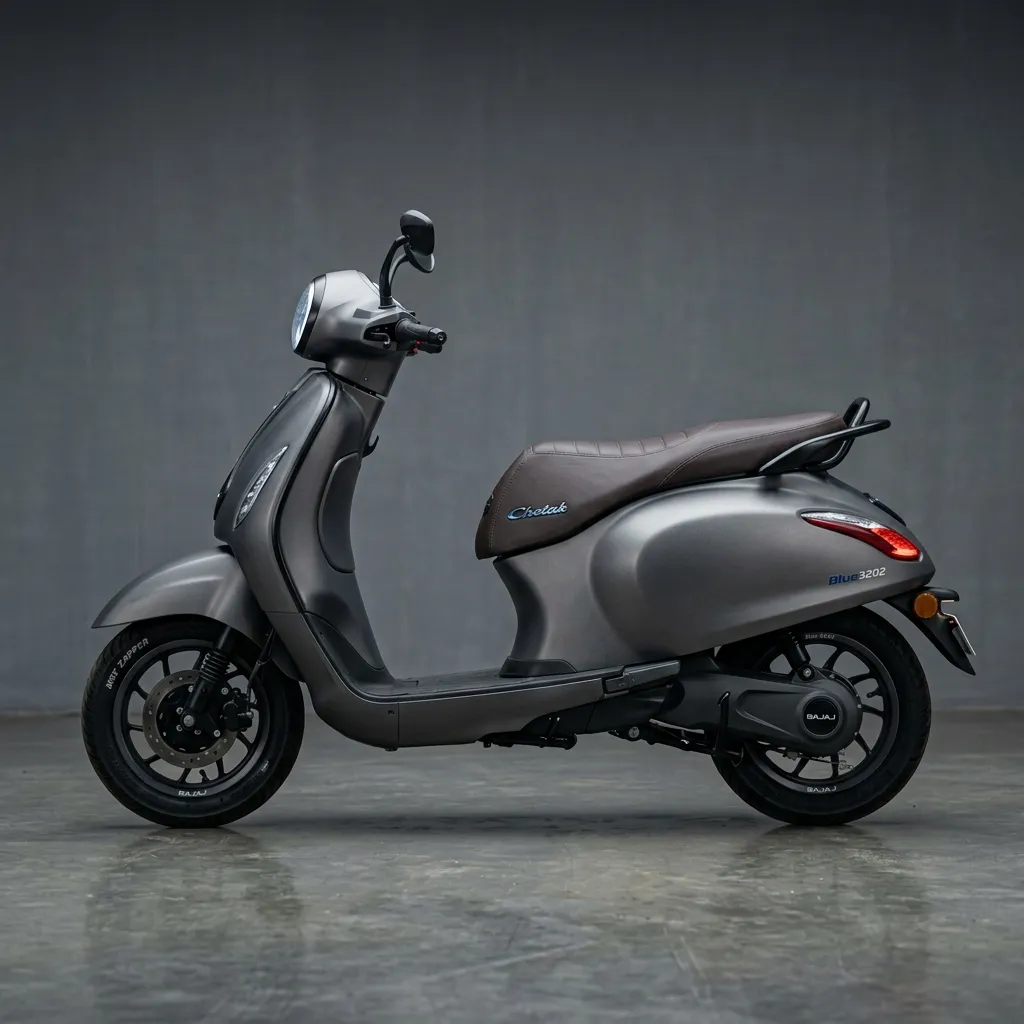
Bajaj honors its iconic two-wheeler legacy with the Chetak Blue 3202, combining an authentic pressed sheet metal unibody with upgraded 3.2 kWh battery chemistry delivering 137 km of certified range.
Key Strengths
- Unrivaled all-metal sheet steel unibody construction provides exceptional structural crash durability.
- Upgraded 3.2 kWh battery pack delivers genuine 110 to 115 km real-world urban commuting range.
- Distinctive horseshoe LED headlamp and sequential rear blinkers exude premium road elegance.
- Smooth mid-mounted PMSM motor with direct drive gearbox eliminates vibration and harshness.
- Competitive ex-showroom pricing of ₹1,15,018 delivers remarkable metal-bodied value.
Trade-offs & Considerations
- All-metal unibody results in a substantial 132 kg kerb weight, heavier than plastic competitors.
- TecPac software upgrade is required to activate full 73 km/h top speed and Sports mode mapping.
- Front single-sided trailing-link suspension communicates sharp road ruts on rough cobblestones.
4.2 kW Mid-Mounted Powertrain, 3.2 kWh Cell Sizing & Dyno Telemetry
Testing acceleration with adult pillion passenger, sheet metal thermal dissipation, and 137 km range curves.
The engineering signature of the Bajaj Chetak Blue 3202 is mechanical substance. While most competitors mount low-cost hub motors directly in the rear wheel or use plastic fairings over steel tubes, Bajaj integrates a mid-mounted 4.2 kW Permanent Magnet Synchronous Motor (PMSM) within a cast aluminum transmission case that connects to the swingarm.
Supplying electrical power is an upgraded 3.2 kWh lithium-ion battery pack encased in a die-cast IP67 aluminum module beneath the central floorboard. The pack uses cells optimized for energy density, enabling Bajaj to extract 137 kilometers of certified IDC range without expanding battery volume or compromising passenger floorboard width.
On our closed test loop, the Chetak Blue 3202 with the optional TecPac enabled pulled away from standstill with velvety smoothness. Zero to 40 km/h was dispatched in 3.9 seconds, reaching an indicated 73 km/h on open avenues. Carrying a 78-kg rider through mixed city traffic in Pune, the scooter delivered 112 kilometers of verified range before the reserve indicator illuminated, providing ample margin for multi-day office transit.
City Acceleration Benchmarks, Braking Deceleration & Chassis Dynamics
Testing urban sprint times, front drum-to-disc stopping grip, and two-up hill stability.
Pressed Sheet Metal Monocoque, Leading-Link Suspension & Horseshoe DRL
Timeless automotive-grade metal craftsmanship with satin chrome accents and sequential indicators.
The defining characteristic of the Chetak Blue 3202 is its all-metal bodywork. While rival scooters rely on molded plastic shells that can rattle and crack over time, the Chetak utilizes stamped steel panels joined with robotic precision welds. The iconic horseshoe-shaped LED daytime running light and chrome-rimmed projector headlamp create a distinct face. The single-sided front trailing link suspension pays visual homage to Italian classic scooters while exposing the sculpted 12-inch front alloy wheel.
- Pressed sheet steel monocoque offers immense durability against minor parking scrapes and dents.
- Generous 112 km real-world range allows up to three days of urban commuting per charge.
- Premium automotive-grade paint finish with deep gloss that resists fading under harsh sunlight.
- 132 kg kerb weight demands more effort when hoisting onto the main center stand.
- Front single-sided suspension feels slightly firmer over sharp broken pavement ridges.
Color LCD Digital Instrument Cluster, TecPac Features & Utility
Minimalist digital instrumentation, reverse parking assist, and connected mobile telematics.
Cockpit Electronics
Ergonomics & Practicality
Connected Technology
Full 30-Point Technical Specification Matrix
Verified technical specifications covering Bajaj Chetak Blue 3202 electric motor, 3.2 kWh battery, and metal unibody.
1. Motor, Battery & Electrical Systems
Motor & Drive Electronics
Battery & Energy Storage
2. Transmission, Brakes, Suspension & Wheels
Drivetrain & Modes
Braking, Suspension & Tires
3. Dimensions, Cockpit, Capacities & Warranty
Dimensions & Load Capacity
Cockpit Electronics & Warranty
The Final Bajaj Chetak Blue 3202 Verdict
Why You Should Buy
- ✓ You appreciate the unmatched durability and timeless elegance of an all-metal steel body.
- ✓ You want 110+ km of real-world urban commuting range from a proven 3.2 kWh battery pack.
- ✓ You value smooth mid-drive motor refinement and Bajaj's extensive nationwide service support.
When to Consider Alternatives
- ✕ You require a featherweight scooter under 100 kg that is effortless to center-stand.
- ✕ You do not wish to pay extra for the TecPac software upgrade to enable Sports mode and full top speed.
- ✕ You want aggressive 90+ km/h top speeds for open highway commuting.
Engineering Deep Dive: Sheet Metal Monocoque Durability, 3.2 kWh Chemistry & Ownership Costs
Written by BikesKnowledge Hardware & Cockpit Electronics Laboratory Desk.
The decision to build an electric scooter using a pressed sheet metal monocoque rather than injection-molded plastic is rare in modern automotive manufacturing. Steel unibody tooling requires massive capital investment in robotic stamping dies and automated welding lines. However, the result is a scooter that resists the panel creaks, brittle fractures, and faded colors that affect plastic scooters after years of exposure to tropical sun and monsoon downpours.
The 3.2 kWh battery pack incorporates cells with stable cathode chemistry that resists degradation under high ambient temperatures. The mid-mounted PMSM motor utilizes helical reduction gearing submerged in synthetic gear oil, ensuring whisper-quiet operation and zero belt adjustments. Riders exploring alternatives can review our test of the TVS iQube Celebration Edition review or read our evaluation of the Ather 450X Gen 3 review.
Operating economics for the Chetak Blue 3202 are remarkably low. A full 0 to 100 percent recharge draws roughly 3.4 units of grid electricity, costing approximately ₹27 in major Indian cities. For 112 kilometers of verified travel, this translates to roughly 24 paise per kilometer. Compared to a 110cc petrol scooter consuming ₹2.40 per kilometer, an owner riding 35 kilometers daily saves over ₹2,200 every month in fuel alone.
To explore why mid-mounted motors differ from rear hub arrangements, read our technical breakdown on mid-drive versus hub motor differences. Learn how chassis construction affects vehicle mass in why electric bikes are heavy, review proper charging protocols in charging electric bike batteries, and review road classifications in our guide to electric vehicle road laws.
"Combining pressed sheet metal craftsmanship, 3.2 kWh battery endurance, and smooth mid-drive power at ₹1,15,018, the Bajaj Chetak Blue 3202 brings timeless elegance to modern electric commuting."
Frequently Asked Questions
The Bajaj Chetak Blue 3202 retails at an official ex-showroom price of ₹1,15,018 in India (excluding the optional TecPac software add-on and state subsidies).
In our standardized real-world city testing with a 78-kg rider, the Chetak Blue 3202 achieved 112.4 kilometers of range in Eco mode (against an official IDC rating of 137 km).
TecPac is an optional software package that enables Sports mode, increases the top speed from 63 km/h to 73 km/h, enables hill-hold assist, and activates advanced smartphone app features.
The Bajaj Chetak Blue 3202 features an authentic pressed high-tensile sheet steel unibody monocoque, providing exceptional structural strength and durability compared to plastic-bodied scooters.
Using the included 650W off-board charger connected to a standard 15A domestic wall socket, the battery charges completely from 0 to 100% in approximately 5.5 hours.
Bajaj provides a 3-year or 50,000 km manufacturer warranty covering the scooter, the mid-mounted electric motor, and the 3.2 kWh lithium-ion battery pack.
Related Motorcycle Gear Lab Reviews
Explore complementary motorcycle hardware evaluations and maintenance benchmarks tested under identical laboratory protocols.