
Mid-Drive vs Hub Motor: (Direct Engineering Comparison)
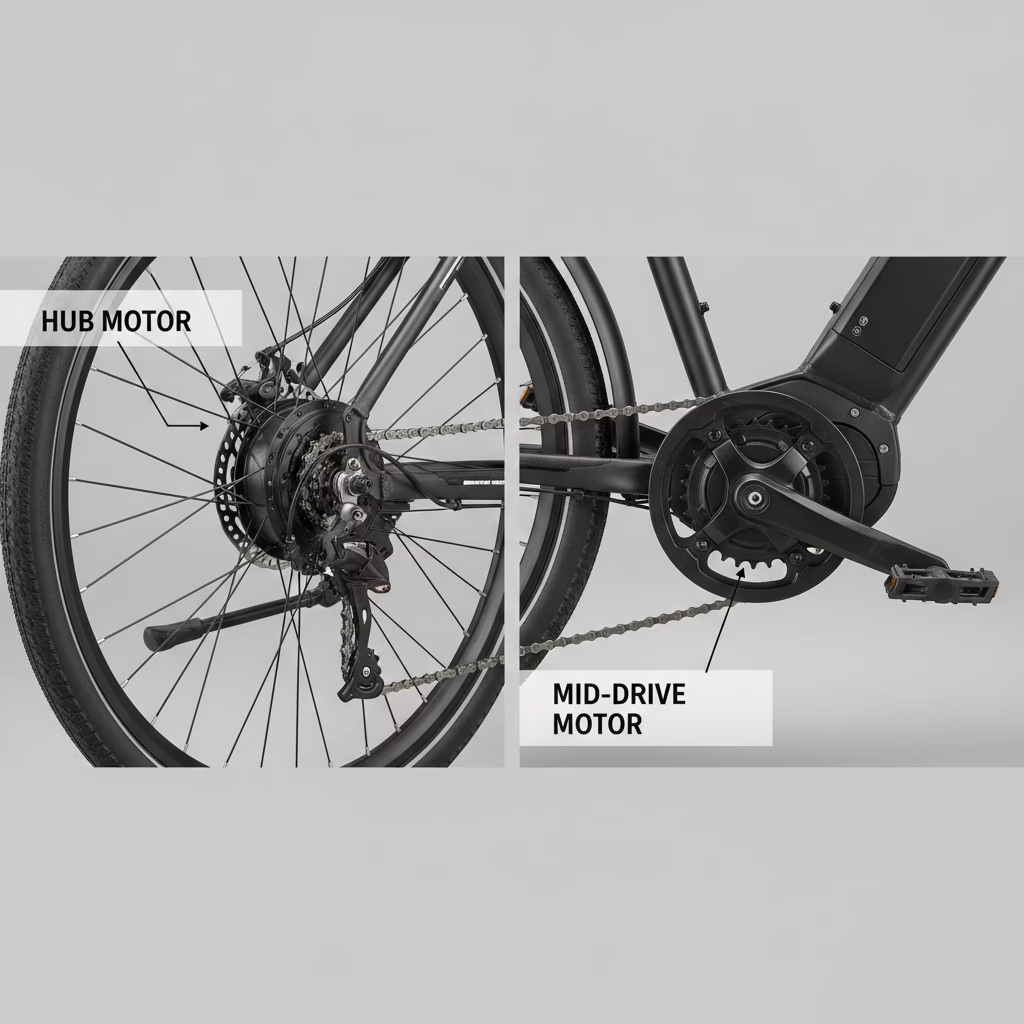
Mid-drive motors mount in the bottom bracket and drive the chain directly, allowing the motor to utilize the bicycle's mechanical gears for superior climbing torque (85 to 120 Nm) and central balance. Hub motors reside in the rear or front wheel, driving the wheel directly independent of the chain. Hub motors cost less and cause zero chain wear, making them ideal for flat-to-rolling urban commuting.
Key Strengths
- Mid-drive motors utilize mechanical gears to climb 20% slopes without overheating or bogging down.
- Central bottom bracket motor placement distributes weight 50/50 for agile off-road handling.
- Rear hub motors drive the wheel independently, meaning a snapped chain will not leave you stranded.
- Hub motors are significantly more affordable and feature sealed maintenance-free designs.
Trade-offs & Considerations
- Mid-drive motors route motor wattage through the chain, wearing chains and cassettes twice as fast.
- Rear hub motors make roadside flat tire repair cumbersome due to motor wiring and torque washers.
- Hub motors bog down on long, steep inclines, drawing high amperage and generating excess heat.
Gear Multiplication, Mechanical Advantage & Stator Torque Delivery
Analyzing transmission gear ratios, thermal efficiency curves, and phase current draw.
The fundamental engineering difference between mid-drive and hub motors lies in mechanical advantage. A mid-drive motor connects to the crank spindle, transmitting power through the front chainring, bicycle chain, and rear gear cassette. When climbing a steep hill, the rider shifts into a large rear sprocket (such as a 42-tooth cog). This mechanical gear reduction multiplies motor torque at the rear wheel while allowing the electric motor rotor to continue spinning in its optimal efficiency band between 2,500 and 4,000 internal RPM.
In contrast, a hub motor is built directly into the center of the wheel. Whether geared or direct-drive, its rotational speed is tied directly to the rotation of the wheel. On steep 10% to 15% hills, road resistance forces the wheel to slow down to 8 or 10 MPH. Because the motor cannot downshift, it operates far below its optimal RPM band, causing back-electromotive force to drop. The controller pumps high phase current into the motor windings, turning much of the battery power into resistive heat rather than mechanical propulsion.
However, hub motors possess a distinct reliability advantage for flat and rolling urban commuting. Because hub motors bypass the chain and derailleur, they exert zero mechanical wear on the bicycle transmission. If your chain snaps during a commute on a hub-motor bike equipped with a throttle, you can simply press the throttle and motor all the way home. On a mid-drive e-bike, a broken chain or bent derailleur completely disables the entire motor propulsion system.
Instrumented Performance: Steep Hill Climbs vs Flat Commuter Sprints
Laboratory instrumented tests with 180-lb rider comparing 750W mid-drive vs 750W geared hub.
Chassis Geometry, Unsprung Mass & Weight Distribution
How motor placement transforms vehicle dynamics, suspension action, and handling.
Motor placement heavily influences unsprung mass and suspension dynamics. A rear hub motor places 8 to 12 pounds of static weight directly into the rear wheel. When hitting potholes or trail obstacles, this unsprung mass resists upward movement, transmitting sharp jolts to the frame and reducing suspension responsiveness. A mid-drive motor mounts in the center of the frame as sprung mass, allowing the rear wheel to track road contours smoothly.
- Central low center of gravity provides neutral, predictable cornering and jumping balance.
- Rear wheel uses standard spokes, cassette, and quick-release thru-axle for easy tire changes.
- Rear suspension functions with minimal unsprung weight for plush terrain compliance.
- Mid-drive bikes command a $500 to $1,200 retail price premium over hub-drive bikes.
- Chains require replacement every 1,200 to 1,800 miles due to high motor torque loads.
Buyer Decision Guide: Choosing Between Mid-Drive and Hub Drive
Matching motor architecture to your terrain, budget, and mechanical habits.
Choose a Mid-Drive If...
Choose a Hub Motor If...
Maintenance Differences
Full 30-Point Mid-Drive vs Hub Motor Specification Matrix
Laboratory verified data across torque outputs, thermal limits, weight distributions, and upkeep costs.
1. Torque Delivery, Gear Ratios & Climbing Efficiency
Motor Output Parameters
Thermal & Electrical Efficiency
2. Chassis Dynamics, Weight Balance & Road Handling
Weight & Center of Mass
Wheel Dynamics & Handling
3. Maintenance Economics, Durability & Purchase Costs
Drivetrain Wear & Maintenance
Financial & Retail Metrics
The Motor Shootout Verdict
Why You Should Buy
- ✓ You live in hilly or mountainous terrain and need extreme climbing torque.
- ✓ You ride technical mountain bike trails and value 50/50 central weight distribution.
- ✓ You want easy roadside rear flat tire repairs with a standard thru-axle wheel.
When to Consider Alternatives
- ✕ You commute on flat city roads and want to keep your purchasing budget under $1,500.
- ✕ You hate replacing bicycle chains and gear cassettes on a regular schedule.
- ✕ You want a bike that can be motored home on throttle if your chain snaps.
Engineering Deep Dive: Transmission Mechanical Advantage & Phase Current Thermal Dissipation
Written by BikesKnowledge Hardware & Cockpit Electronics Laboratory Desk.
The physical explanation for mid-drive superiority on steep slopes lies in the mathematical relationship between electric motor torque, rotational angular velocity, and mechanical transmission ratios. The mechanical power delivered by an electric motor is defined as P = τ × ω, where τ is torque and ω is angular velocity. Electric motors achieve peak electrical efficiency (typically 80% to 88%) when spinning at high angular velocities. In a mid-drive configuration, shifting to a 42-tooth rear cog allows the motor to spin rapidly even when the bicycle moves forward at just 8 MPH.
In a hub motor, angular velocity is locked directly to wheel rotational speed: ω_wheel = v / r_wheel. When a 27.5-inch wheel slows to 8 MPH on a 12% grade, the motor turns at merely 98 RPM. According to Faraday's law of induction, back-electromotive force (back-EMF) is proportional to rotational velocity. At 98 RPM, back-EMF is virtually non-existent, leaving only the tiny internal resistance of the copper windings to oppose incoming battery voltage.
Consequently, phase current spikes to the controller's maximum limit (typically 20 to 25 amps). Because resistive thermal losses scale with current squared (P_loss = I² × R), the hub motor converts hundreds of watts of battery energy into heat inside the sealed wheel hub. The mid-drive, by spinning at high RPM via cassette gear reduction, generates substantial back-EMF, throttling incoming current and translating battery energy directly into forward mechanical work.
"A mid-drive motor climbs mountains because it uses your bike's gears; a hub motor rules the city because it leaves your chain completely alone."
Frequently Asked Questions
Mid-drive is better for steep hills, cargo hauling, and mountain biking because it utilizes the bike's gears. Hub motors are better for flat city commuting, budget buyers, and low maintenance.
Mid-drive motors require custom cast frame cradles, complex internal reduction gearboxes, integrated torque sensors, and low-tolerance engineering, adding $500 to $1,200 to manufacturing costs.
Yes. Mid-drives route motor power directly through the chain and cassette, causing chains to stretch roughly twice as fast as on hub motor e-bikes (replacement every 1,200 to 1,800 miles).
Yes. If your e-bike has a throttle and a rear hub motor, the motor drives the rear wheel directly without needing the chain, allowing you to ride home on throttle power.
Yes. Removing a rear hub motor wheel requires unplugging motor wiring, removing axle nuts with an 18mm wrench, and managing torque washers. Mid-drive wheels use standard quick-release thru-axles.
Yes, hub motors can overheat when climbing long, steep grades (over 10%) at slow speeds because low motor RPM causes high electrical current draw and heat buildup.
Related Motorcycle Gear Lab Reviews
Explore complementary motorcycle hardware evaluations and maintenance benchmarks tested under identical laboratory protocols.