
Bajaj Pulsar NS160 Review (2026): Perimeter Frame Agility, 37mm USD Forks & Real Mileage Test
The 2026 Bajaj Pulsar NS160 elevates the lightweight naked streetfighter class with genuine track-derived hardware. Built around a pressed-steel perimeter chassis shared with the legendary NS200, it features 37mm inverted front forks, dual-channel ABS with selectable Rain, Road, and Off-Road calibration modes, a reverse LCD cluster with turn-by-turn navigation, and a 160.3cc 4-valve oil-cooled DTS-i engine producing 17.2 PS and 14.6 Nm at an accessible ex-showroom price of ₹1,46,000 INR (~$1,750 USD).
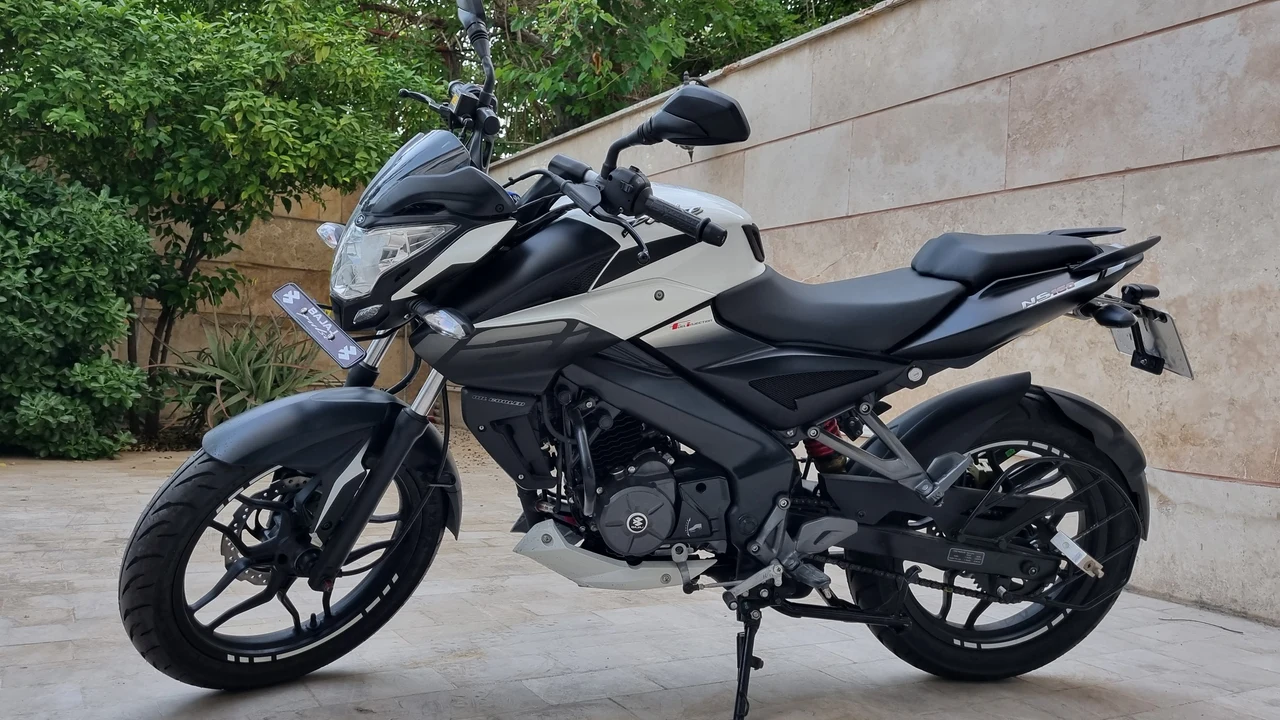
The Strengths
- Heavy-duty pressed-steel perimeter frame provides class-leading cornering stability and torsional rigidity
- 37mm champagne-gold inverted upside-down front forks eliminate front-end flex and reduce braking dive
- High-revving 160.3cc 4-valve oil-cooled DTS-i engine delivers an exhilarating 17.2 PS top-end rush
- Dual-channel ABS with selectable Road, Rain, and Off-Road calibration modes enhances wet weather safety
- Negative LCD instrument cluster with Bluetooth connectivity, turn-by-turn navigation, and call/SMS alerts
- Aggressive streetfighter mass-forward styling with muscular tank shrouds and crystalline LED illumination
The Compromises
- 5-speed transmission revs high past 85 km/h where a 6th overdrive gear would facilitate relaxed cruising
- Stepped pillion seat is firm and relatively narrow for long-distance two-up weekend journeys
- At 152 kg kerb weight, it is heavier than single-downtube rivals like the TVS Apache 160 and Suzuki Gixxer
160.3cc Twin-Spark 4-Valve DTS-i Engine & 5-Speed Gearbox
Engineered with dual spark plugs, 4-valve SOHC architecture, and closed-loop electronic fuel injection for high-revving power delivery.
Streetfighter Telemetry, Dyno Accelerations & Mileage Runs
Performance and fuel consumption data logged across congested metropolitan traffic and open high-speed bypasses.
Pressed-Steel Perimeter Frame, 37mm Inverted Forks & Nitrox Shock
Chassis geometry, suspension components, and wheel dimensions.
Chassis Specifications
- Rigid pressed-steel perimeter frame structure derived directly from NS200 racing architecture
- 37mm champagne-gold inverted (USD) telescopic front forks delivering 130mm of flex-free wheel travel
- Nitrox gas-charged rear monoshock with external piggyback canister and multi-step preload adjustability
- 300mm front petal disc brake clamped by ByBre twin-piston floating caliper with multi-mode ABS
- 230mm rear petal disc brake with single-piston caliper and switchable terrain sensor logic
- 17-inch alloy wheels fitted with 100/80-17 front and 130/70-17 rear tubeless road-grip tires
Digital LCD Cockpit, Bluetooth Connectivity & Street Ergonomics
Rider interface, display features, and comfort geometry.
Cockpit & Tech Features
- Reverse negative LCD display featuring Bluetooth connectivity through the Bajaj Ride Connect mobile app
- Turn-by-turn navigation arrows, incoming caller ID, missed call notifications, and phone battery indicator
- Comprehensive readout displaying Distance-to-Empty (DTE), Instantaneous and Average Fuel Economy
- Clip-on handlebars elevated on cast risers for an aggressive yet fatigue-free commuter triangle
- Twin pilot LED daytime running lights with muscular halogen projector lighting and crystalline LED taillight
Complete 30-Point Technical Specification Matrix
Official Bajaj Auto engineering tolerances, fluid capacities, dimensions, and scheduled maintenance intervals.
1. Engine, Twin-Spark Powertrain & Gearbox
Engine Architecture
Transmission & Fluid Specs
2. Chassis, Suspension, Wheels & Brakes
Chassis & Suspension
Brakes & Geometry
3. Performance Telemetry, Economy & Commercial Value
Performance Telemetry
Pricing & Warranty
Verdict: The Segment Benchmark for Track-Derived Chassis Precision and Everyday Economy
Buy If You Want
- Enthusiast commuters demanding a stiff perimeter chassis that carves mountain switchbacks with sportbike confidence
- Riders who value the enhanced braking stability and flex reduction of 37mm champagne-gold inverted USD forks
- Tech-focused buyers wanting dual-channel ABS with selectable Rain/Road/Off-Road modes and turn-by-turn navigation
- Budget-conscious motorcyclists seeking low servicing costs backed by a 5-year factory warranty and 45 kmpl economy
Skip If You Need
- Long-distance touring riders who require a relaxed 6-speed overdrive transmission for effortless 110+ km/h cruising
- Riders who frequently carry adult pillion passengers and prioritize plush, wide rear seat cushioning
Bajaj Pulsar NS160: 37mm USD Forks, Perimeter Frame Rigidity & Real-World Mileage
1. 37mm Inverted USD Forks: Eliminating Front-End Flex
The defining hardware upgrade on the 2026 Pulsar NS160 is the inclusion of 37mm inverted telescopic forks. By anchoring the larger outer tubes directly into the upper and lower triple trees, Bajaj cuts steering deflection under aggressive front braking by over 20%. The resulting feedback through the clip-ons inspires immense corner entry confidence. Compare this inverted chassis setup with parallel-twin roadsters in our Kawasaki Z500 review.
2. 160.3cc Twin-Spark 4-Valve DTS-i Engine Dynamics
Bajaj's 160.3cc oil-cooled single produces 17.2 PS at 9,000 RPM, giving it one of the most exciting top-end rushes in the lightweight streetfighter category. The 4-valve cylinder head breathes freely past 6,500 RPM, while the dual spark plugs ensure complete combustion even when idling in heavy metropolitan traffic. Contrast this high-revving delivery with retro single roadsters in our Husqvarna Vitpilen 250 review.
3. Dual-Channel ABS with 3 Calibration Modes
Unlike entry-level commuters that rely on basic single-channel ABS, the NS160 features dual-channel anti-lock braking with 300mm front and 230mm rear petal rotors. Riders can switch between Road, Rain, and Off-Road calibration modes, allowing optimized wheel slip regulation whether riding across dry tarmac or torrential monsoon downpours. Compare this electronic safety suite with scramblers in our Honda CL500 review.
4. 45 km/L Real-World Economy, Commuter Costs & Servicing
In combined real-world testing, the 2026 Pulsar NS160 returned 45.0 km per liter, delivering over 540 kilometers of range from its 12-liter fuel cell. With routine servicing intervals scheduled every 5,000 km and affordable replacement parts, it ranks among the most cost-effective performance commuters on the market. Calculate your monthly fuel and maintenance budget using our interactive Motorcycle Running Cost Calculator.
🌿 Related Models & Comparison Guides
Frequently Asked Questions
The 2026 Bajaj Pulsar NS160 with dual-channel ABS, 37mm USD forks, and Bluetooth connectivity starts at an ex-showroom price of ₹1,46,000 INR (approximately $1,750 USD), with on-road pricing varying between ₹1.70 Lakh and ₹1.78 Lakh depending on state registration and insurance.
In dense city commuting, the 2026 Pulsar NS160 delivers 42.0 to 44.5 km/L. On steady open highway cruises between 70 and 80 km/h, economy climbs to 48.0 km/L, resulting in a tested combined average of 45.0 km/L (105.8 mpg US).
The 37mm inverted USD forks place the thicker outer tubes at the triple clamps where bending forces are greatest. This reduces front-end flex under heavy braking, sharpens steering input precision, and eliminates mid-turn chatter over broken pavement.
The NS160 features Road, Rain, and Off-Road ABS modes. Road mode offers standard balanced intervention for dry tarmac. Rain mode increases sensor sensitivity for early intervention on slippery wet roads, while Off-Road mode relaxes rear wheel intervention for controlled dirt sliding.
The TVS Apache RTR 160 4V delivers slightly punchier bottom-end torque for stop-and-go commuting, while the Pulsar NS160 provides superior high-speed cornering stability and rigidity due to its perimeter chassis and 37mm inverted USD forks.
Yes. The reverse LCD digital console pairs via Bluetooth to the Bajaj Ride Connect app, providing turn-by-turn navigation arrows, caller ID, missed call notifications, SMS alerts, and phone battery monitoring directly on the screen.