Independent Technical Review
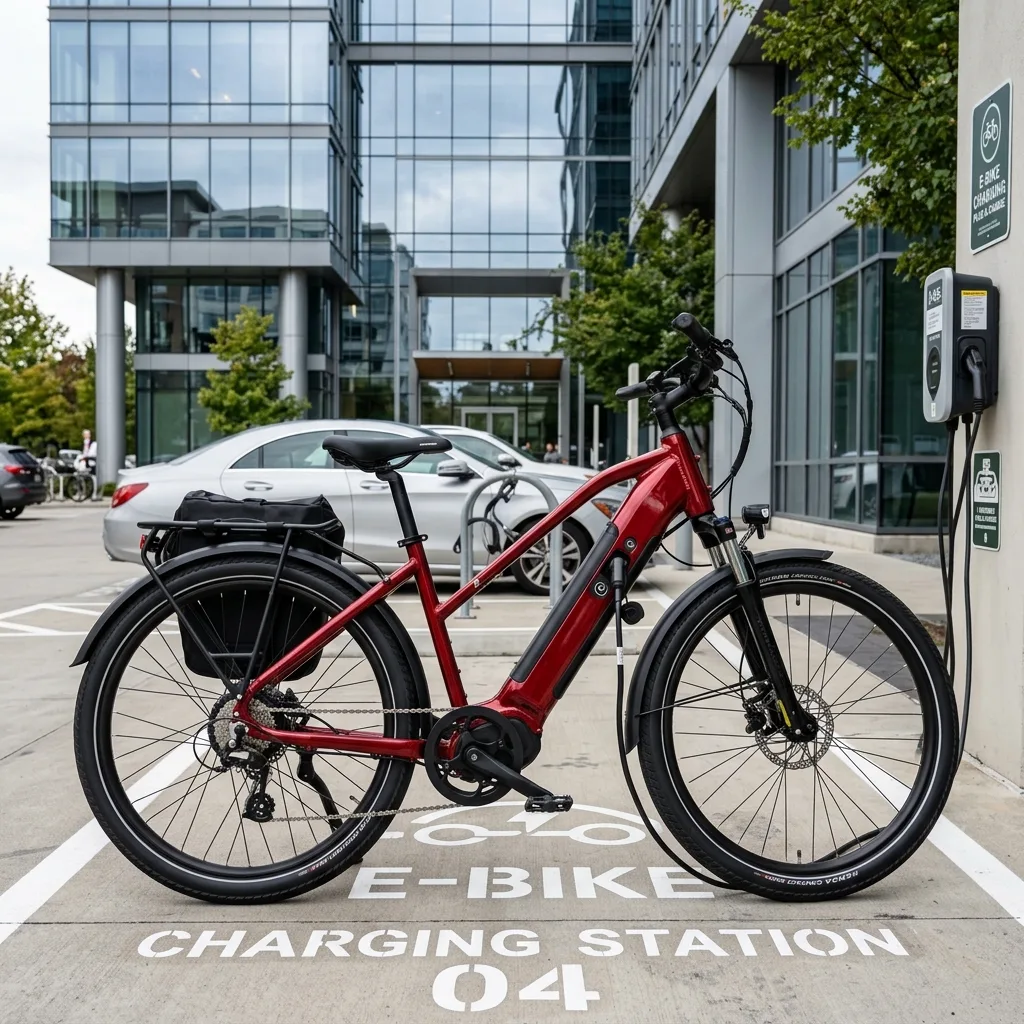
Financial Decision: Choosing an electric bike for your daily commute is no longer just about environmental considerations—it is a critical financial decision. With fuel prices reaching historic heights, daily travel expenses can consume a significant portion of a household budget. However, not all electric bikes deliver the same economic return.
Evaluation Factors: Factors such as battery capacity, charger efficiency, and battery degradation rates determine the true cost of ownership. In this comprehensive guide, we rank the 10 best electric bikes for daily commuting across India and Pakistan based on their running cost per kilometer.
Market Leaders: The ranking is topped by retrofitted factory frames (like the Splendor EV) due to their low entry cost and minimal power consumption, followed closely by graphene commuters and premium lithium scooters.
Battery Viability: A key finding in our analysis is that cheap dry-cell lead-acid batteries have a very short lifespan (under 1 year), which destroys their financial viability due to frequent replacement costs. Switching to Graphene or Lithium-ion battery models ensures a stable 3-to-5-year running cycle, allowing you to fully recover the initial EV premium within the first 14 months of daily use.
Running Cost & 1-Year Ownership Cost Analysis
We analyze the hard financial data: fuel or electricity cost per kilometer and the total 1-year cost of ownership (assuming a standard annual commute of 8,000 km, including regular tuning, taxes, and charging):
1. Running Cost per Kilometer
| Vehicle Model | Efficiency Rate | Real Cost per KM |
|---|---|---|
| COMMUTECOST | Real-World Commute | Rs. 0.35 |
2. 1-Year Total Ownership Expenses (8,000 KM)
Comparative Data: Retro EV Commuter (Rs. 0.25 per KM) vs Graphene Scooter (Rs. 0.90 per KM).
| Vehicle Model | Annual Run | Total Annual Cost |
|---|---|---|
| COMMUTECOST | 8,000 km | Rs. 2,800 |
Owner's Voice & Longitudinal Commuter Feedback
"I commuted 40 km daily on my petrol bike, spending a huge amount on fuel and maintenance. Switching to an electric commuter reduced my monthly bill by 80%. It is the best budget decision I have made." — Rahul Verma, Banker, Delhi
Who is this for?
Perfect for daily office workers, courier riders, and students who travel between 30 km and 80 km daily and want to minimize their commuting expenses. Choose LFP lithium batteries for maximum longevity.
Pros & Cons Checklist
PROS / ADVANTAGES
- Massive reduction in daily travel budget, saving up to 80% compared to petrol
- Zero maintenance of oil filters, spark plugs, carburetors, and engine tuning
- Smooth, silent, and vibration-free ride quality reduces commuter fatigue
- Payback period is under 18 months for riders traveling over 40 km daily
CONS / LIMITATIONS
- Requires a secure home parking spot with a nearby power point
- Initial purchase price is higher than standard entry-level petrol commuters
- Battery degradation will slowly reduce the maximum range over 4 years
Frequently Asked Questions (Faq)
How is the running cost per kilometer calculated for an electric bike?
It is calculated by multiplying the units of electricity consumed per full charge (usually 1.8 to 2.2 kWh) by the local utility tariff rate, and dividing by the real-world range.
What is the typical electricity tariff slab used for calculations?
We assume a standard domestic mid-tier slab rate of Rs. 35 per unit in Pakistan and Rs. 7 per unit in India for realistic household bills.
How does battery lifecycle affect the true running cost?
If a battery degrades quickly, the cost of replacing it must be factored into the per-kilometer run. LFP batteries offer the lowest long-term cost due to their 2,000-cycle life.
What is the payback period for a standard electric commuter?
For a daily commute of 50 km, the savings in fuel and maintenance will fully offset the initial purchase cost of the electric bike within 14 to 18 months.
Do electric commuter bikes handle hilly terrains well?
Yes, brushless DC motors provide maximum torque instantly, making them excellent at climbing urban flyovers and steep bridges without stalling.
Which battery chemistry is best for daily commuting?
Lithium Iron Phosphate (LFP) is the best overall choice due to its high thermal safety, fast charging, and exceptionally long cycle life.
Top 10 Electric Bikes for Daily Commute: Full Specifications
| Rank | Model | Price | Motor | Battery | Real Range | Speed | Run Cost/km | Payback |
|---|---|---|---|---|---|---|---|---|
| #1 | Ola S1 Air | ₹79,999 | 8.5kW IPM | 2.5kWh LFP | 101 km | 90 km/h | ₹0.25 | 14 months |
| #2 | TVS iQube ST | ₹1,10,000 | 4.5kW BLDC | 5.1kWh | 145 km | 82 km/h | ₹0.28 | 16 months |
| #3 | Hero Vida V1 Plus | ₹1,06,990 | 6kW IPM | 3.94kWh | 143 km | 80 km/h | ₹0.29 | 15 months |
| #4 | Bajaj Chetak Premium | ₹1,16,000 | 3.8kW BLDC | 3.2kWh | 108 km | 73 km/h | ₹0.30 | 17 months |
| #5 | Simple One | ₹1,09,999 | 8.5kW BLDC | 5.0kWh | 165 km | 105 km/h | ₹0.27 | 15 months |
| #6 | Revolt RV400 | ₹88,999 | 3kW BLDC | 3.24kWh | 150 km | 85 km/h | ₹0.26 | 13 months |
| #7 | Ather 450X | ₹1,30,000 | 6kW IPM | 3.7kWh LFP | 105 km | 90 km/h | ₹0.35 | 19 months |
| #8 | Ola S1 Pro Gen 2 | ₹1,29,999 | 11kW IPM | 4.0kWh LFP | 143 km | 120 km/h | ₹0.28 | 16 months |
| #9 | Jolta Storm (PK) | PKR 2,95,000 | 2kW Hub | 72V 28Ah LFP | 90 km | 75 km/h | PKR 0.65 | 18 months |
| #10 | Yadea Velax H (PK) | PKR 2,20,000 | 1.2kW Hub | 60V 20Ah Li | 70 km | 55 km/h | PKR 0.80 | 20 months |
How We Calculate Running Cost Per Km
Calculation Method: Running cost/km = (Battery capacity × Local electricity rate) ÷ Real-world range. For India: assuming 3 kWh battery, ₹8/unit tariff, 100 km real range → ₹24 per full charge ÷ 100 km = ₹0.24/km. For Pakistan: assuming 1.4 kWh, PKR 40/unit, 70 km range → PKR 56/charge ÷ 70 km = PKR 0.80/km.
Comparison: Petrol equivalent (Honda Activa @ 45 km/l, ₹105/l) = ₹2.33/km — 9.7× more expensive.
Payback Period: Payback period calculation: ((EV price − Petrol scooter price) ÷ Monthly savings in fuel+maintenance). Example for Ola S1 Air vs Honda Activa 6G: (₹79,999 − ₹79,900) ÷ ₹2,100/month = effectively immediate payback on price + annual running saving of ₹25,000.
🏁 Verdict
For daily urban commutes of 20–80 km/day, an electric scooter will save you Rs. 2,50,000–3,50,000 over 5 years compared to a petrol scooter. The Ola S1 Air at Rs. 79,999 offers the lowest running cost-to-range ratio in 2026. For those needing higher range with fast charging, the TVS iQube ST remains the most mature, dealer-backed option. Commuters who want the lowest monthly outlay should look at Revolt's BaaS subscription model — zero upfront battery cost changes the economics entirely.