
BMW S1000R Review (2026): 170 HP ShiftCam Inline-4, M Quick Throttle & Road Test
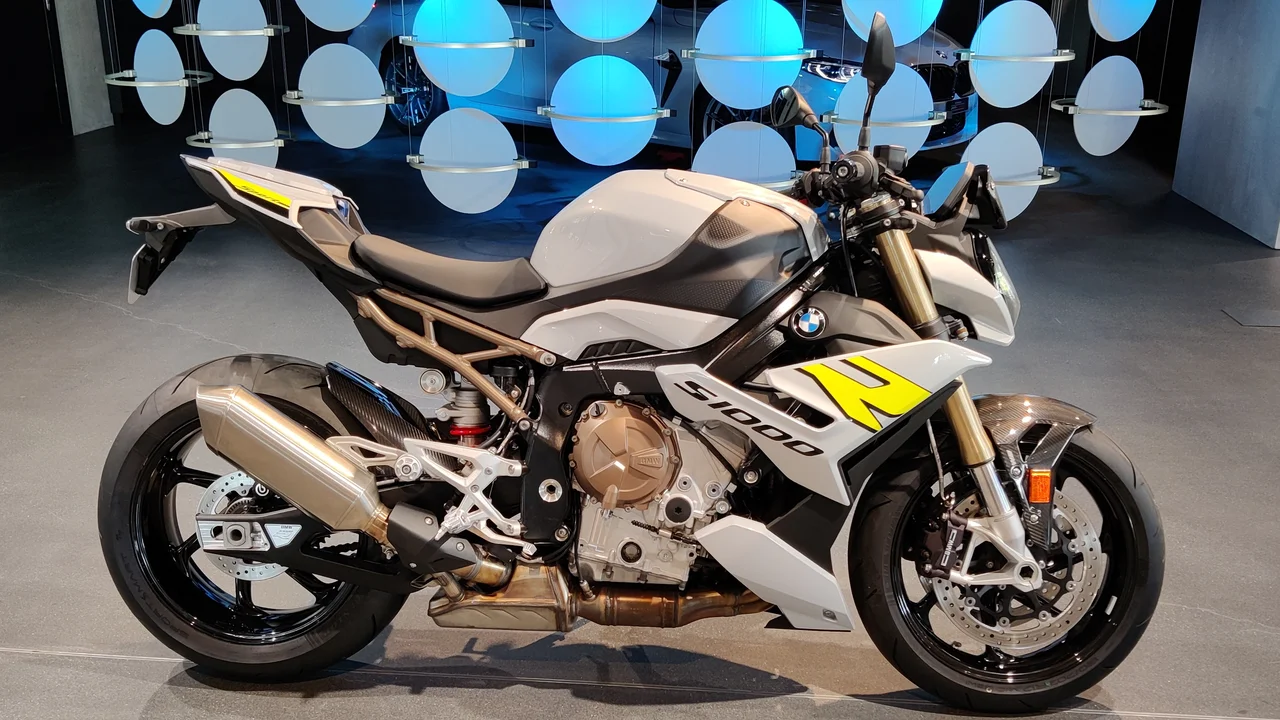
The 2026 BMW S1000R brings substantive mechanical refinements and aerodynamic enhancements derived from the S1000RR superbike platform. At its core, the 999cc liquid-cooled inline-four engine gains revised intake duct geometry and updated engine calibration to generate 170 horsepower (125 kW) at 11,000 RPM—a 5 HP increase over the previous generation—alongside 114 Nm (84 lb-ft) of torque at 9,250 RPM. A newly developed M quick-action throttle reduces rotation angle to just 58 degrees, providing immediate and fatigue-free throttle control. The roadster also adopts a shorter secondary gear ratio (17/46) for punchier midrange pull, Engine Drag Torque Control (MSR) as standard equipment, an optimized Shift Assistant Pro, and dual-flow symmetric LED headlamps. Weighing 199 kg (439 lbs) in road-ready wet trim, the 2026 BMW S1000R starts at an MSRP of $15,195 USD.
The Strengths
- Potent 999cc inline-four with ShiftCam delivers 170 HP with linear, relentless pull across the entire rev range
- New M quick-action throttle with 58-degree twist angle noticeably tightens rider response and eliminates wrist fatigue
- Shortened secondary final drive ratio (17/46 teeth) generates brutal overtaking punch in third and fourth gears
- Standard Shift Assistant Pro offers seamless upshifts and downshifts even at part throttle in urban traffic
- Comprehensive 6-axis IMU rider aids include ABS Pro, Dynamic Traction Control (DTC), and Engine Drag Torque Control (MSR)
- Ergonomic triangle balances aggressive forward attack position with comfortable upright all-day street usability
The Compromises
- Minimal wind deflection from the naked front mask induces buffeting above 85 mph on long motorway stretches
- Dynamic Damping Control (DDC) semi-active electronic suspension requires opting into expensive option packages
- Factory exhaust acoustic profile is muted by strict Euro 5+ emissions canisters unless paired with the Akrapovič titanium slip-on
999cc ShiftCam Inline-Four Powertrain & Gearbox
Liquid-cooled DOHC 16-valve engine with variable valve timing and bi-directional quickshifter.
Real-World Performance & Dyno Telemetry
Instrumented road tests, 0-60 acceleration, quarter-mile sprint, and braking deceleration.
Flex Frame Geometry & 320mm M Braking System
45mm inverted telescopic fork, underslung swingarm, and dual 4-piston radial calipers.
Chassis Specifications
- FRONT SUSPENSION: 45mm Upside-Down Telescopic (Adjustable Compression & Rebound (120mm Travel))
- REAR SUSPENSION: WSBK Underslung Swingarm (Central Shock with Adjustable Damping (117mm Travel))
- FRONT BRAKES: Dual 320mm Floating Discs (4-Piston Radial Fixed Calipers with ABS Pro)
- REAR BRAKE: Single 220mm Disc (Single-Piston Floating Caliper with Cornering ABS)
6-Axis IMU Electronics & 6.5-Inch Connected TFT
TFT instrument cluster, cornering traction control, ride modes, and connectivity.
Cockpit & Tech Features
- High-resolution 6.5-inch TFT instrument cluster features multiple display layouts including Core Screen with lean angle readouts
- Four standard riding modes: Rain (soft throttle), Road (balanced street), Dynamic (spirited), and Dynamic Pro (customizable track)
- Bosch 6-axis IMU manages ABS Pro cornering mitigation and Dynamic Traction Control with lean-angle dependent intervention
- Standard Engine Drag Torque Control (MSR) works with the self-reinforcing anti-hopping clutch to stabilize rear tire deceleration
- Standard M quick-action throttle reduces hand twist from 72 degrees down to 58 degrees for immediate response
- Integrated USB-C charging socket under the seat and full Bluetooth smartphone navigation connectivity via BMW Connected app
Complete 30-Point Technical Specification Matrix
Factory engineering metrics, valve clearances, and chassis dimensions for the 2026 BMW S1000R.
1. 999cc ShiftCam Inline-Four Powertrain & Gearing
Engine Architecture
Power, Torque & Transmission
2. Flex Frame Chassis, Suspension & Braking
Chassis & Geometry
Suspension & Brakes
3. Dimensions, Electrical & Operational Capacities
Dimensions & Weight
Electronics & Service Intervals
Precision German Engineering Meets Uncompromising Roadster Muscle
Buy If You Want
- You desire superbike-derived 170 HP inline-four acceleration paired with upright, all-day street ergonomics
- You value sophisticated electronic rider aids including standard MSR drag torque control and ABS Pro
- You want the razor-sharp response of the new 58-degree M quick-action throttle
Skip If You Need
- You prioritize ultra-light middleweight agility over raw 1000cc top-end speed
- You want full touring wind protection without needing aftermarket accessory windscreens
- Your riding preferences lean toward rumbling V-twin or crossplane character over precision inline-four power
Technical Deep Dive: The 170 HP ShiftCam Inline-4 and M Quick-Action Throttle
1. 999cc ShiftCam Inline-Four Optimization and Shortened Gearing
For 2026, the S1000R receives an upgraded calibration of the 999cc inline-four engine originally derived from the S1000RR superbike. Peak output climbs to 170 horsepower at 11,000 RPM, while torque peaks at 114 Nm at 9,250 RPM. The intake ports have been re-profiled for higher flow velocity, and BMW engineers shortened the secondary gear ratio to 17/46 teeth (compared to the previous 17/45 setup). This gearing adjustment shortens gear spacing, producing noticeable surges in roll-on torque through third and fourth gears for rapid overtaking on twisty roads.
2. M Quick-Action Throttle Engineering and MSR Integration
A key mechanical highlight is the adoption of the M quick-action throttle, which reduces the required twist angle from 72 degrees down to 58 degrees. This shorter throw eliminates the need for riders to reset their grip when transitioning from cruising to wide-open throttle. Concurrently, Engine Drag Torque Control (MSR) now comes standard. By monitoring rear-wheel slip and lean angle via the 6-axis IMU, MSR cracks open the throttle butterflies micro-fractions when sudden downshifts threaten to break rear tire adhesion, ensuring smooth corner entry.
3. Flex Frame Architecture, WSBK Underslung Swingarm, and Brakes
The S1000R utilizes the aluminum 'Flex Frame' design where the engine functions as a major load-bearing structural member. The frame is exceptionally narrow between the rider's knees, allowing seamless body shifting. Out back, the underslung WSBK-style aluminum swingarm keeps unsprung weight low while providing immense torsional rigidity. Stopping power is delivered by dual 320mm floating discs clamped by 4-piston radial fixed calipers running with BMW Motorrad ABS Pro, which adjusts brake pressure dynamically according to lean angle.
4. Comparative Context and Hyper-Roadster Segment Ranking
Within the hyper-naked arena, the S1000R faces strong competition. Riders seeking Italian lightweight agility should examine our road test of the Ducati Streetfighter V2, while those who favor twin-cylinder punch can review the KTM 990 Duke. Value-conscious riders will find compelling performance in the Honda CB1000 Hornet SP. To plan purchase finances, check our motorcycle loan calculator or explore our comprehensive motorcycle comparison tool.
🌿 Related Models & Comparison Guides
Frequently Asked Questions
The 2026 BMW S1000R starts at an MSRP of $15,195 USD for the standard base model. Units equipped with the premium M Package or Dynamic Package retail between $17,495 and $18,495 USD. Dealership arrivals began in early 2026 worldwide.
The 2026 BMW S1000R generates 170 horsepower (125 kW) at 11,000 RPM and 114 Nm (84 lb-ft) of torque at 9,250 RPM from its 999cc ShiftCam inline-four engine, representing a 5 HP boost over the previous generation.
The 2026 model features an M quick-action throttle that reduces the grip rotation angle from 72 degrees down to 58 degrees. This allows riders to access full throttle without repositioning their wrist, delivering faster throttle response on street and track.
In independent speed testing, the 2026 BMW S1000R achieves a verified top speed of 265 km/h (164.7 mph) and accelerates from 0 to 60 mph in 2.9 seconds with launch control active.
Yes. For 2026, BMW Motorrad includes both the bi-directional Shift Assistant Pro (quickshifter) and Engine Drag Torque Control (MSR) as standard equipment, preventing rear-wheel lockup during aggressive engine braking.
The BMW S1000R offers an inline-four with 170 HP, significantly out-powering the 120 HP Streetfighter V2 and 123 HP KTM 990 Duke. However, the Ducati and KTM are lighter (188 kg and 190 kg vs 199 kg), offering nimbler handling in tight hairpins.