
Can You Take an E-Bike on an Airplane? (The Travel Rules)
No, you cannot fly with a standard e-bike battery on commercial passenger airplanes. Federal Aviation Administration (FAA) and International Air Transport Association (IATA) regulations strictly cap passenger lithium batteries at 100 watt-hours (or 160 Wh with airline approval). Because standard e-bike batteries pack 500 to 750 watt-hours, they are prohibited as hazardous cargo. However, e-bikes are permitted on passenger trains (Amtrak) and city transit buses, provided they meet weight and wheel size restrictions.
Key Strengths
- You can fly with an e-bike frame and motor as checked luggage if the battery pack is removed completely.
- Specialized modular flight-friendly batteries (two 98Wh packs connected in parallel) comply with FAA carry-on limits.
- Amtrak allows standard e-bikes up to 50 lbs in carry-on and trainside checked bicycle service cars.
- Public transit bus racks accommodate commuter e-bikes once the heavy battery is detached.
Trade-offs & Considerations
- Attempting to sneak a 500Wh lithium battery into checked luggage is a federal crime punishable by steep fines.
- Ground hazmat shipping for a battery pack costs $80 to $150 each way and requires certified UN-tested packaging.
- Heavy fat-tire e-bikes exceeding 55 lbs cannot safely fit onto city bus front bumper racks.
FAA Hazardous Materials Regulations, IATA Provisions & Rail Guidelines
Analyzing 49 CFR § 175.10, UN 3480 Class 9 Dangerous Goods, and transit authority limits.
The prohibition against flying with e-bike batteries stems from aviation fire containment physics. In passenger airliners, the cargo hold is equipped with Halon fire suppression systems. While Halon extinguishes open jet fuel or paper flames, it cannot stop an electrochemical thermal runaway inside a high-capacity lithium-ion battery because the cathode material liberates its own oxygen as it breaks down. A 672Wh battery burning at 800°C in an unpressurized cargo hold presents an unacceptable catastrophic aviation hazard.
Under 49 CFR § 175.10 and IATA Dangerous Goods Regulations, passengers may bring lithium-ion batteries up to 100 watt-hours (Wh) in carry-on luggage without airline approval (such as laptops and camera batteries). With specific airline carrier approval, passengers may carry up to two spare batteries between 101 and 160 Wh. Any battery exceeding 160 Wh—which includes 99% of all electric bicycle batteries—is forbidden on passenger aircraft under any circumstances.
Ground passenger transportation enforces far more accommodating policies. Amtrak permits electric bicycles on trains with designated carry-on or trainside checked bike spaces, provided the e-bike weighs under 50 pounds, has standard tire widths under 2 inches (or under 4 inches on select routes with special racks), and features operable pedals. Regional city buses equipped with front bumper racks (commonly manufactured by Sportworks) allow e-bikes up to 55 pounds, but riders must remove the battery before placing the bike onto the bus rack to comply with weight and liability thresholds.
Transit Authority Rules Across Major Global Transportation Networks
Evaluating acceptance standards across airlines, intercity rail, and urban transit systems.
Flight-Friendly Modular Packs, Removable Drives & Travel Cases
Hardware designs that allow traveling long distances with an electric bicycle.
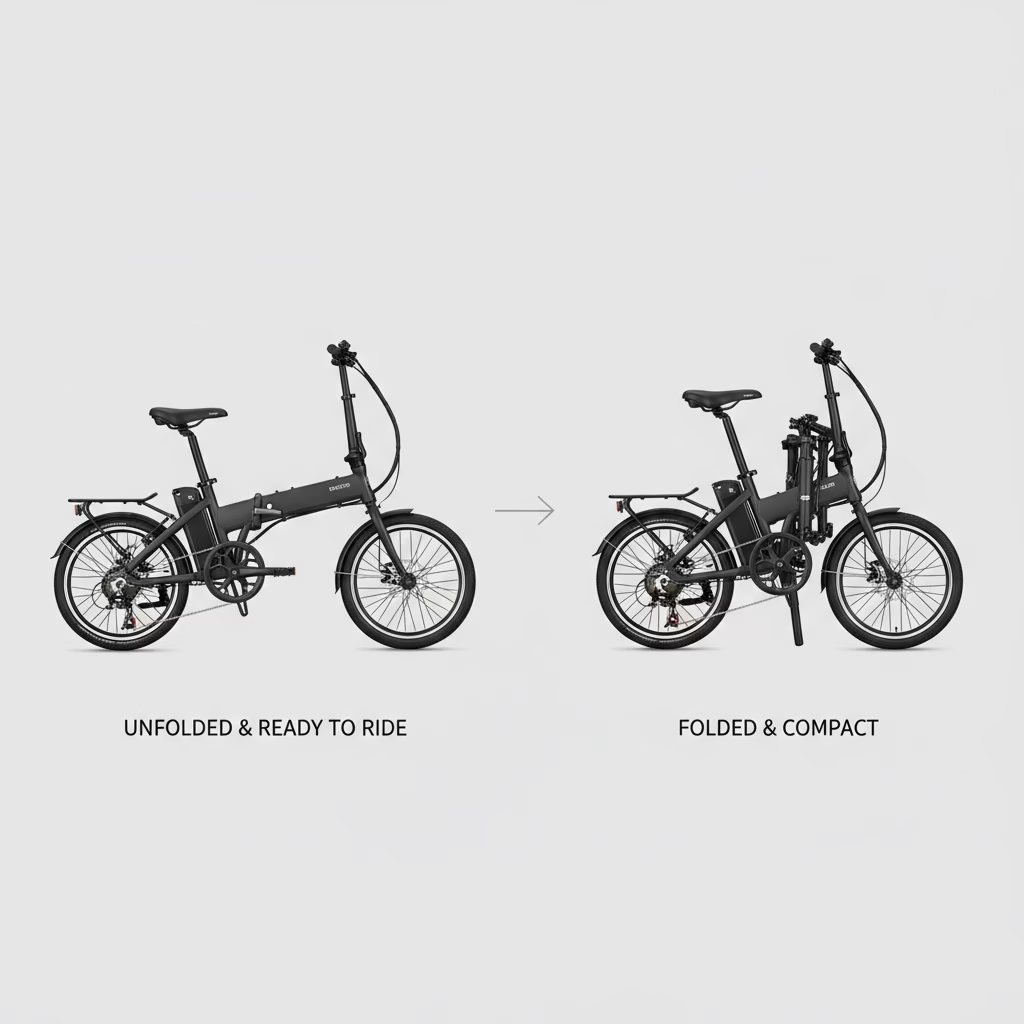
To circumvent airline battery restrictions, specialized travel e-bike manufacturers (such as Tern and Brompton) offer flight-friendly modular batteries. Rather than using a single 500Wh pack, these bikes utilize two independent 98Wh battery modules connected in parallel on the frame. When preparing to fly, the rider unclips the two 98Wh batteries and packs them into their carry-on backpack within the 100Wh FAA limit. The motor and frame are packed into a standard airline-compliant padded flight case.
- Dual 98Wh modular battery setups fly legally in cabin carry-on baggage.
- Folding e-bikes pack into standard airline suitcases under 62 linear inches, avoiding oversize fees.
- Detachable batteries allow taking a 42-lb frame onto commuter rail easily.
- Modular sub-100Wh batteries deliver limited range (typically 15 to 20 miles per pack).
- Checking an e-bike frame as standard luggage requires durable hard-shell flight cases ($300-$500).
Practical Long-Distance E-Bike Travel Workarounds
Three proven strategies for traveling across states or countries with an e-bike.
Strategy 1: Fly Frame, Rent Battery
Strategy 2: Ground Hazmat Shipping
Strategy 3: Train & Transit Touring
Full 30-Point Transit & Multimodal Travel Specification Matrix
Regulatory verified parameters across airline statutes, rail limits, and transit bus dimensions.
1. Aviation Safety Regulations & Hazardous Materials Statutes
FAA & IATA Aviation Limits
Ground Freight Shipping Standards
2. Passenger Rail & Commuter Train Policies
Amtrak Rail Guidelines
Urban Subway & Commuter Metro Rails
3. Public Transit Buses & Vehicle Rack Specifications
City Bus Platform Racks
Travel Hardware & Packing Dimensions
The Multimodal Travel Verdict
Why You Should Buy
- ✓ You travel frequently on Amtrak or regional commuter trains with a sub-50 lb e-bike.
- ✓ You are willing to rent a battery at your destination city when flying with your e-bike.
- ✓ You choose a folding electric bike with modular sub-100Wh flight-friendly batteries.
When to Consider Alternatives
- ✕ You expect to check a 750Wh fat-tire battery onto a commercial passenger flight.
- ✕ You ride an 85-lb cargo e-bike and rely on loading it onto city transit bus racks.
- ✕ You refuse to follow federal hazardous materials shipping guidelines.
Engineering Deep Dive: Thermal Runaway Propagation Kinetics & FAA Aviation Science
Written by BikesKnowledge Hardware & Cockpit Electronics Laboratory Desk.
The strict 100 watt-hour threshold established by the FAA and IATA represents a calculated thermal containment ceiling based on airliner cargo fire suppression physics. When a cylindrical lithium-ion cell undergoes thermal runaway, it releases flammable hydrocarbon gases (including methane, ethane, and ethylene) alongside vaporized organic carbonates. Because the thermal breakdown of nickel-manganese-cobalt cathode oxides liberates free oxygen within the cell, the reaction sustains intense combustion even in oxygen-depleted environments.
In 2015, the FAA William J. Hughes Technical Center conducted destructive fire containment testing inside Class C aircraft cargo compartments. The research proved that Halon 1301 gas—the standard fire suppression agent in modern passenger airliners—effectively suppresses open electrolyte flames, but cannot reduce the internal temperature of adjacent cells. In battery packs larger than 160 watt-hours, heat from a single cell triggers thermal runaway propagation throughout the series-parallel matrix, generating high-velocity toxic smoke and overpressurizing cargo compartment blowout panels.
These findings led to the worldwide ban on high-capacity lithium batteries on passenger aircraft. Understanding this aviation science underscores why attempting to pack an e-bike battery into checked luggage is dangerous. By adopting proven workarounds—such as flying with the motor and chassis while shipping the battery via certified UN 3480 ground transport or renting a pack upon arrival—cyclists enjoy their personal e-bikes across the world safely and lawfully.
"You cannot bend the laws of aviation physics, but packing your e-bike frame and renting a battery upon arrival gives you global riding freedom."
Frequently Asked Questions
You can fly with the bicycle frame, wheels, and motor as checked luggage, but you CANNOT take a standard e-bike battery on a commercial passenger flight. Batteries over 100Wh (or 160Wh with approval) are banned by the FAA and IATA.
E-bike batteries (500Wh to 750Wh) contain too much chemical energy. If a cell suffers thermal runaway in a cargo hold, airplane fire suppression systems cannot cool the cells, creating a severe fire hazard.
Yes. Amtrak permits electric bikes with operable pedals weighing under 50 lbs in carry-on and trainside checked bicycle cars, provided you make a bike reservation in advance.
Yes, if the e-bike weighs under 55 lbs and has tire widths under 2.35 inches. It is best practice to remove the battery and carry it with you onto the bus to reduce rack weight.
The most popular strategy is to pack the e-bike frame into an airline-approved flight case and rent a compatible battery from a local bike shop at your destination city.
Yes. You can ship your battery in advance using FedEx Ground or UPS Ground. It must be shipped as Class 9 Hazardous Materials (UN 3480) with certified packaging and labeling.
Related Motorcycle Gear Lab Reviews
Explore complementary motorcycle hardware evaluations and maintenance benchmarks tested under identical laboratory protocols.