
Ducati Hypermotard 698 Mono Review (2026): 10,250 RPM Superquadro Single, Drift Electronics & Track Test
The 2026 Ducati Hypermotard 698 Mono breaks all mechanical precedents by packing the world's most powerful road-going single-cylinder engine into a featherweight 151 kg chassis. Derived directly from the 1299 Panigale superbike, the 659cc Superquadro Mono produces 77.5 HP at 9,750 RPM with a stratospheric 10,250 RPM rev ceiling. Paired with Marzocchi 45mm aluminum USD forks, Sachs rear monoshock, and 4-level Cornering ABS featuring Slide-by-Brake drift control, it redefines the supermotard category at an MSRP of $12,995 USD.
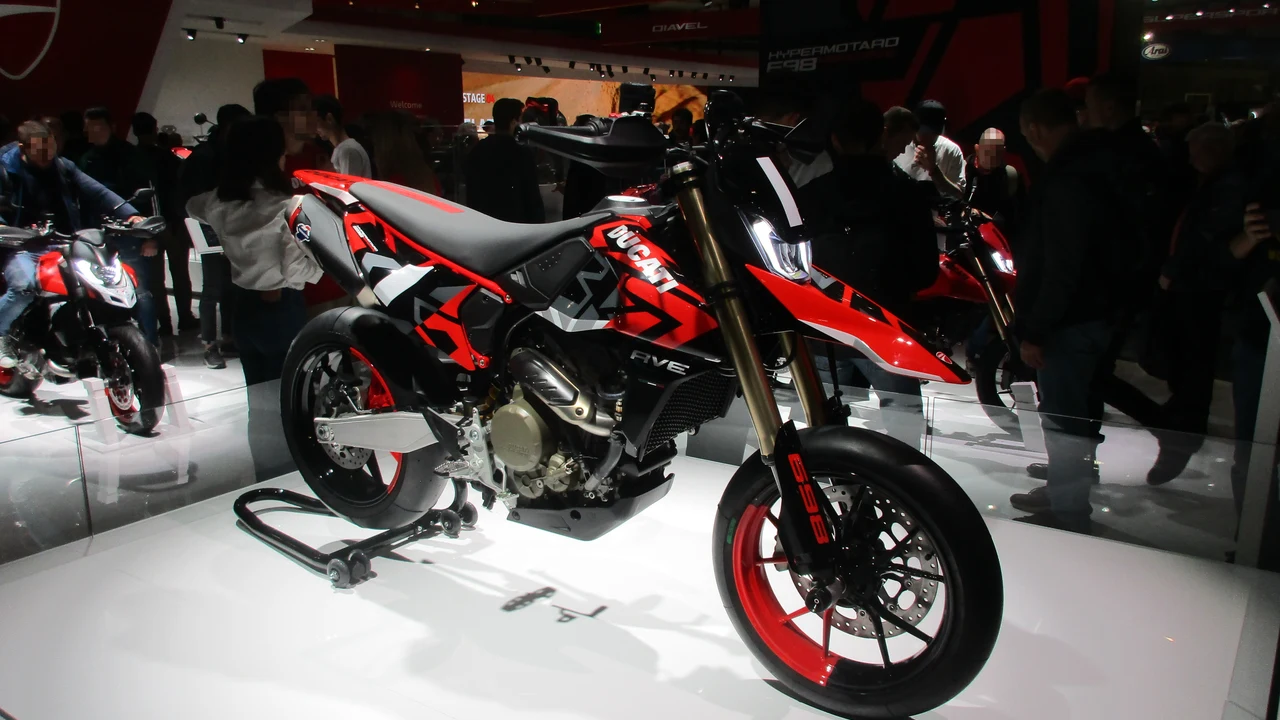
The Strengths
- Superquadro Mono 659cc engine produces 77.5 HP (84.5 HP with Termignoni race exhaust) and revs to an unprecedented 10,250 RPM
- Ultralight 151 kg dry weight delivers unmatched power-to-weight flickability through tight technical hairpins
- Groundbreaking Slide-by-Brake electronics allow riders of varying skill to execute controlled supermoto entry drifts
- Top-shelf suspension with fully adjustable 45mm Marzocchi USD forks (215mm travel) and Sachs rear shock (240mm travel)
- Brembo M4.32 radial monobloc brake caliper clamping an oversized 330mm aluminum-flange floating rotor
- Generous 30,000 km valve clearance check interval despite high-strung racing desmodromic architecture
The Compromises
- Tall 904mm (35.6-inch) seat height makes flat-footing challenging for riders under 5'10"
- Minimalist 12.0-liter fuel tank requires frequent stops on extended mountain road tours
- Vigorous single-cylinder engine pulses emerge through the footpegs when maintaining sustained 130 km/h highway cruising
659cc Superquadro Mono Engine & Desmodromic Valvetrain
Engineered with a massive 116mm Panigale-derived piston, titanium intake valves, and twin balancer shafts.
Supermoto Telemetry, Canyon Dyno Runs & Track Lap Data
Telemetry logged across short kart circuits, tight alpine switchbacks, and open canyon sweepers.
Steel Trellis Frame, 45mm Marzocchi USD & 330mm Brembo
Chassis geometry, suspension components, and wheel dimensions.
Chassis Specifications
- Sectioned steel trellis chassis weighing just 7.2 kg engineered with differentiated tube thicknesses for corner flex
- Marzocchi 45mm fully adjustable aluminum inverted front forks providing 215mm of plush wheel stroke
- Sachs fully adjustable rear monoshock operating via progressive linkage with 240mm of travel
- Brembo M4.32 4-piston radial monobloc caliper clamping a 330mm semi-floating aluminum-carrier rotor
- Bosch 6-axis IMU controlling 4-level Cornering ABS with dedicated Slide-by-Brake lateral drift thresholds
- Cast aluminum 5-spoke Y-pattern wheels wrapped in Pirelli Diablo Rosso IV tires (120/70-ZR17 front, 160/60-ZR17 rear)
3.8-Inch LCD Cockpit, Slide-by-Brake & Supermoto Ergonomics
Rider interface, display features, and comfort geometry.
Cockpit & Tech Features
- Compact 3.8-inch white-on-black negative LCD dash engineered for zero distraction and instantaneous gear readout
- Dedicated Slide-by-Brake mode settings (Level 2 and 3) allowing throttle-pinned backing into corners with backing assist
- 4 riding modes: Sport, Road, Urban, and Wet, dynamically adjusting throttle maps, traction, and wheelie control
- 4-level Ducati Wheelie Control (DWC) featuring Level 1 track calibration allowing sustained, controlled front-wheel lift
- Flat supermoto-style saddle facilitating extreme fore-aft rider weight transfer over the front wheel during corner entry
Complete 30-Point Technical Specification Matrix
Official Ducati factory engineering tolerances, fluid capacities, dimensions, and scheduled servicing data.
1. Engine, Superquadro Powertrain & Gearbox
Engine Architecture
Transmission & Fluid Specs
2. Chassis, Suspension, Wheels & Brakes
Chassis & Suspension
Brakes & Geometry
3. Performance Telemetry, Economy & Commercial Value
Performance Telemetry
Pricing & Warranty
Verdict: The Most Technologically Advanced Single-Cylinder Motorcycle Ever Built
Buy If You Want
- Track and canyon carving enthusiasts who demand the highest power-to-weight ratio and agility in the supermotard sector
- Riders wanting the world's most powerful single-cylinder engine with a screaming 10,250 RPM rev limit and desmodromic valves
- Supermoto pilots who want to master entry powerslides using the revolutionary Bosch IMU Slide-by-Brake assistance
- Ducati purists who appreciate 30,000 km valve check intervals on a bespoke Italian racing single
Skip If You Need
- Cross-country touring riders who require large luggage racks, wind protection, and expansive fuel range
- Riders with short inseams who find the 904mm saddle height intimidating in urban commuter traffic
Ducati Hypermotard 698 Mono: Superquadro Single, Slide-by-Brake & Supermoto Engineering
1. The Superquadro Mono: 77.5 HP at 10,250 RPM from One Cylinder
To create the Superquadro Mono, Ducati engineers took the 116mm bore piston, combustion chamber architecture, and desmodromic valvetrain from the 1299 Panigale superbike and shortened the stroke to 62.4mm. The resulting 659cc powerplant churns out 77.5 HP at 9,750 RPM with an unprecedented 10,250 RPM redline. Dual counter-rotating balance shafts eliminate primary inertia forces, delivering turbine-like smoothness. Contrast this extreme single with roadster nakeds in our Husqvarna Vitpilen 250 review.
2. Slide-by-Brake Technology: Safe, Controlled Cornering Drifts
Supermoto racing relies on backing the rear wheel into tight hairpins under heavy braking. Ducati's Cornering ABS includes a dedicated Slide-by-Brake feature (Levels 2 and 3). When the rider stomps the rear brake lever upon corner entry, the Bosch 6-axis IMU monitors the yaw angle. If the bike begins to slide too far, the system modulates rear hydraulic brake pressure automatically to hold a perfect, recoverable drift angle. Compare this electronic safety net with middleweight streetfighters in our Kawasaki Z500 review.
3. 151 kg Lightweight Chassis & Marzocchi 45mm Suspension
The steel trellis chassis weighs a scant 7.2 kg and pairs with an aluminum double-sided swingarm. Up front, 45mm fully adjustable Marzocchi inverted aluminum forks offer 215mm of stroke, while a Sachs monoshock provides 240mm of travel at the rear. Clamped by a Brembo M4.32 radial caliper over an oversized 330mm disc, stopping power is immense. Contrast this long-travel setup with middleweight dual-sport bikes in our Honda XL750 Transalp review.
4. Running Economics, 30,000 km Service Intervals & Ownership Costs
Despite its race-bred specification, Ducati engineered the Superquadro Mono with industry-leading maintenance schedules: routine oil changes occur every 15,000 km, and desmo valve clearance inspections are spaced at 30,000 km. Real-world fuel economy averages 20.8 km/L, yielding about 250 km from its 12-liter cell. Model your running expenses and track day budget with our interactive Motorcycle Running Cost Calculator.
🌿 Related Models & Comparison Guides
Frequently Asked Questions
The 2026 Ducati Hypermotard 698 Mono starts at an MSRP of $12,995 USD in Ducati Red. The flagship RVE version with the graffiti graphic livery and standard bidirectional quickshifter retails for $14,495 USD.
Slide-by-Brake uses the Bosch 6-axis IMU to manage rear brake pressure when entering corners. In Level 3 (track beginner), it limits the yaw slide to a modest angle. In Level 2, it allows experienced riders to back the rear wheel into corners at aggressive drift angles without high-siding.
In stock road-legal trim, the engine produces 77.5 HP at 9,750 RPM and reaches a verified GPS top speed of 205 km/h (127.4 mph). Installing the optional non-homologated Termignoni titanium racing exhaust and track map elevates output to 84.5 HP.
Despite being an ultra-high-revving desmodromic single, Ducati established a generous 30,000 km (18,000 miles) valve clearance check interval, while routine engine oil and filter changes are required every 15,000 km or 24 months.
The Ducati produces more peak power (77.5 HP vs 74 HP), revs significantly higher (10,250 RPM vs 8,500 RPM), weighs less (151 kg dry vs 158 kg dry), and provides a vastly more sophisticated electronics suite with 4-level slide control and 4-level wheelie control.
The 904mm (35.6-inch) seat is tall, but the motorcycle is exceptionally narrow between the rider's thighs due to its single-cylinder layout. Ducati also offers an optional low seat accessory that drops the saddle height down to 889mm (35.0 inches).