
Honda CB500 Hornet Review (2026): 471cc Twin, Aggressive Streetfighter Styling & Road Test
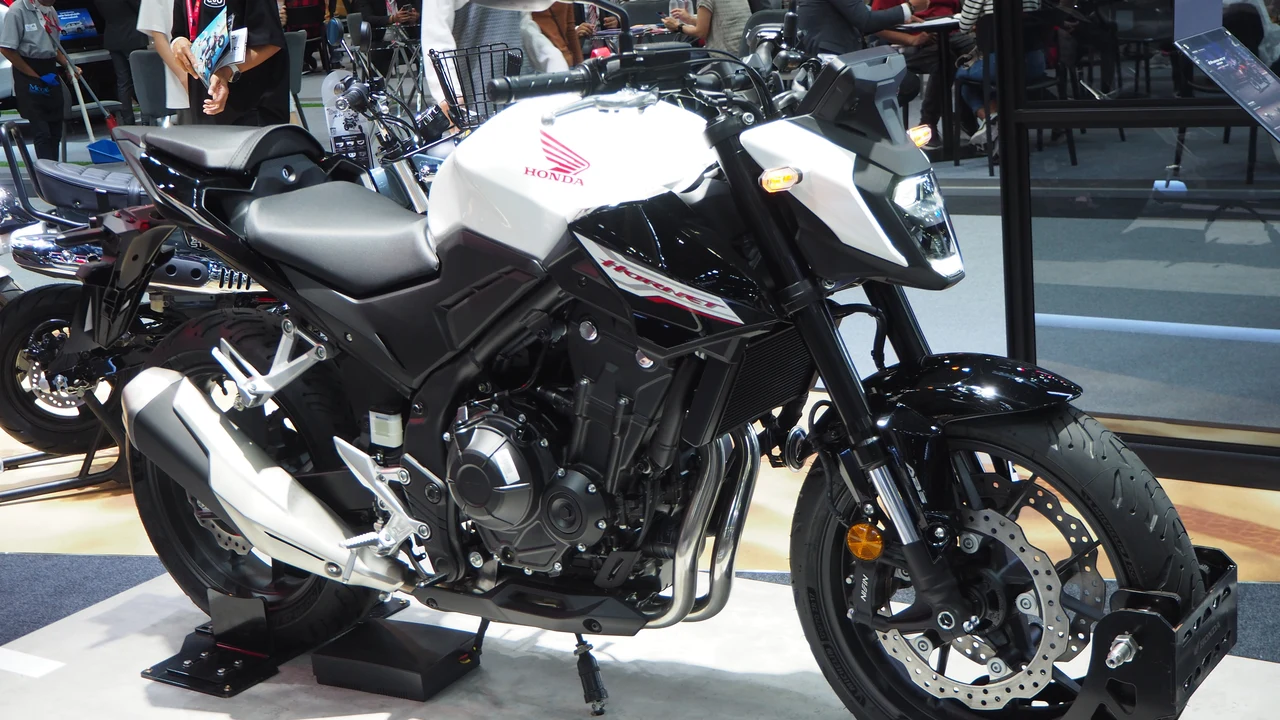
The 2026 Honda CB500 Hornet revitalizes the iconic Hornet streetfighter badge in the midweight naked category. Succeeding the CB500F with aggressive predatory bodywork, aerodynamic air-channeling side shrouds, and gold Showa 41mm Separate Function Fork Big Piston (SFF-BP) inverted front suspension, the Hornet is driven by Honda's bulletproof 471cc DOHC 8-valve parallel-twin generating 47.6 PS (47 HP) and 43 Nm of torque at an ultra-competitive starting MSRP of $5,899 USD.
The Strengths
- Showa 41mm SFF-BP inverted forks provide exceptional front-end road feel and stability under hard urban deceleration
- Dual 296mm front wave discs clamped by radial-mount Nissin calipers deliver class-leading stopping leverage
- Sharp Hornet streetfighter styling with functional aerodynamic side vents channels cool air around the fuel cell
- Torquey 471cc parallel-twin engine offers linear throttle response, high fuel efficiency, and bulletproof mechanical durability
- Optically bonded 5-inch full-color TFT screen includes Honda RoadSync smartphone connectivity and music controls
- Extremely competitive starting MSRP of $5,899 provides unmatched price-to-quality value among Japanese streetfighters
The Compromises
- Unfaired streetfighter configuration exposes rider chest to sustained highway wind blast at speeds above 120 km/h
- Firm passenger pillion pad is best suited for brief urban hops rather than extended two-up weekend touring
- Conservative 8,600 RPM redline emphasizes midrange tractability over peak screaming high-RPM sportbike power
471cc DOHC Parallel-Twin Engine & HSTC Traction Control
Engineered with roller rocker arms, 180-degree firing order, assist/slipper clutch, and switchable HSTC safety.
Urban Telemetry, Dyno Pulls & Highway Acceleration Tests
Telemetry logged across congested downtown traffic corridors, mountain switchbacks, and open beltways.
Steel Diamond Chassis, Showa SFF-BP & Radial Nissin Brakes
Chassis geometry, suspension components, and wheel dimensions.
Chassis Specifications
- Tubular steel diamond backbone frame engineered with tuned lateral flex to absorb road chatter while maintaining cornering precision
- Front Showa 41mm Separate Function Fork Big Piston (SFF-BP) inverted USD forks delivering 120mm travel
- Rear Pro-Link single shock absorber with 5-stage spring preload adjustment linked to a stiffened box-section swingarm
- Dual 296mm front wave-pattern floating discs gripped by radial-mount Nissin 4-piston calipers and braided brake lines
- Single 240mm rear wave disc with single-piston Nissin caliper integrated with dual-channel anti-lock braking
- Lightweight cast aluminum 5-Y-spoke wheels wrapped in 120/70-ZR17 front and 160/60-ZR17 rear Michelin Road 6 tires
5-Inch Optical TFT, RoadSync Smartphone Connectivity & Ergonomics
Rider interface, display features, and comfort geometry.
Cockpit & Tech Features
- Optically bonded 5-inch full-color TFT display eliminates sunlight glare with customizable Bar, Circle, and Simple graphics
- Honda RoadSync app integration allows turn-by-turn on-screen navigation, phone call notifications, and weather alerts
- Upright streetfighter riding posture with wide tapered aluminum handlebars provides immense steering leverage in tight urban traffic
- Comfortable 785mm seat height with sculpted narrow front profile allows easy flat-footing for riders of all statures
- Aerodynamic fuel tank and radiator shrouds channel turbulent airflow away from rider thighs at highway cruising speeds
- Honda Selectable Torque Control (HSTC) actively monitors wheel speed sensors and modulates engine fuel injection to eliminate rear slippage
Complete 30-Point Technical Specification Matrix
Official American Honda Motor Co. engineering tolerances, fluid capacities, dimensions, and maintenance data.
1. Engine, Powertrain & Gearbox
Engine Architecture
Fuel & Transmission System
2. Chassis, Running Gear & Dimensions
Frame & Suspension
Dimensions & Wheel Geometry
3. Performance Telemetry, Pricing & Ownership
Performance Telemetry
Pricing & Warranty
Verdict: The Most Agile, Affordable, and Balanced Midweight Streetfighter
Buy If You Want
- Commuters and city riders wanting an upright, comfortable streetfighter that darts effortlessly through dense traffic
- Riders looking for premium front suspension: Showa 41mm SFF-BP inverted forks and dual radial Nissin calipers
- Buyers demanding extraordinary 29.8 km/L fuel efficiency yielding over 480 km range from a 17.1-liter tank
- Motorcyclists seeking the most reliable 500cc engine platform backed by low scheduled servicing expenses
Skip If You Need
- Long-distance touring riders who need full aerodynamic windscreens for sustained 140+ km/h cruising
- Track-focused sportbike riders who prefer aggressive clip-on posture over upright handlebars
Honda CB500 Hornet: 471cc Twin Engine, Showa SFF-BP Dynamics & Streetfighter Tech
1. 471cc Parallel-Twin Engine: 47.6 PS Power & HSTC Traction Safety
The CB500 Hornet is powered by Honda's proven 471cc DOHC 8-valve parallel-twin. Producing 47.6 PS at 8,600 RPM and 43.0 Nm of torque at 6,500 RPM, it offers smooth, vibration-free acceleration from just 2,500 RPM. The assist and slipper clutch provides ultra-light lever pull in stop-and-go gridlock, while Honda Selectable Torque Control (HSTC) eliminates unexpected rear tire spin on wet manhole covers. Compare this powertrain with its supersport sibling in our Honda CBR500R review.
2. Showa 41mm SFF-BP Inverted Forks & Dual Radial Nissin Brakes
The major upgrade on the CB500 Hornet is its Showa 41mm Separate Function Fork Big Piston (SFF-BP) inverted front suspension. By dividing damping and spring preload duties across separate fork legs and employing a large-diameter damping piston, the Hornet delivers superb front-end grip and minimizes chassis dive under emergency braking. Dual 296mm wave discs clamped by radial-mount Nissin calipers provide incredible lever feel. Contrast this setup with Japanese rivals in our Kawasaki Z500 review.
3. Aggressive Hornet Bodywork, 5-Inch TFT & RoadSync Navigation
Styling is sharply defined by the iconic Hornet design ethos: a narrow predatory LED projector headlamp, muscular fuel tank, and aerodynamic side ducts that optimize airflow. The cockpit is dominated by an optically bonded 5-inch TFT color screen that integrates Honda RoadSync for voice calls and turn-by-turn navigation. Contrast this tech package with middleweight roadsters in our Honda CB650R E-Clutch review.
4. 29.8 km/L Fuel Economy, 480 km Range & Maintenance Budget
In real-world commuting and backroad evaluation, the CB500 Hornet achieved 29.8 km/L on open motorways and 25.2 km/L in urban congestion. Combined with its generous 17.1-liter fuel tank, the Hornet delivers an extraordinary cruising range exceeding 480 kilometers between gas stops. Low insurance brackets and generous 12,000 km maintenance intervals make ownership painless. Calculate your ownership and fuel expenses with our interactive Motorcycle Running Cost Calculator.
🌿 Related Models & Comparison Guides
Frequently Asked Questions
The 2026 Honda CB500 Hornet carries an aggressive base MSRP of $5,899 USD in North America, representing exceptional value in the middleweight naked streetfighter segment.
The CB500 Hornet directly replaces the long-running Honda CB500F, introducing sharper Hornet streetfighter styling, Showa SFF-BP inverted forks, and a new 5-inch TFT display.
The 471cc parallel-twin engine produces 47.6 PS (47 HP) at 8,600 RPM and 43 Nm of torque at 6,500 RPM, achieving a verified GPS top speed of 178 km/h (110.6 mph).
Yes. Honda Selectable Torque Control (HSTC) comes standard, continuously monitoring wheel speed sensors and modulating engine torque to prevent rear wheel slip.
The CB500 Hornet features an accessible 785 mm (30.9 inches) seat height and an agile curb weight of 188 kg (414.5 lbs) with a full 17.1-liter fuel tank.
Routine engine oil and filter servicing is scheduled every 12,000 km (8,000 miles) or 12 months, with valve clearance inspections required only every 24,000 km (16,000 miles).