Honda CB650R E-Clutch Review (2026): 12,000 RPM Inline-Four Scream & Automated Clutch Test
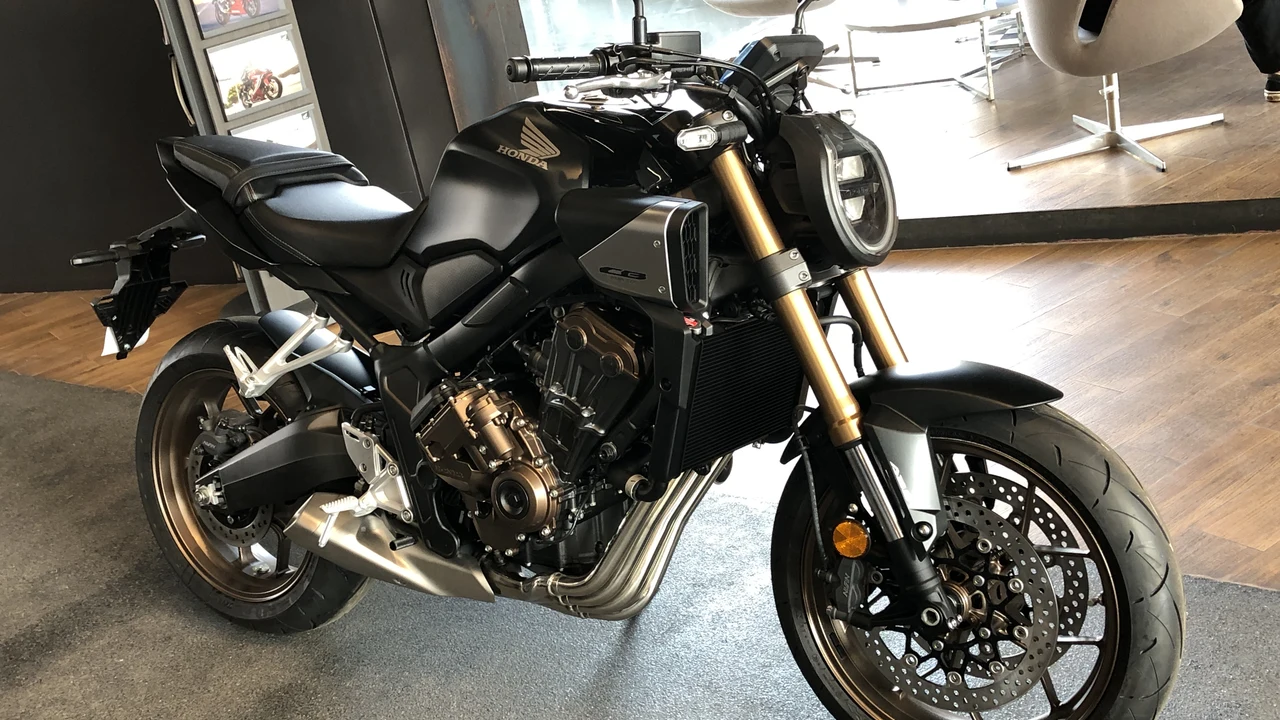
The 2026 Honda CB650R E-Clutch preserves the spine-tingling thrill of a middleweight screaming inline-four while pioneering motorcycle transmission automation. Generating 94.0 HP at 12,000 RPM from its 649cc 16-valve engine, it introduces Honda's revolutionary dual-motor electronic E-Clutch system, permitting stall-proof start, stop, and rapid gear shifts with zero clutch lever pull while maintaining instantaneous manual lever override at an accessible MSRP of $9,399 USD.
The Strengths
- Glorious 649cc inline-four powerplant revs to 12,000 RPM, delivering 94 HP with the turbine smoothness parallel twins cannot replicate
- Innovative Honda E-Clutch system eliminates clutch lever stalling in city traffic while preserving traditional manual override
- Showa 41mm Separate Function Big Piston (SFF-BP) inverted front forks provide exceptional front-end road texture feedback
- Radial-mount 4-piston front brake calipers clamping dual 310mm floating discs provide superb deceleration control
- Neo Sports Café aesthetic with waterfall exhaust header pipes inspired by the legendary 1970s CB400F
- Full-color 5-inch TFT display with backlit 4-way handlebar toggle and Honda RoadSync smartphone connectivity
The Compromises
- Engine requires revving past 7,500 RPM to unlock brisk acceleration compared to torquey mid-size parallel twins
- E-Clutch actuator assembly adds 2.0 kg to the engine case and widens the right-side engine profile slightly
- Minimalist passenger tailpad offers limited pillion padding for long-distance highway weekend tours
649cc DOHC 16-Valve Inline-Four Engine & Dual-Motor E-Clutch
Engineered with four direct cylinders, asymmetrical skirt pistons, waterfall 4-into-1 exhaust, and electronic dual-servo clutch actuators.
Roadster Telemetry, High-Rev Dyno Pulls & E-Clutch Shifts
Telemetry logged across congested urban traffic grids, open bypasses, and twisty mountain tarmac.
Steel Diamond Frame, Showa 41mm SFF-BP & Radial Calipers
Chassis geometry, suspension components, and wheel dimensions.
Chassis Specifications
- Steel diamond chassis with pressed swingarm pivot plates offering engineered flex for cornering compliance
- Showa 41mm Separate Function Fork Big Piston (SFF-BP) inverted forks providing 120mm of supple stroke
- Single-tube Showa rear monoshock with 10-stage spring preload adjustment and 130mm axle travel
- Twin 310mm floating front discs clamped by radial-mount 4-piston calipers with dual-channel ABS
- Single 240mm rear hydraulic disc brake clamped by a single-piston sliding caliper
- Cast aluminum 5-Y-spoke wheels wrapped in Dunlop Sportmax Roadsport 2 tires (120/70-ZR17 front, 180/55-ZR17 rear)
5-Inch TFT Cockpit, Honda RoadSync & E-Clutch Settings
Rider interface, display features, and comfort geometry.
Cockpit & Tech Features
- 5-inch optically bonded color TFT screen with Bar, Circle, and Simple graphic rev counter display options
- E-Clutch operation status indicator with three rider-selectable foot-pedal shift resistance levels (Soft, Medium, Hard)
- Honda Selectable Torque Control (HSTC) traction system with instantaneous handlebar switch disengagement
- Backlit four-way directional navigation switch on the left handlebar for distraction-free menu browsing
- Iconic Neo Sports Café round LED headlight with signature horseshoe DRL and waterfall 4-into-1 exhaust headers
Complete 30-Point Technical Specification Matrix
Official Honda Motor Company factory engineering tolerances, fluid capacities, dimensions, and maintenance data.
1. Engine, Inline-Four Powertrain & Gearbox
Engine Architecture
Transmission & Fluid Specs
2. Chassis, Suspension, Wheels & Brakes
Chassis & Suspension
Brakes & Geometry
3. Performance Telemetry, Economy & Commercial Value
Performance Telemetry
Pricing & Warranty
Verdict: The Most Refined, Technologically Innovative Middleweight Roadster
Buy If You Want
- Motorcyclists who crave the silky smoothness, turbine linearity, and 12,000 RPM howl of a genuine inline-four engine
- Commuters navigating heavy stop-and-go city gridlock who want to eliminate clutch fatigue and stall anxiety
- Riders wanting the best of both worlds: effortless automated shifting without forfeiting the traditional manual clutch lever
- Design enthusiasts captivated by the Neo Sports Café aesthetic and iconic four-pipe waterfall header headers
Skip If You Need
- Riders seeking low-RPM thumping tractor torque under 4,000 RPM without working the gearbox
- Long-distance touring riders who prioritize tall windscreens and expansive factory hard luggage systems
Honda CB650R E-Clutch: 94 HP Inline-Four, Automated Dual Servos & Neo Sports Café Styling
1. 649cc DOHC 16-Valve Inline-Four: The High-Revving Rarity
While middleweight rivals have replaced multi-cylinder layouts with parallel twins, Honda continues to champion the screaming inline-four. Generating 94.0 HP at 12,000 RPM and 63.0 Nm of torque at 9,500 RPM, the CB650R pulls with electric linearity. The engine delivers velvety smoothness through the rev band, punctuated by an induction howl past 8,000 RPM. Contrast this four-cylinder power delivery with punchy middleweight twins in our Honda NX500 review.
2. How Honda E-Clutch Works: Dual-Motor Electronic Servo Control
The Honda E-Clutch integrates an electronic control unit with two compact electric servomotors inside the clutch cover. The system monitors vehicle speed, throttle position, gear position, engine RPM, and foot pedal pressure. When the rider taps the gear lever, the servos automatically disengage and re-engage the clutch plates in milliseconds while the ECU trims ignition timing. The rider can start from a dead stop in 1st gear and come to a complete halt in 6th gear without ever touching the clutch lever. Compare this clutch technology with scramblers in our Honda CL500 review.
3. Showa 41mm SFF-BP Suspension & Radial-Mount Braking
Chassis dynamics are anchored by 41mm Showa Separate Function Fork Big Piston (SFF-BP) inverted front forks. By isolating the spring mechanism in one fork leg and the large damping piston in the other, unsprung weight is cut while oil displacement is maximized. Paired with radial-mount 4-piston Nissin calipers on dual 310mm floating discs, braking precision matches supersport machines. Compare this front-end hardware with adventure tourers in our Honda XL750 Transalp review.
4. 21.2 km/L Economy, Maintenance & E-Clutch Servicing
In mixed urban commuting and highway runs, the CB650R returned 21.2 km/L, yielding an operational range of over 325 kilometers from its 15.4-liter fuel cell. Honda engineered the E-Clutch with standard friction plates that require no specialized fluid or servicing beyond standard oil changes at 12,000 km intervals. Calculate your fuel expenses and annual ownership costs with our interactive Motorcycle Running Cost Calculator.
🌿 Related Models & Comparison Guides
Frequently Asked Questions
The 2026 Honda CB650R equipped with the factory E-Clutch system carries an MSRP of $9,399 USD in North America and approximately £7,999 in the UK (approx. ₹9,20,000 INR ex-showroom in India).
Yes. The manual handlebar clutch lever remains fully functional via a standard cable. The rider can grab the clutch lever at any time to override the electronic system manually. When the lever is released, the E-Clutch system seamlessly resumes automatic operation after 5 seconds.
No. With the E-Clutch active, it is physically impossible to stall the motorcycle. You can come to a dead stop in any gear without touching the clutch lever, and the electronic servos will automatically decouple the clutch plates.
The 649cc inline-four engine produces 94.0 HP (70.0 kW) at 12,000 RPM and 63.0 Nm of torque at 9,500 RPM, achieving a verified GPS top speed of 220 km/h (136.7 mph).
Yes. Through the 5-inch TFT display, riders can choose between three pedal shift resistance feel settings: Soft, Medium, and Hard, allowing custom tactile engagement for upshifts and downshifts.
The CB650R features an inline-four engine producing more top-end power (94 HP vs 73.4 HP) with a 12,000 RPM redline, superior Showa SFF-BP inverted forks, radial brakes, and the E-Clutch, while the MT-07 is lighter and offers more low-end twin torque.