
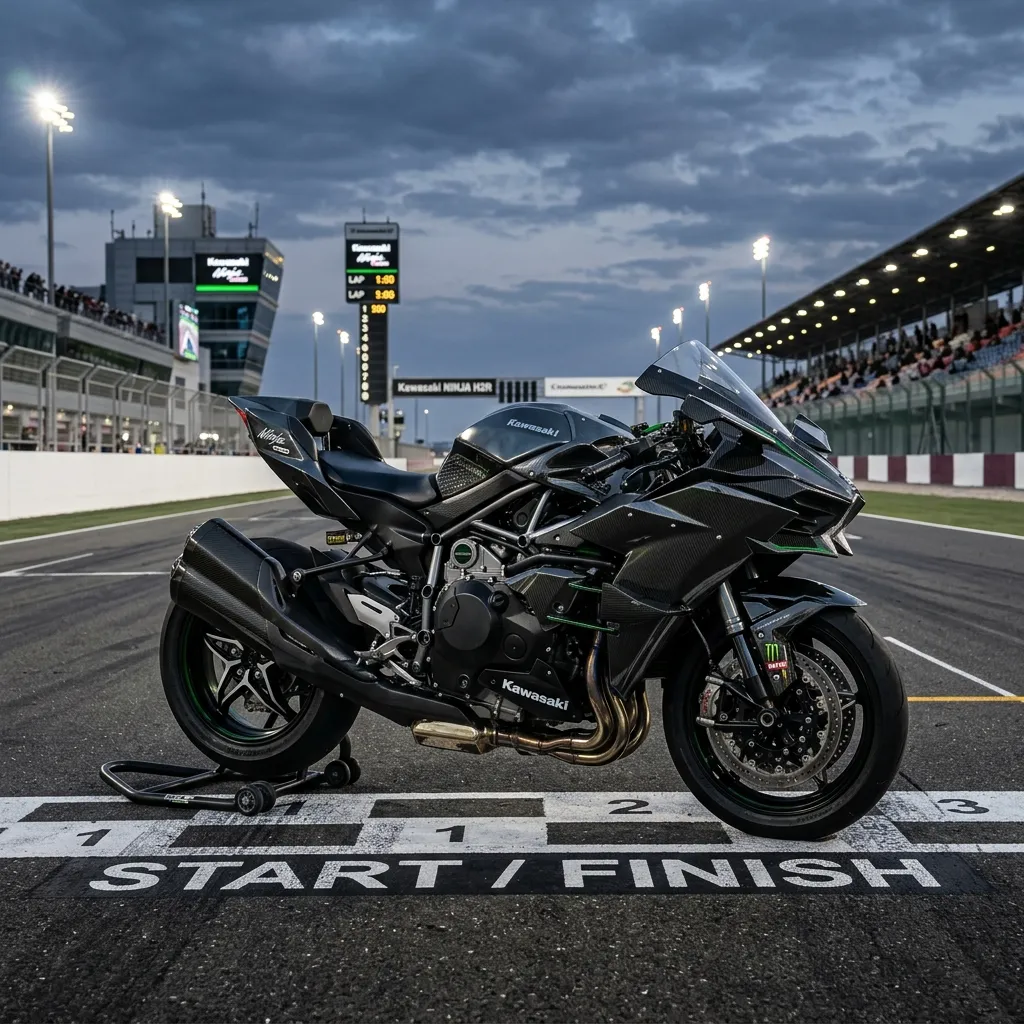
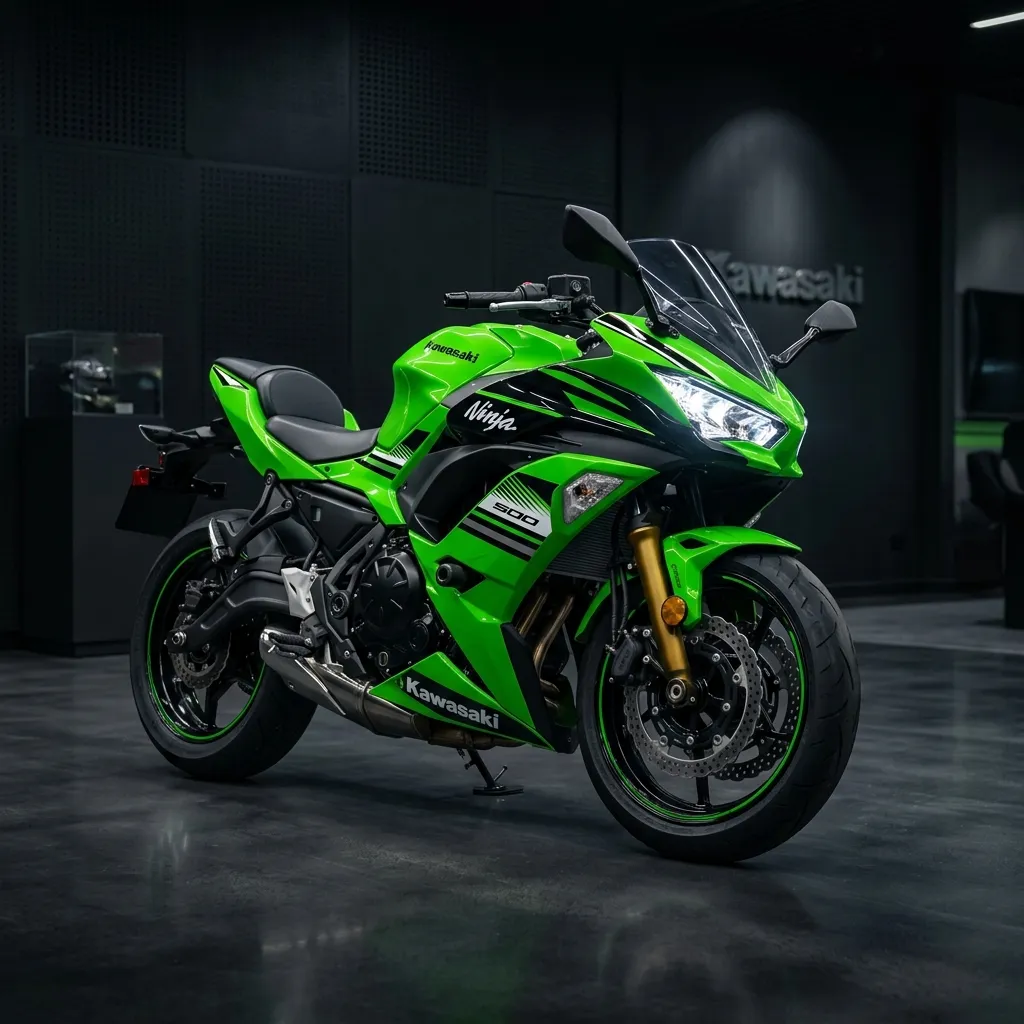
Complete technical review of the 2026 Kawasaki Ninja 300. Features a 296cc parallel-twin 8-valve DOHC liquid-cooled engine, 39.0 PS power, 26.1 Nm torque, 28 km/l mileage, 160 km/h top speed, 6-speed transmission with Assist & Slipper clutch, Uni-Trak rear suspension, 17L fuel tank (475 km range), Dual-Channel ABS, and Rs. 3.17 - 3.34 Lakh ($3,800 USD) price.
296cc Parallel-Twin Architecture & 13,000 RPM Valvetrain
The 2026 Kawasaki Ninja 300 is powered by a 296cc 4-stroke liquid-cooled 8-valve DOHC parallel-twin engine producing 39.0 PS at 11,000 rpm and 26.1 Nm of torque at 10,000 rpm. Equipped with dual 32mm digital throttle bodies and open-deck die-cast aluminum cylinders, the high-revving engine pulls continuously to its 13,000 rpm redline with minimal mechanical vibration, accelerating cleanly to 160 km/h.
Explore related entry supersport motorcycle reviews on our motorcycle comparison portal and browse our full lineup in the motorcycle reviews directory.
Tube Diamond Steel Chassis & Uni-Trak Monoshock Stability
Constructed around a high-tensile steel tube diamond chassis with rubber front engine mounts, the 179 kg supersport features 37mm front telescopic forks and a bottom-link Uni-Trak gas-charged rear monoshock with 5-way preload adjustability. The full aerodynamic fairing with integrated side air extractors channels hot radiator air away from rider legs.
Assist & Slipper Clutch, Petal Discs & Dual-Channel ABS
The race-derived assist and slipper clutch reduces clutch lever effort by 25% while preventing rear wheel lockup during aggressive high-rpm downshifts. 290mm front and 220mm rear petal disc brakes with dual-piston calipers and Dual-Channel ABS provide progressive stopping power across high-speed expressway runs.
28 km/l Fuel Economics & 475 km Touring Range
Delivering an average real-world fuel economy of 28.0 km/l alongside a class-leading 17-liter fuel tank, the Ninja 300 provides an expansive sports touring range of approximately 475 km per tank. Running costs average under Rs. 3.60 per kilometer. Calculate loan financing and monthly operating expenses using our bike finance and fuel calculator.
Frequently Asked Questions (FAQs)
What is the price of the Kawasaki Ninja 300 in 2026? +
The 2026 Kawasaki Ninja 300 is priced starting at Rs. 3.17 Lakh to Rs. 3.34 Lakh ex-showroom in India (approx. $3,800 USD).
What is the top speed and fuel economy of Kawasaki Ninja 300? +
The Ninja 300 achieves a GPS-verified top speed of 160 to 165 km/h and delivers an average real-world fuel economy of 26 to 28 km/l under mixed riding conditions.
Why is the Ninja 300 engine special compared to single-cylinder 300cc-400cc bikes? +
Unlike single-cylinder engines that produce heavy vibrations at high revs, the Ninja 300 uses a 180-degree parallel-twin engine with dual throttle valves, delivering silky-smooth power delivery all the way to 13,000 rpm.
How does the Ninja 300 compare to the KTM RC 390 and Yamaha R3? +
The Ninja 300 is priced more affordably than the Yamaha R3 and offers more relaxed, comfortable upright ergonomics than the aggressive track-focused KTM RC 390.
What is the fuel tank capacity and full-tank cruising range? +
With a large 17-liter fuel tank and an average fuel economy of 28 km/l, the Ninja 300 provides an expansive sports touring range of roughly 475 km per fill.
What braking hardware is equipped on the Ninja 300? +
It features a 290mm front petal disc brake with dual-piston calipers, a 220mm rear petal disc, and Dual-Channel ABS for fade-free stopping power.