
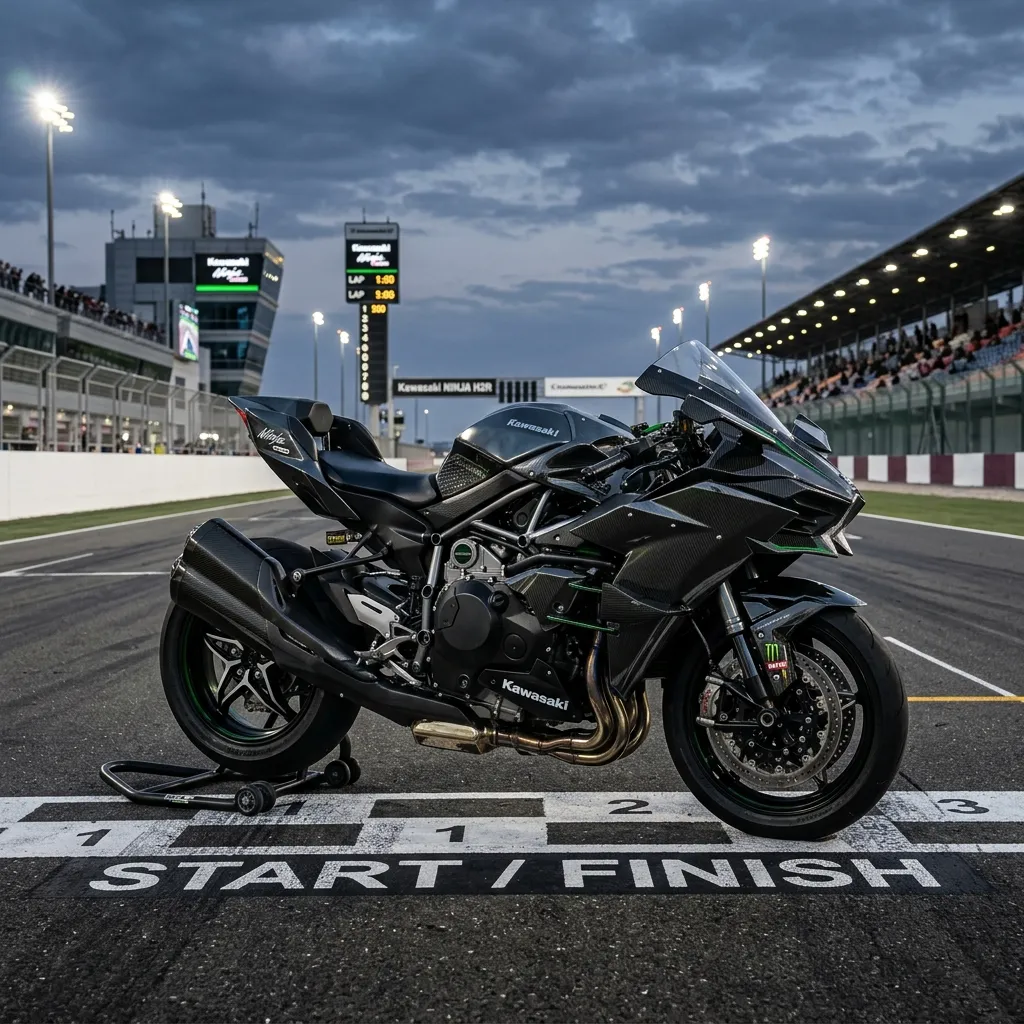
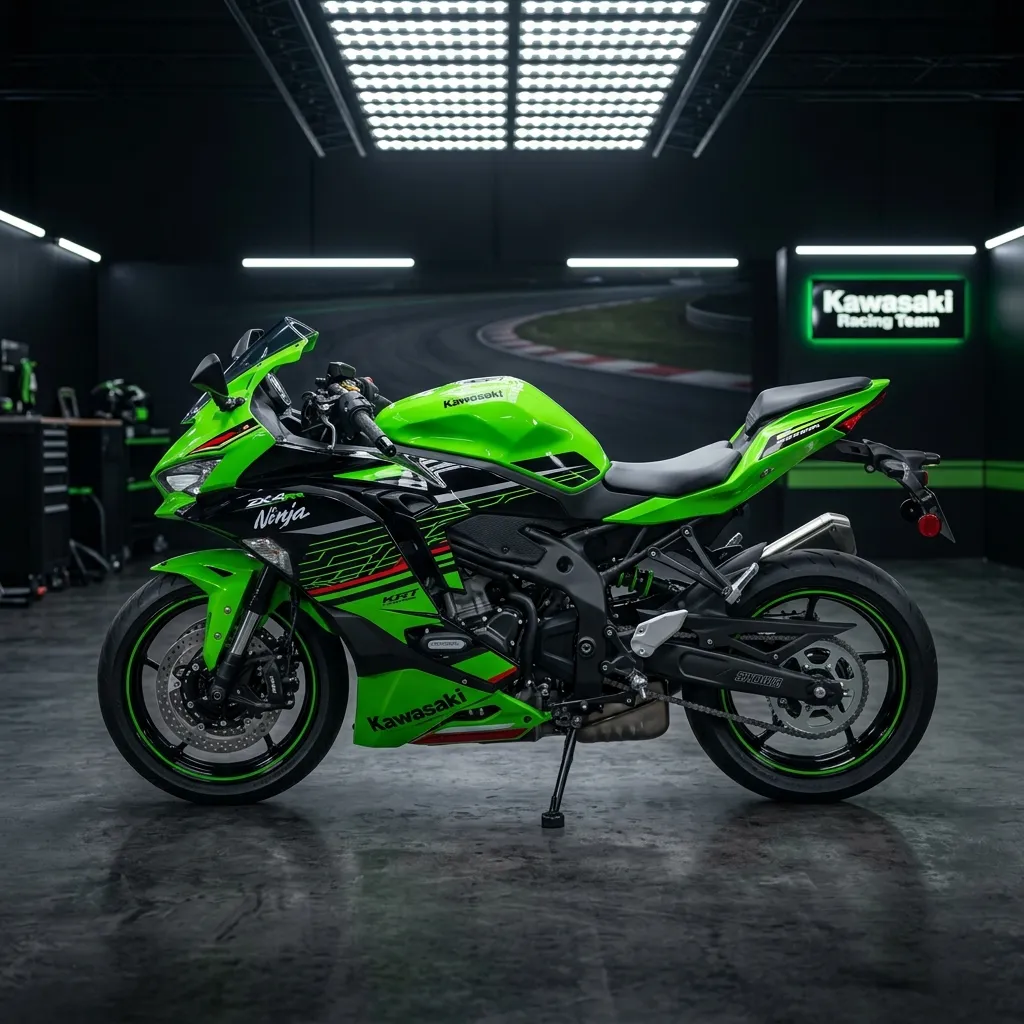
Complete technical review of the 2026 Kawasaki Ninja H2R track hyperbike. Features a 998cc supercharged inline-4 engine, 310 HP (326 HP Ram-Air), 165 Nm torque, 400 km/h top speed, carbon fiber aerodynamic downforce wings, 6-speed dog-ring transmission, Brembo Stylema calipers, Öhlins TTX36 rear shock, titanium megaphone exhaust, and $58,500 USD (Rs. 79.90 Lakh) price.
998cc Centrifugal Supercharged Powertrain & 326 HP Peak Output
The 2026 Kawasaki Ninja H2R is powered by a 998cc 4-stroke liquid-cooled DOHC 16-valve inline-4 engine equipped with an in-house developed planetary centrifugal supercharger. Spinning at 9.2 times crankshaft speed up to 130,000 rpm, the impeller pumps 200+ liters of high-pressure air into the plenum per second, generating 310 HP at 14,000 rpm (326 HP with Ram-Air pressurization) and 165 Nm of torque at 12,500 rpm for a top speed of 400 km/h.
Explore related flagship hyperbike reviews on our motorcycle comparison portal and browse our full lineup in the motorcycle reviews directory.
Carbon Fiber Aerodynamic Wings, Trellis Frame & Öhlins TTX36 Damping
Designed in collaboration with Kawasaki Aerospace Company, the H2R features carbon-fiber aerodynamic strakes and upper winglets that generate over 20 kg of downforce to prevent front-wheel lift at extreme track velocities. Built on an emerald green high-tensile steel trellis frame, suspension is managed by 43mm KYB AOS-II front forks and an Öhlins TTX36 rear gas monoshock.
Bosch 6-Axis IMU Telemetry, Dog-Ring Transmission & Brembo Stylema Brakes
Power transmission is handled by a MotoGP-derived 6-speed dog-ring gearbox with bi-directional Kawasaki Quick Shifter (KQS). A Bosch 6-axis IMU manages 9-mode KTRC traction control and KCMF cornering management, while dual 330mm Brembo semi-floating discs with Brembo Stylema monobloc calipers provide instant stopping power.
15 km/l Track Economics & Hyperbike Telemetry
Delivering a track fuel consumption average of 15.0 km/l alongside a 17-liter fuel tank, the H2R is engineered for high-intensity closed-course sessions. High-octane fuel and factory maintenance protocols ensure track readiness. Calculate loan financing and monthly operating expenses using our bike finance and fuel calculator.
Frequently Asked Questions (FAQs)
What is the price of the Kawasaki Ninja H2R in 2026? +
The 2026 Kawasaki Ninja H2R carries an MSRP of $58,500 USD in international markets / approx. Rs. 79.90 Lakh ex-showroom in India (approx. PKR 24 Million).
What is the top speed and horsepower of Kawasaki Ninja H2R? +
The Ninja H2R produces 310 HP (326 HP with Ram-Air pressurization) @ 14,000 rpm and holds a verified production motorcycle top speed record of 400 km/h (249 mph).
Is the Kawasaki Ninja H2R street-legal? +
No, the H2R is a dedicated closed-course track hyperbike equipped with racing slick tires, carbon aerodynamic wings in place of mirrors, no headlights, and an un-silenced titanium megaphone exhaust exceeding 120 dB.
How does the H2R supercharger work? +
Designed entirely in-house by Kawasaki Aerospace and Gas Turbine divisions, the centrifugal supercharger uses a 3D-machined aluminum impeller driven by a planetary gear train off the crankshaft, spinning at 9.2 times engine speed (up to 130,000 rpm).
What electronics package controls the Ninja H2R? +
It features a Bosch 6-axis Inertial Measurement Unit (IMU), Kawasaki Cornering Management Function (KCMF), 9-mode Kawasaki Traction Control (KTRC), Kawasaki Launch Control (KLCM), and Engine Brake Control (KEBC).
What braking and suspension components are fitted? +
It is equipped with dual 330mm Brembo discs with Brembo Stylema monobloc calipers, KIBS intelligent ABS, KYB AOS-II front forks, and an Öhlins TTX36 rear gas shock absorber.