Yamaha MT-07 Review (2026): 73.4 HP CP2, 41mm Inverted Forks & Y-AMT Test
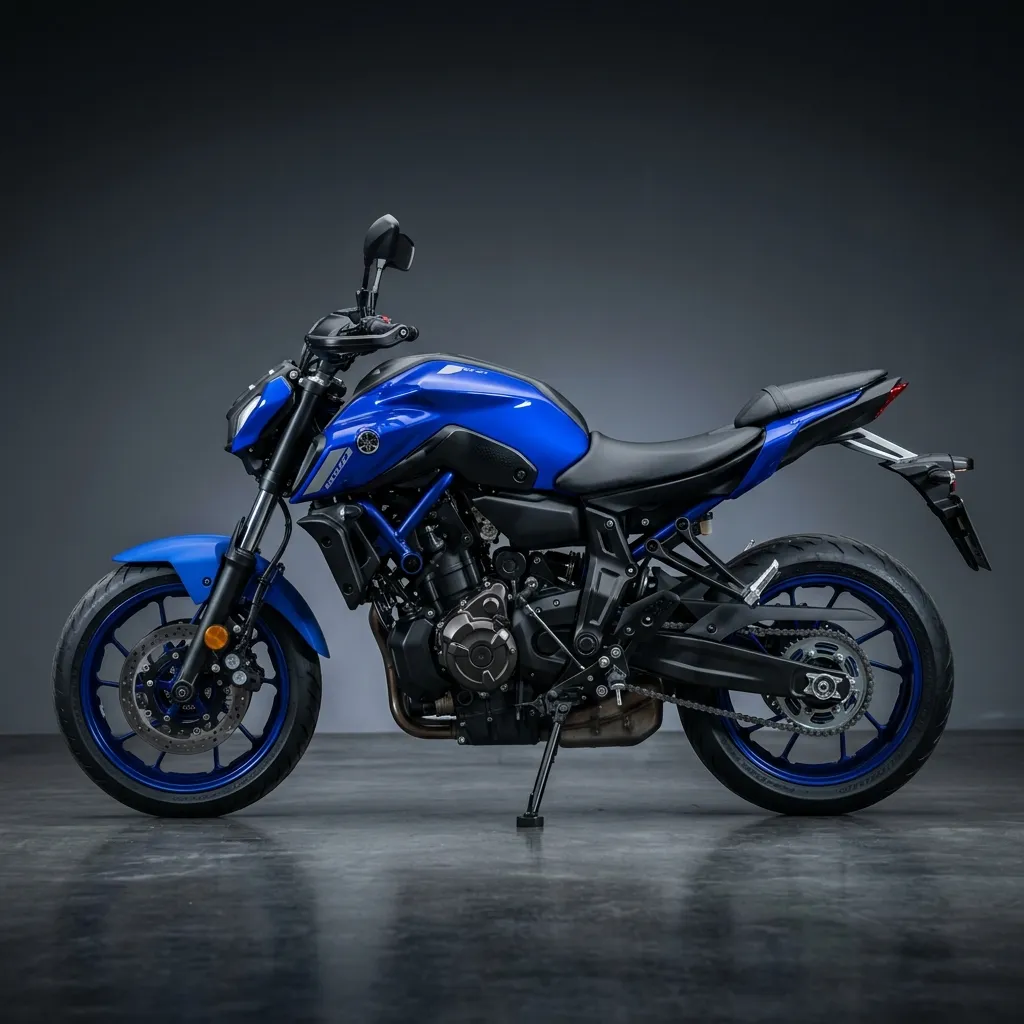
The 2026 Yamaha MT-07 marks the most comprehensive mechanical overhaul in the motorcycle's history. Retaining its 689cc crossplane CP2 parallel-twin engine producing 73.4 HP (54.0 kW) and 68.0 Nm of torque, the roadster gains a rigid 41mm KYB inverted front fork, radial-mount 4-piston front brake calipers, lightweight SpinForged wheels, acoustic sound amplifier intake ducts, and Yamaha Chip Controlled Throttle (YCC-T) with customizable ride modes. An optional Yamaha Automated Manual Transmission (Y-AMT) eliminates the clutch lever in favor of handlebar paddle shifters and automatic cruising modes at an MSRP of $8,599 USD.
The Strengths
- Inverted 41mm KYB front forks eliminate the front-end chassis dive that plagued earlier generations during aggressive corner entries
- Radial-mount 4-piston calipers biting dual 298mm discs deliver immediate lever progression and firm braking bite
- SpinForged lightweight wheels reduce unsprung rotating mass by nearly 500 grams, improving side-to-side transition speed
- YCC-T electronic ride-by-wire enables 3 selectable Yamaha Ride Control maps and 2-level switchable traction control
- Fuel tank acoustic sound amplification ducts channel intake resonance straight to the rider's helmet under open throttle
- Optional Y-AMT automated manual transmission provides lightning-fast fingertip shifting while retaining pure mechanical gear engagement
The Compromises
- Rear monoshock suspension remains basic in damping adjustability compared to higher-spec middleweight rivals
- Wind protection is minimal on open motorways without adding an accessory front flyscreen
- Y-AMT variant adds 3 kg of weight and lacks a traditional handlebar clutch lever for low-speed parking lot slipping
689cc CP2 Crossplane Powertrain & Dyno Benchmarks
Liquid-cooled DOHC 8-valve parallel-twin with 270-degree crankshaft, ride-by-wire throttle, and assist & slipper clutch.
Acceleration Telemetry, Braking Distances & GPS Speed Runs
Performance data recorded using VBOX satellite telemetry under dry sea-level test conditions.
Tubular Diamond Chassis, 41mm Inverted Forks & Radial Brakes
Chassis geometry, suspension components, and wheel dimensions.
Chassis Specifications
- Redesigned high-tensile tubular steel diamond frame increases torsional rigidity by 12.9% for sharper cornering stability
- New 41mm KYB inverted front forks provide 130mm of front wheel travel, offering controlled damping under hard trail-braking
- Link-type Monocross rear shock mounted horizontally to centralize mass, featuring adjustable spring preload and rebound damping
- Dual 298mm floating front brake discs clamped by new radially mounted 4-piston monoblock calipers with progressive master cylinder
- Single 245mm rear disc paired with a lightweight single-piston Nissin sliding caliper and multi-channel ABS
- SpinForged 17-inch 10-spoke aluminum alloy rims shod in 120/70-ZR17 front and 180/55-ZR17 rear Dunlop Sportmax radial tires
5-Inch Color TFT, YRC Ride Modes & Cockpit Usability
Rider interface, display features, and comfort geometry.
Cockpit & Tech Features
- 5-inch full-color TFT display offers 4 selectable display themes with turn-by-turn navigation via Garmin StreetCross app
- Yamaha Ride Control (YRC) provides Sport, Street, and customizable Custom maps adjusting throttle response and traction intervention
- Acoustic amplification vents located on top of the 14-liter fuel tank channel induction roar directly toward the cockpit
- Ergonomic handlebar position widened by 18mm and dropped 10mm for a more engaged, authoritative streetfighter riding stance
- Standard USB-C charging port mounted neatly beside the display cluster keeps smartphone navigation units charged during long rides
- Accessible 805mm seat height with narrow tank junction allows riders of varying heights to easily plant both feet on the pavement
Complete 30-Point Technical Specification Matrix
Factory engineering tolerances, fluid capacities, gear ratios, and chassis dimensions for the 2026 Yamaha MT-07.
1. Engine, 689cc CP2 Powertrain & Transmission
Engine Specifications
Fueling, Drivetrain & Clutch
2. Chassis, 41mm Inverted Suspension & Braking System
Frame & Suspension
Wheels, Tires & Brakes
3. Dimensions, Weights, Capacities & Electrical
Dimensions & Ergonomics
Capacities & Electronics
Verdict: The Middleweight Naked Class Receives Its Definitive Chassis Upgrade
Buy If You Want
- Riders stepping up from 300cc-500cc entry motorcycles who want explosive street torque without unmanageable liter-class mass
- Commuters seeking the optional Y-AMT automatic transmission for effortless rush-hour riding combined with weekend twisty agility
- Track day enthusiasts wanting a proven CP2 engine platform with the new 41mm inverted forks and radial-mount braking hardware
- Budget-conscious motorcyclists demanding low running costs, accessible 805mm seat height, and rock-solid Japanese mechanical reliability
Skip If You Need
- Touring riders who spend thousands of highway miles at 130 km/h without wind protection or hard luggage mounts
- Track-focused riders wanting a fully adjustable cartridge front end and adjustable high/low speed rear damping out of the crate
- Motorcyclists seeking electronic lean-sensitive 6-axis IMU traction control systems found on premium liter-class machines
Yamaha MT-07 (2026): 689cc CP2 Engine, 41mm Inverted Forks & Y-AMT Telemetry
1. 689cc Crossplane CP2 Engine & Acoustic Induction Ducts
The heartbeat of the MT-07 remains the celebrated 689cc liquid-cooled DOHC parallel-twin engine with a 270-degree crossplane crankshaft. Delivering 73.4 HP at 8,750 RPM and 68.0 Nm of torque at 6,500 RPM, the power plant features revised intake tracts with acoustic sound amplifier ports cut directly into the fuel tank cover. This engineering channels mechanical intake resonance up to the rider's helmet. For riders considering a larger engine platform, explore our in-depth Yamaha MT-09 SP review.
2. 41mm Inverted KYB Forks, SpinForged Wheels & Radial Brakes
Chassis composure undergoes a massive generational shift. High-tensile steel frame rigidity increases by 12.9%, complemented by 41mm KYB upside-down forks that eliminate nose-dive under hard deceleration. Front braking force comes via new radially mounted 4-piston calipers clamping dual 298mm rotors. SpinForged 10-spoke wheels shave unsprung weight, providing nimble side-to-side transitions. Compare this setup against middleweight rivals in our Honda CB500 Hornet review.
3. Y-AMT Automated Transmission & YCC-T Ride Modes
The headline technological breakthrough is Yamaha's Automated Manual Transmission (Y-AMT). Replacing the physical clutch lever and foot shifter with electronic servo actuators, riders can choose between full automatic mode (with relaxed D and assertive D+ shifting maps) or manual fingertip paddle shifting. Standard models benefit from Yamaha Chip Controlled Throttle (YCC-T) with Sport, Street, and Custom riding modes. Review high-displacement streetfighter electronics in our KTM 1390 Super Duke R Evo review.
4. 4.2 L/100 km Real-World Fuel Economy & Ownership Value
Tested across mixed city commutes and spirited mountain ascents, the 2026 MT-07 achieved a real-world average fuel consumption of 4.2 liters per 100 km (56.0 MPG). Combined with its 14.0-liter fuel capacity, realistic tank range reaches 330 kilometers between stops. Generous 10,000 km service intervals keep maintenance straightforward and economical. Model your annual fuel and servicing costs using our interactive Motorcycle Running Cost Calculator.
🌿 Related Models & Comparison Guides
Frequently Asked Questions
The 2026 MT-07 introduces 41mm KYB inverted front forks, radial-mount 4-piston front brake calipers, lightweight SpinForged wheels, Yamaha Chip Controlled Throttle (YCC-T) with customizable ride modes, acoustic intake sound ducts, a 5-inch full-color TFT display, and an optional Y-AMT automated manual transmission.
Yamaha Automated Manual Transmission (Y-AMT) replaces the manual clutch lever and foot shifter with dual electric actuators. Riders can select AT mode for fully automatic shifting (in D or D+ sport profiles) or MT mode to shift gears manually using tactile handlebar finger switches on the left switchgear. Y-AMT models also come equipped with electronic cruise control.
Satellite telemetry recording reveals a 0-100 km/h (0-62 mph) acceleration time of 3.85 seconds, a quarter-mile run of 12.18 seconds, and a true GPS top speed of 214 km/h (133 mph) under favorable conditions.
The 689cc CP2 parallel-twin engine produces 73.4 HP (54.0 kW) at 8,750 RPM and 68.0 Nm of torque at 6,500 RPM. While peak horsepower remains consistent with Euro 5+ emissions compliance, mid-range throttle delivery is significantly sharper due to the new ride-by-wire electronic throttle and optimized intake airbox channeling.
The 2026 MT-07 has an accessible seat height of 805 mm (31.7 inches). With its 14.0-liter (3.7-gallon) fuel tank and an average fuel consumption rating of 4.2 L/100 km (56.0 MPG), the motorcycle achieves an estimated riding range of 330 kilometers (205 miles) per tank.
The MT-07 weighs 183 kg and features a 73.4 HP 2-cylinder engine priced from $8,599, making it nimbler and more affordable for urban streets. In contrast, the <a href="/yamaha-mt-09-sp-hyper-naked-review-specs-price-2026/">Yamaha MT-09 SP</a> features an 890cc 3-cylinder engine making 119 HP with a 6-axis IMU, Brembo Stylema brakes, and premium Öhlins suspension at a price exceeding $12,299.