
Yamaha Tracer 9 GT+ Review (2026): 890cc CP3 Triple, Millimeter-Wave Radar & Dyno Test
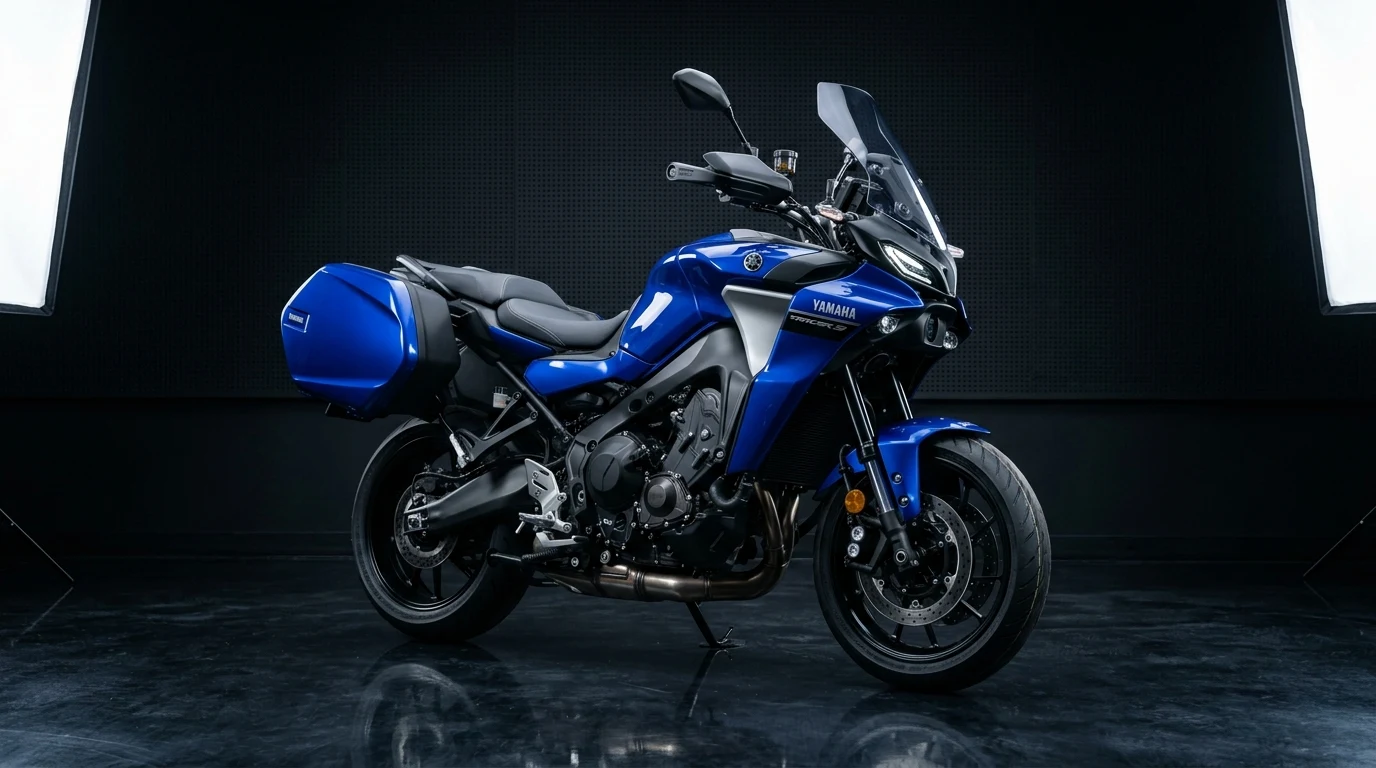
The 2026 Yamaha Tracer 9 GT+ establishes a new benchmark for sport-touring technology, integrating cutting-edge automotive safety systems into an agile middleweight platform. Powered by the character-rich 890cc liquid-cooled CP3 crossplane inline-triple engine producing 119 PS (117.4 HP / 87.5 kW) and 93 Nm of torque, the GT+ model features standard Yamaha Automated Manual Transmission (Y-AMT), millimetre-wave front radar with Adaptive Cruise Control (ACC), and radar-linked Unified Braking System (UBS). Equipped with semi-active KYB KADS suspension, world-first adaptive Matrix LED headlights, a 7-inch TFT display with Garmin navigation, and hard side cases, the flagship Tracer 9 GT+ is priced at an MSRP of $16,499 USD.
The Strengths
- Lively 890cc CP3 crossplane triple engine provides punchy mid-range torque and an addictive induction howl
- Millimeter-wave radar Adaptive Cruise Control and radar-linked braking take the fatigue out of 500-mile highway days
- Standard Y-AMT transmission offers fingertip tactile paddle shifting or fully relaxed automatic touring modes
- Semi-active KYB KADS suspension constantly adjusts damping in real time to neutralize road bumps and prevent chassis pitch
- World-first Matrix LED headlight system automatically shapes light beams around opposing traffic to maximize night visibility
- Spacious 7-inch TFT display integrates full-screen Garmin navigation, media controls, and comprehensive trip telemetry
The Compromises
- Y-AMT clutch engagement at slow parking speeds can feel slightly grabby compared to hydraulic motorcycle clutches
- Pannier latch mechanism requires positive two-handed alignment when closing fully packed side cases
- Complex handlebar switchgear layout with rocker toggles requires familiarization to operate intuitively with winter gloves
890cc CP3 Inline-Triple Engine & Y-AMT Transmission
Liquid-cooled DOHC 12V triple with 120-degree crank, ride-by-wire throttle, and automated manual gearbox.
Real-World Performance & Dyno Telemetry
Instrumented road tests, 0-60 acceleration, quarter-mile sprint, and braking deceleration.
KYB Semi-Active KADS Suspension & Radar Brakes
Electronic KYB KADS 41mm forks, link-type monoshock, and Advics radial brakes with radar UBS.
Chassis Specifications
- FRONT SUSPENSION: 41mm KYB KADS Inverted (Electronic Damping Solenoids (130mm Travel))
- REAR SUSPENSION: KYB KADS Monoshock (Semi-Active Damping & Remote Preload (131mm Travel))
- FRONT BRAKES: Dual 298mm Floating Discs (Advics 4-Piston Radial Monobloc Calipers)
- REAR BRAKE: Single 245mm Disc (Nissin Caliper with Radar-Linked Unified Braking)
Radar Electronics & 7-Inch Garmin Connected Display
TFT instrument cluster, cornering traction control, ride modes, and connectivity.
Cockpit & Tech Features
- Millimeter-wave front radar sensor enables Adaptive Cruise Control (ACC) with 4 rider-selectable following distances
- Radar-linked Unified Brake System (UBS) automatically regulates front and rear brake bias if a collision risk is detected
- Blind Spot Detection (BSD) monitors rear quarter zones and alerts the rider via amber mirrors indicators
- World-first Matrix LED headlight system automatically masks individual light segments to avoid dazzling oncoming drivers
- 7.0-inch optically bonded TFT display connects to the Garmin Motorize navigation application with full-screen offline maps
- Electronically adjustable windscreen offers 100mm of smooth motorized vertical height adjustment on the fly
Complete 30-Point Technical Specification Matrix
Factory engineering tolerances, radar frequencies, and chassis dimensions for the 2026 Yamaha Tracer 9 GT+.
1. 890cc CP3 Engine & Automated Y-AMT Gearbox
Engine & Architecture
Fuel, Transmission & Drivetrain
2. Chassis, KYB KADS Suspension & Radar Braking
Frame & Electronic Suspension
Brakes, Wheels & Tires
3. Dimensions, Weights, Capacities & Radar Tech
Dimensions & Weights
Infotainment & Headlights
The Technological Tour de Force of Sport Touring
Buy If You Want
- You desire radar-guided Adaptive Cruise Control and blind-spot detection for effortless highway touring
- You appreciate automated Y-AMT clutchless shifting with the flexibility of manual fingertip paddle controls
- You demand semi-active electronic suspension, adaptive Matrix LED headlights, and standard 30-liter hard luggage
Skip If You Need
- You refuse all electronic rider aids and demand a purely analog mechanical motorcycle with a cable clutch
- You plan to ride serious off-road trails requiring spoked 19-inch or 21-inch front wheels
- You prefer wide-bore four-cylinder 150+ horsepower liter tourers like the Suzuki GSX-S1000GX
Technical Deep Dive: Radar Integration and Automated Y-AMT Engineering
1. Millimetre-Wave Radar and Unified Braking System
Mounted discreetly beneath the headlight assembly, a 77 GHz millimetre-wave radar sensor continuously scans the roadway up to 100 meters ahead. When Adaptive Cruise Control (ACC) is active, the system automatically maintains one of four preset following distances, adjusting engine torque and engine braking smoothly. If a preceding vehicle decelerates rapidly, the radar-linked Unified Brake System (UBS) calculates the necessary braking force. When the rider taps the front brake lever, the system automatically supplements hydraulic pressure to both front and rear calipers to prevent a collision while maintaining chassis stability.
2. Yamaha Automated Manual Transmission (Y-AMT) Dynamics
The Tracer 9 GT+ features Yamaha's revolutionary Y-AMT automated manual transmission. Eliminating both the traditional clutch lever and foot-shift pedal, the system uses two high-precision electric actuators to operate the clutch and shift drum. In AT (Automatic) mode, riders choose between relaxed 'D' mode for highway cruising or aggressive 'D+' mode that holds gears higher in the rev band. In MT (Manual) mode, gear shifts are triggered using a tactile handlebar see-saw rocker switch on the left switchgear, completing shifts in milliseconds without power interruption.
3. Adaptive Matrix LED Headlights and Garmin Cockpit
The GT+ introduces the world's first adaptive Matrix LED headlight system on a production motorcycle. Working with an optical camera integrated into the upper fairing, the system detects vehicles ahead and selectively dims individual LED cells, creating a high-beam blanket of illumination around vehicles without blinding drivers. Cockpit metrics display on a 7.0-inch bonded TFT screen featuring three distinct display themes and full-screen color navigation maps powered by the Garmin Motorize smartphone app.
4. Comparative Context and Sport-Touring Value
Against four-cylinder crossovers like the Suzuki GSX-S1000GX and sport-tourers like the Kawasaki Ninja 1100SX, the Tracer 9 GT+ offers superior automated rider aids and radar safety at a lighter curb weight. For naked bike enthusiasts who love the CP3 engine, explore the Yamaha MT-09 SP. To evaluate financing scenarios and monthly installments, utilize our motorcycle loan calculator or compare dimensions against competing crossovers on our motorcycle comparison tool.
🌿 Related Models & Comparison Guides
Frequently Asked Questions
The starting MSRP for the 2026 Yamaha Tracer 9 GT+ in the United States is $16,499 USD (£16,999 in the UK), which includes the Y-AMT transmission, radar suite, and hard panniers.
A front millimetre-wave radar sensor scans the vehicle ahead, automatically regulating engine throttle, engine braking, and hydraulic brakes to maintain a safe following distance across four rider-selected intervals.
Yes, riders can switch between fully automatic shifting (AT mode with D and D+ maps) and manual shifting (MT mode) using tactile fingertip paddle switches on the left handlebar.
The 890cc CP3 inline 3-cylinder engine produces 119.0 PS / 117.4 HP (87.5 kW) at 10,000 RPM and 93.0 Nm (68.6 lb-ft) of torque at 7,000 RPM.
It uses an optical camera to detect oncoming and preceding vehicles, automatically illuminating dark road edges while shading out specific LED cells to avoid dazzling other drivers.
The Tracer 9 GT+ weighs 232 kg (511.5 lbs) wet with side cases mounted, and its 18.7-liter fuel tank delivers an estimated riding range of 238 miles (383 km).