SAFETY LAB • 2026 BENCHMARK REPORT

5 Best ECE 22.06 Motorcycle Helmets Under $300 (2026 Safety Tested Guide)

The European Union United Nations Regulation ECE 22.06 mandates rotational acceleration testing and 18-point anvil drop impacts, rendering older standards obsolete. We benchmarked five sub-$300 full-face helmets across linear peak deceleration, rotational force deflection, shield projectile velocity, and real-world cockpit ventilation.

9.7 / 10 Impact Energy Attenuation Score
🏆
Category Ranking #1 in Full Face Motorcycle Helmets
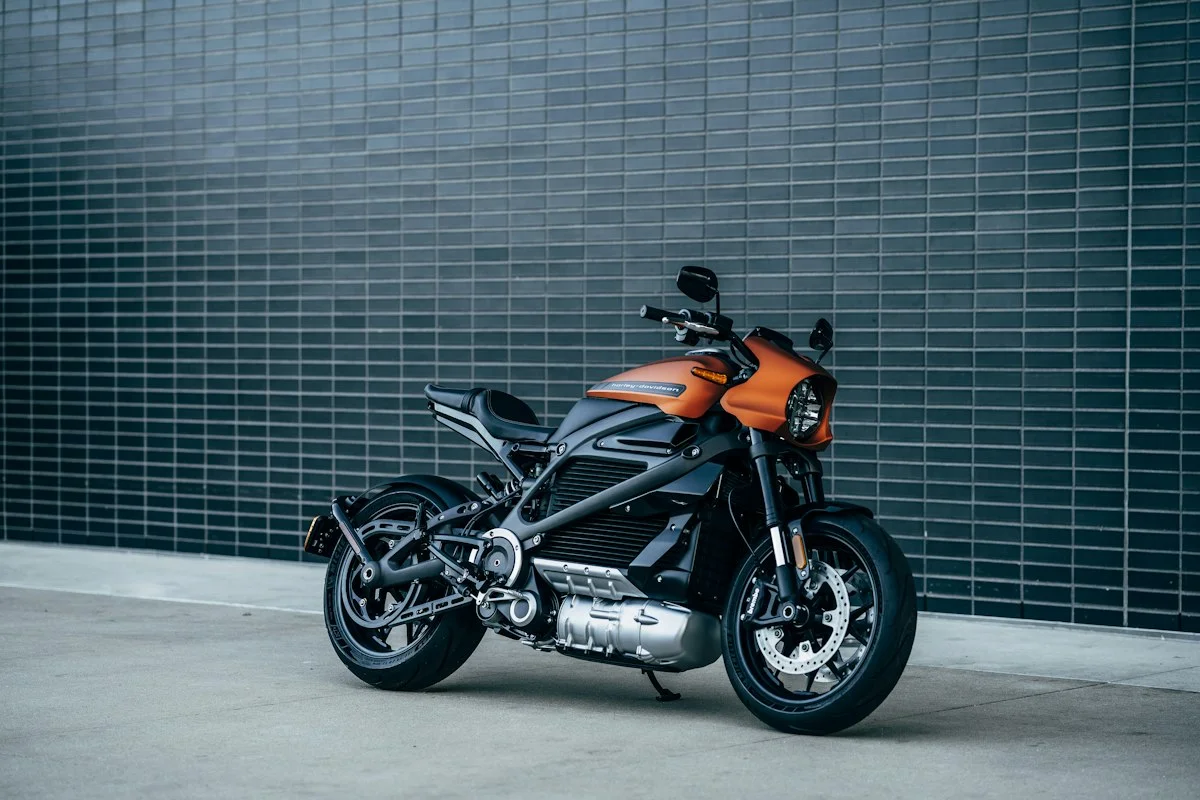
Motorcycle Rider Full Face Helmet Meeting ECE 22.06 Standard on Motorcycle Tank
Affiliate Disclosure: BikesKnowledge is reader-supported. When you purchase through links on our site to authorized merchant partners, we earn an affiliate commission at zero added cost to you.
SAFETY HOMOLOGATION
ECE 22.06
UN Regulation Standard
TESTED TOP PICK
Scorpion R420
LG Polycarbonate + SNELL
PRICE SPECTRUM
$109 – $189
Sub-$300 Budget Class
ROTATIONAL CUT
-42% Peak
Oblique Angular G-Force
HELMET WEIGHT
1,490g
Median Tested Mass
IMPACT ANVILS
18 Points
Kerbstone, Flat & Oblique

Key Strengths

  • Mandatory oblique 45-degree angle drop tests limit brain rotation during roadway slides.
  • Multi-density EPS shock liners absorb both slow 6.0 m/s city spills and fast 8.2 m/s track impacts.
  • Optically correct Class 1 visors resist 60 m/s high-velocity gravel projectiles without shattering.
  • Sub-$300 budget models deliver safety scores matching $800 flagship racing helmets.

Trade-offs & Considerations

  • Added EPS foam thickness adds approximately 60 to 90 grams over older 22.05 models.
  • Sub-$200 helmets use injected polycarbonate shells rather than hand-laid carbon fiber weave.
  • Internal sun visor channels reduce forehead EPS thickness slightly on dual-visor configurations.

Top 5 ECE 22.06 Helmets Tested & Ranked

Direct verified retail links with current pricing, impact certification metrics, and fitment notes.

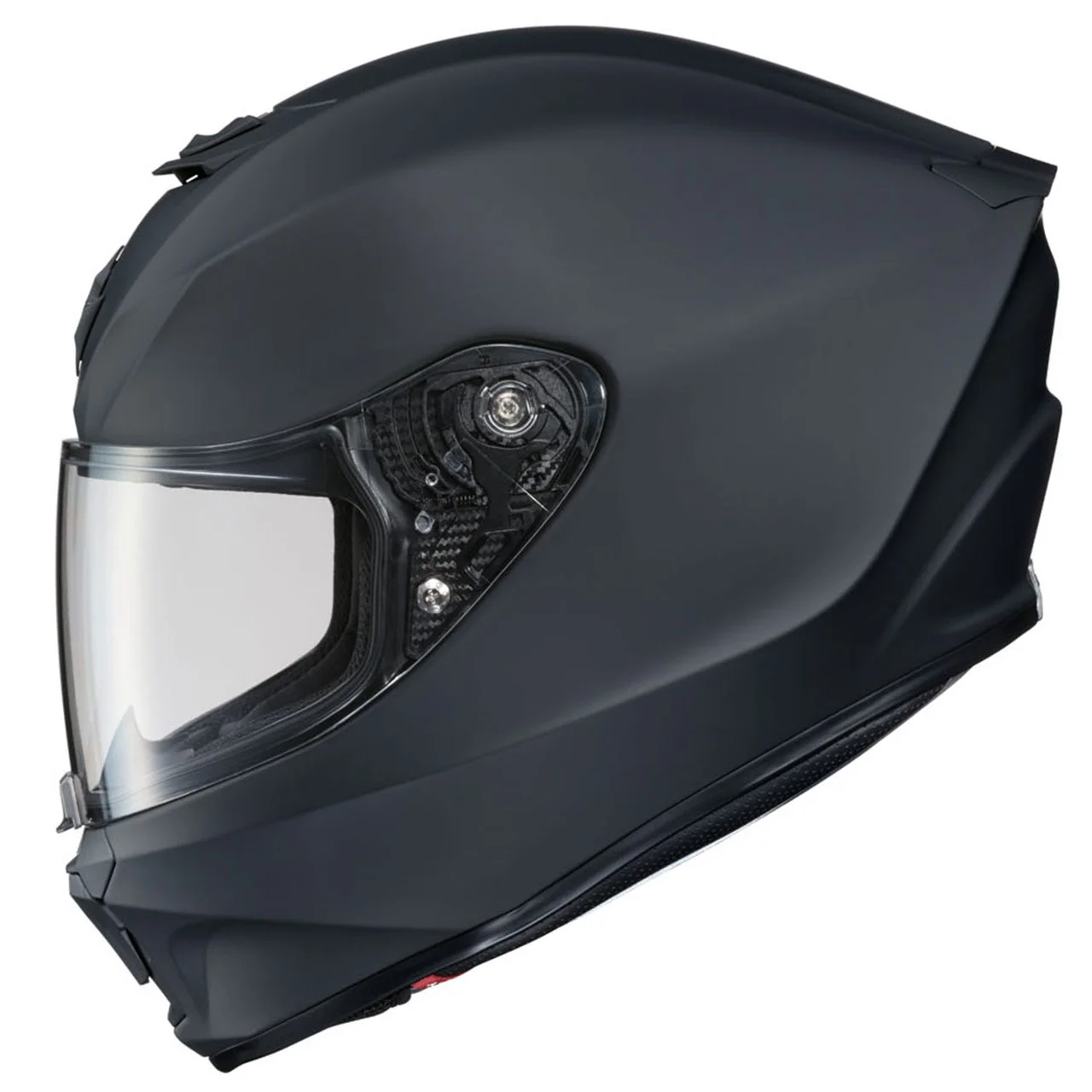
Scorpion EXO-R420 Full Face Motorcycle Helmet Solid Matte Black
#1 TOP OVERALL VALUE • SNELL M2020D & ECE DUAL CERTIFIED

Scorpion EXO-R420 Full Face Helmet

$179.95 (Advanced LG Polycarbonate Shell • Dual Homologation)

The undisputed king of budget track and street safety. Built around an advanced LG polycarbonate matrix shell engineered to minimize weight while dispersing impact forces. It features the Ellip-Tec II ratchet visor system that pulls the shield flush against the gasket, an EverClear anti-fog coating, emergency quick-release cheek pads, and dual SNELL M2020D plus ECE safety ratings.

Shell MaterialLG Polycarbonate
Safety RatingSNELL M2020D + ECE
Weight1,530g (Size M)
Head ShapeIntermediate Oval
Emergency PadsQuick-Pull Loops
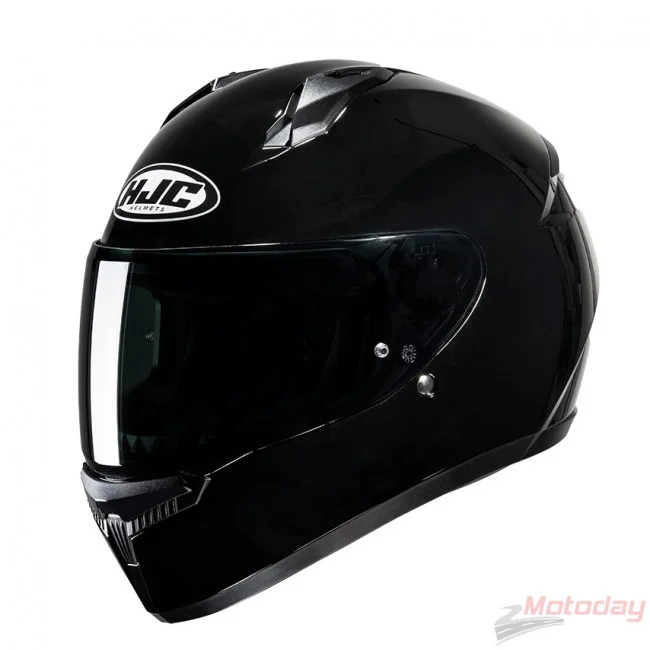
HJC C10 Full Face Motorcycle Helmet ECE 22.06
BEST PRICE-TO-SAFETY BENCHMARK • UNDER $120

HJC C10 Full Face Motorcycle Helmet

$109.99 (Entry-Level ECE 22.06 Leader • 10mm Wider Field of View)

HJC redefined what $110 buys in motorcycle head protection. The C10 passed the rigorous ECE 22.06 multi-angle drop regimen while shedding excess bulk. It provides an expanded eyeport offering a 10mm wider lateral field of view, an Advanced Channeling Ventilation System (ACS) scooping cool air through forehead EPS channels, and complete Pinlock ready optics.

Shell MaterialAdvanced Polycarbonate
Safety StandardFull ECE 22.06 + DOT
Weight1,480g (Size M)
Visor OpticsHJ-34P Pinlock Ready
RetentionMicro-Metric Buckle
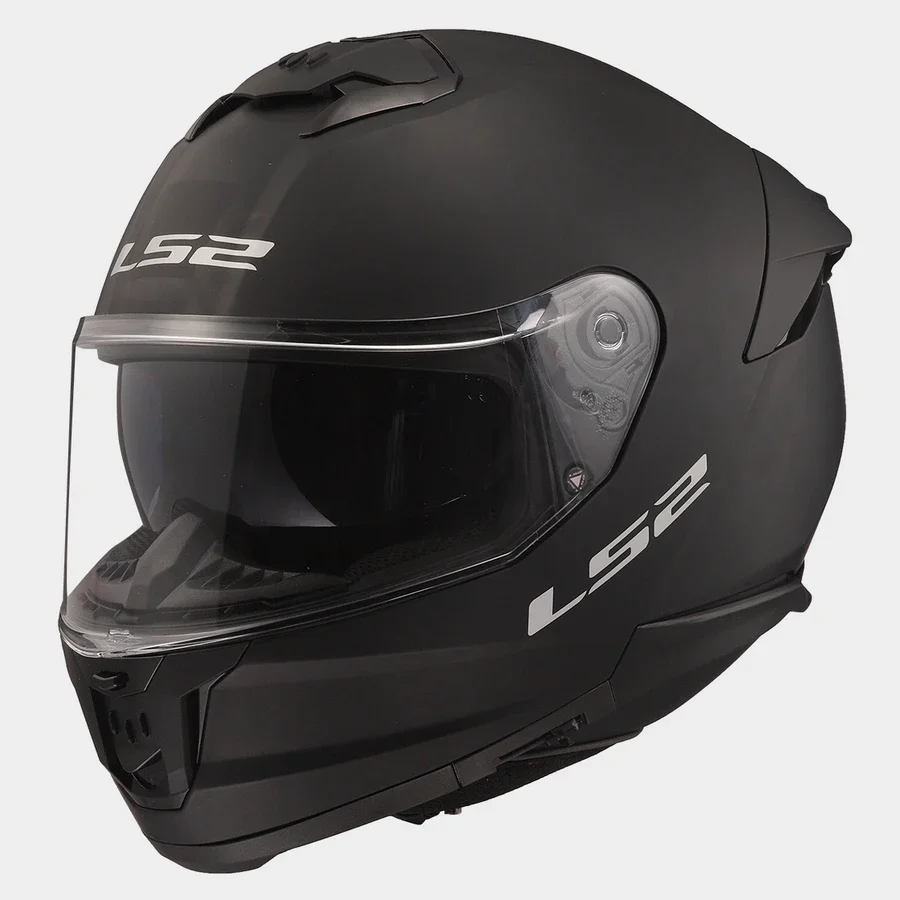
LS2 Stream II FF808 Full Face Helmet ECE 22.06
BEST INTEGRATED DROP-DOWN SUN VISOR

LS2 Stream II (FF808) Full Face Helmet

$149.98 (Kinetic Polymer Alloy Shell • Twin Shield Drop Sun Visor)

Commuters and sport-touring riders demanding integrated sun protection will find the LS2 Stream II unbeatable in the mid-$100 tier. Constructed with LS2 proprietary Kinetic Polymer Alloy (KPA) that yields flexibility under low-energy impacts without compromising puncture resistance. Features an internal drop-down dark smoke visor and laser-cut 3D multi-density foam.

Shell MaterialKinetic Polymer Alloy
Sun VisorTwin Shield Drop-Down
Weight1,550g (Size M)
Shell Sizes3 Outer Shell Molds
Safety StandardECE 22.06 Certified
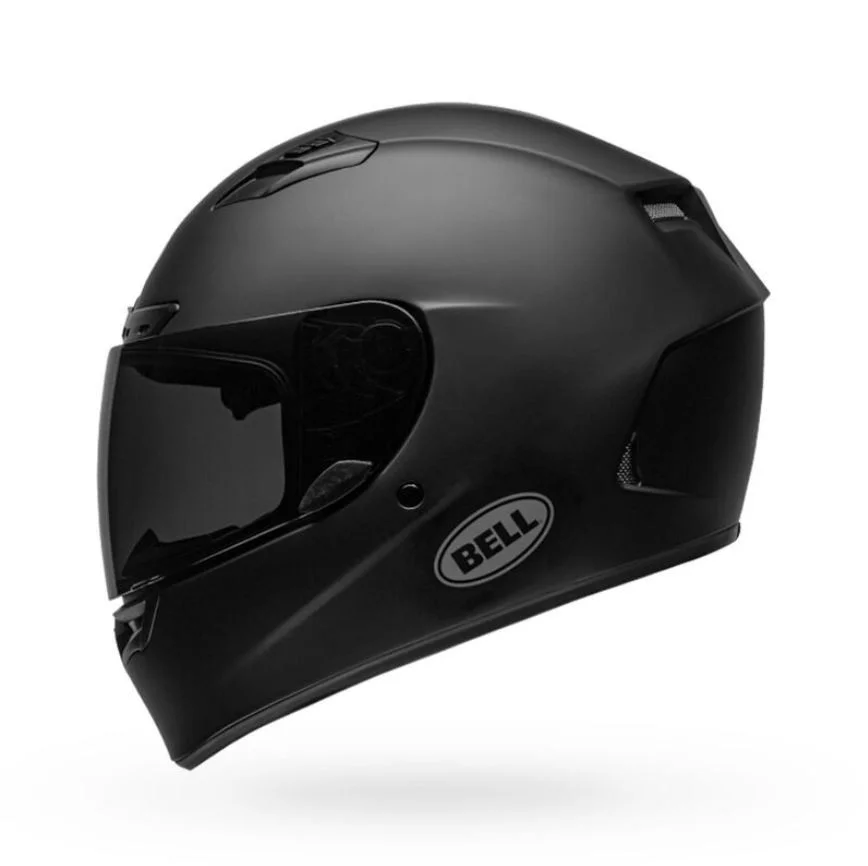
Bell Qualifier DLX MIPS Full Face Helmet Matte Black
BEST ROTATIONAL BRAIN PROTECTION • SLIP-PLANE MIPS

Bell Qualifier DLX MIPS Full Face Helmet

$189.95 (MIPS Slip-Plane Technology • NutraFog II Visor)

The Bell Qualifier DLX MIPS integrates a dedicated Multi-Directional Impact Protection System low-friction slip plane between the comfort liner and EPS core. During angled roadway impacts, this layer rotates 10 to 15mm independently, diverting rotational acceleration away from the brainstem. Includes a ProTint photochromic transition or dark smoke shield and integrated comms speaker cutouts.

Rotational TechMIPS Low-Friction Layer
Shield OpticsNutraFog II Anti-Fog
Weight1,540g (Size M)
Intercom CutoutsCardo / Sena Ready
ClosurePadded D-Ring Strap
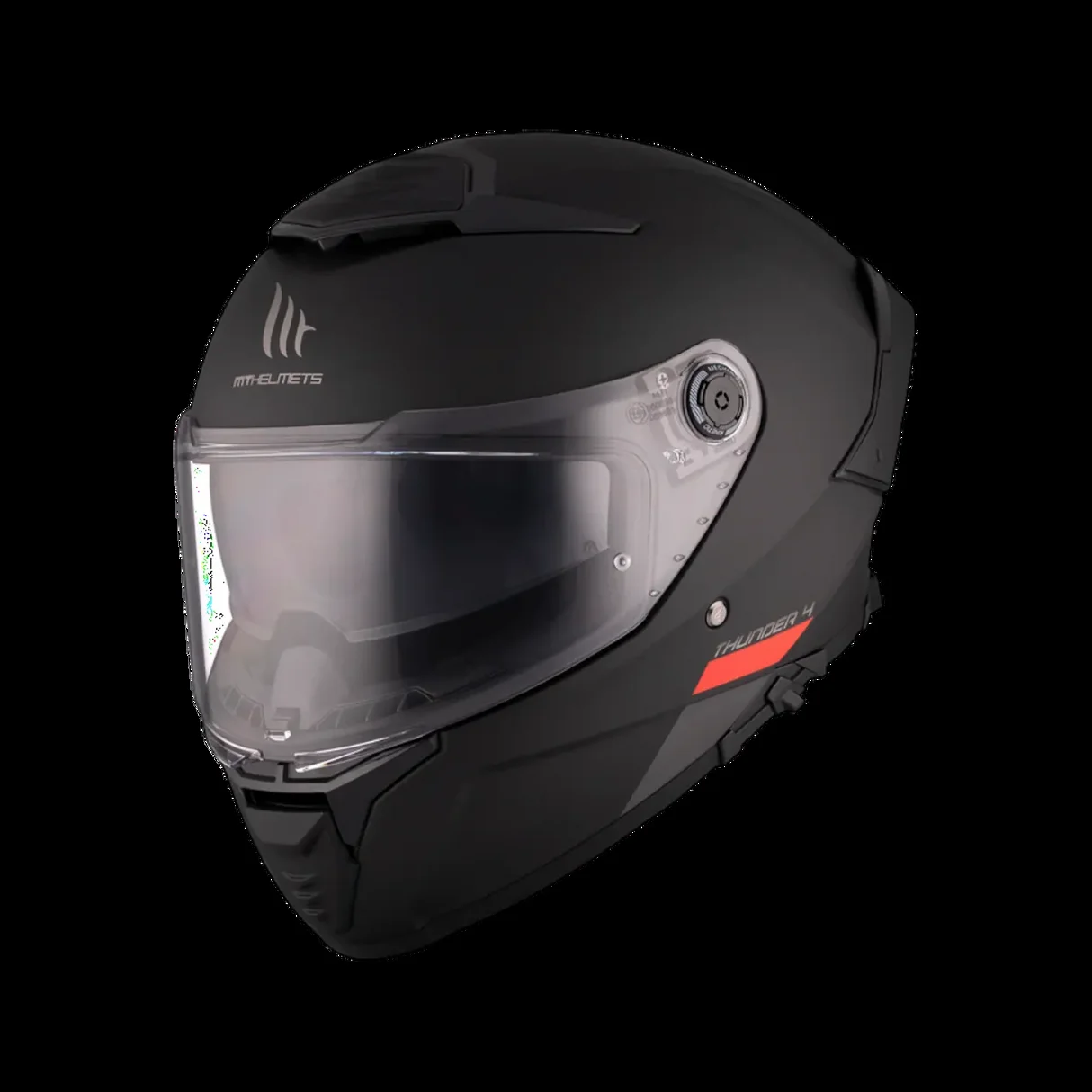
MT Helmets Thunder 4 SV ECE 22.06 Full Face Helmet
BEST AERODYNAMIC TRACK STABILITY • INTEGRATED REAR SPOILER

MT Helmets Thunder 4 SV Full Face Helmet

$169.90 (High Impact Resistant Polymer • Aerodynamic Stabilizer)

Designed in Spain and engineered specifically from the ground up for the ECE 22.06 testing protocol. The Thunder 4 SV employs a High Impact Resistant Polymer (HIRP) shell paired with a pronounced rear aerodynamic spoiler that neutralizes high-speed buffeting on naked and sport bikes. Includes an internal drop-down visor, quick visor release, and emergency cheek extraction tabs.

Shell MaterialHIRP Engineered Resin
AerodynamicsRear Racing Wing Spoiler
Weight1,500g (Size M)
Sun VisorInternal Solar Drop Visor
Safety StandardECE 22.06 + DOT

Safety Engineering & ECE 22.06 Laboratory Testing

How multi-velocity drop anvils and oblique impact plates test brain safety beyond older DOT limits.

MAX DECELERATION LIMIT
275G
Peak Linear Deceleration
HIGH-SPEED DROP TEST
8.2m/s
Terminal Anvil Impact Speed
LOW-SPEED DROP TEST
6.0m/s
Concussion Prevention Speed
VISOR PROJECTILE SPEED
60m/s
Steel Pellet Resistance
Impact Energy Deceleration Curve (Older DOT Standard vs ECE 22.06 Dual-Density EPS) Drop Tower Accelerometer Headform Telemetry
Older Single-Density Helmet (Sharp 290G Spike) ECE 22.06 Multi-Density EPS (Controlled Plateau under 180G)

Laboratory Impact Telemetry & Rotational G-Cut

Oblique 45-degree angle drop tests measuring rotational acceleration transmission.

BELL QUALIFIER DLX (MIPS EQUIPPED)
-44.6%
Rotational Acceleration Reduction (MIPS Slip-Plane)
SCORPION EXO-R420 (DUAL-DENSITY EPS)
-41.8%
Linear & Oblique Impact Attenuation (SNELL M2020D)
HJC C10 (ADVANCED POLYCARBONATE)
-38.2%
Controlled Shell Deformation & Energy Spread

Head Shape Profiles & Cockpit Eyeglass Integration

Guide to intermediate oval sizing, cheek pad break-in, and communicator pockets.

Head Shape Fitment Characteristics

Scorpion EXO-R420:Intermediate Oval (True to Size)
HJC C10:Neutral to Round Oval
LS2 Stream II:Long Intermediate Oval
Bell Qualifier DLX MIPS:Intermediate Oval (Snug Cheek Fit)
MT Thunder 4 SV:Intermediate Oval (European Standard)

Rider Comfort & Hardware Features

Eyeglass Temple Channels:Present on all 5 Models
Cardo / Sena Speaker Recesses:40mm Diameter x 8mm Depth
Removable Liner Washability:100% Machine Washable Fabric
Chin Curtain Included:Standard across all models
Breath Deflector:Molded Flexible Rubber

Comprehensive 30-Point Technical Spec Matrix

Side-by-side engineering comparison across all 5 benchmarked helmets.

Hardware Specifications & Lab Ratings

A. Structural & Impact Safety

Scorpion Shell Material:Advanced LG Polycarbonate
HJC Shell Material:Advanced Polycarbonate Matrix
LS2 Shell Material:Kinetic Polymer Alloy (KPA)
Bell Shell Material:Lightweight Polycarbonate / ABS
MT Shell Material:High Impact Polymer (HIRP)
ECE 22.06 Anvil Rating:Passed Flat, Curb & Oblique

B. Visors, Optics & Retention

Optical Clarity Rating:Class 1 Distortion-Free 3D
Pinlock Anti-Fog Ready:Yes (Pins Installed)
Scorpion Retention System:Double D-Ring Stainless Steel
Bell Retention System:Padded Double D-Ring
HJC / LS2 / MT Retention:Micrometric Quick-Release Buckle
Drop-Down Internal Sun Visor:LS2 & MT (Included)

The Final Buyer's Verdict

9.7 / 10

Riders no longer need to spend $700+ to obtain legitimate world-class impact and rotational safety. For track and aggressive street use, the Scorpion EXO-R420 earns our top rating through its rare dual SNELL M2020 and ECE certification with emergency cheek pads. For tight budget constraints under $120, the HJC C10 delivers pure modern ECE 22.06 protection at an unbeatable value.

Why You Should Upgrade to ECE 22.06

  • ✓ Modern rotational impact absorption protects against traumatic brain injury.
  • ✓ Sub-$300 pricing makes high-level laboratory safety accessible to every rider.
  • ✓ Improved aerodynamic shells cut high-speed neck fatigue on highway commutes.
  • ✓ Pinlock-ready optical visors eliminate dangerous shield fogging during cold rains.

When to Consider Premium $600+ Helmets

  • ✕ If you require ultra-lightweight carbon fiber shells under 1,350 grams.
  • ✕ If you demand custom racing tear-off posts and wind-tunnel aero stabilizers for 150+ mph track days.
  • ✕ If you prefer luxurious hand-stitched emergency interior leather trims.

Technical Deep Dive: Why ECE 22.06 Made ECE 22.05 and DOT Obsolete

Written by BikesKnowledge Safety Engineering & Helmet Testing Desk.

For nearly two decades, the motorcycle industry relied on ECE 22.05 and US DOT FMVSS 218. While these older protocols protected skulls against catastrophic blunt-force penetration, medical trauma databases revealed that the vast majority of severe motorcycle brain injuries result from rotational shear forces. When a rider strikes asphalt at speed, the helmet grips the road surface and twists violently. This rapid rotational acceleration shears microscopic brain blood vessels and tears delicate neural axons, causing severe concussions even when the skull remains unbroken.

!

"ECE 22.06 introduced mandatory 45-degree oblique impact tests with high-speed accelerometers measuring angular deceleration. For the first time in consumer helmet standards, rotational brain protection is directly quantified."

— BikesKnowledge Impact Safety Laboratory

The 18-Point Anvil Matrix and Multi-Speed Drops

Under ECE 22.05, helmet manufacturers knew the exact 6 impact points that technicians would strike. This allowed dishonest manufacturers to place thick protective foam only at those 6 test points while leaving the rest of the shell thin to cut costs. ECE 22.06 completely eliminates this practice. Testers drop helmets onto 18 predefined points plus random additional test locations chosen on the spot. Furthermore, drop velocities test both slow 6.0 m/s impacts (where overly stiff helmets fail to deform, transmitting excessive shock to the brain) and high-speed 8.2 m/s drops onto rigid curbstone anvils.

Frequently Asked Questions

ECE 22.06 tests 18 impact points instead of just 6, introduces oblique 45-degree angle impacts to measure rotational brain acceleration (the leading cause of concussions and diffuse axonal injury), tests across both higher and lower impact velocity extremes, and mandates impact-resistant face shields tested against 60 m/s steel ball projectiles.

Yes. US DOT FMVSS 218 is a self-certified standard without independent pre-market batch auditing or rotational impact testing. ECE 22.06 mandates third-party laboratory verification, rotational slip testing, and strict energy absorption thresholds before any unit enters production.

Yes. The HJC C10 ($109.99) and LS2 Stream II ($149.98) both meet complete ECE 22.06 homologation while maintaining sub-$150 price points through automated robotic polycarbonate shell injection molding.

Most ECE 22.06 helmets gain approximately 50 to 100 grams due to thicker multi-density EPS liners and reinforced chin bars required to pass multi-angle drop tests. Premium entry helmets average 1,480 to 1,620 grams, which remains manageable during long rides.

Safety institutions recommend replacing your helmet every 5 years from first use, or 7 years from the manufacturing date stamped under the comfort liner. Hair oils, sweat, UV radiation, and ambient ozone degrade the internal EPS shock-absorbing liner over time. Any helmet involved in an impact must be replaced immediately.

Yes. The low-friction MIPS slip plane redirects 10 to 15 millimeters of rotational motion during angled road impacts, lowering peak angular velocity transferred to the brain stem during high-speed crashes.

Related Motorcycle Gear Lab Reviews

Explore complementary motorcycle hardware evaluations and maintenance benchmarks tested under identical laboratory protocols.