
Kawasaki KLX300 Review (2026): 43mm Inverted Fork Compliance, 137 kg Trail Agility & Dyno Test
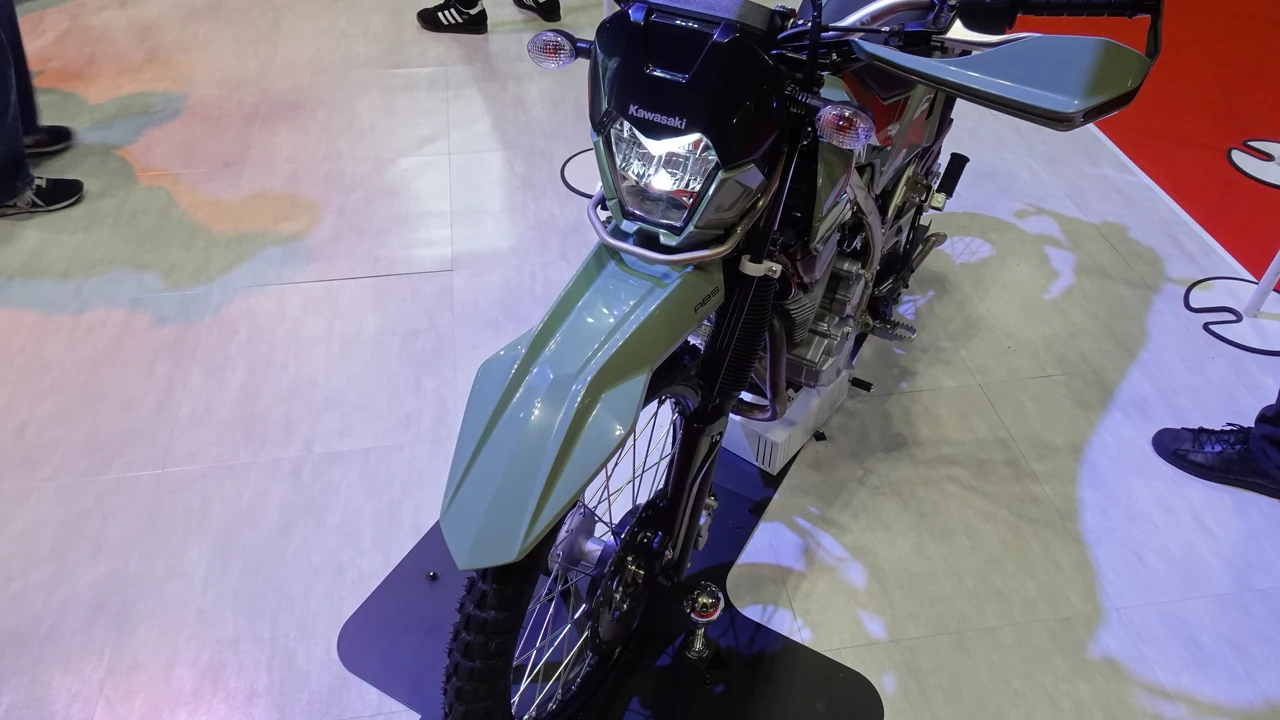
The 2026 Kawasaki KLX300 represents the benchmark for accessible, lightweight dual-sport capability. Powered by a responsive 292cc liquid-cooled DOHC 4-valve single producing 26 HP and 24 Nm of torque, it pairs a box-section high-tensile steel perimeter frame with trail-tuned 43mm inverted cartridge forks offering 10.0 inches of travel, 21-inch front and 18-inch rear dirt rims, and a featherweight 137 kg (302 lbs) wet curb weight at a value-packed MSRP of $6,199 USD.
The Strengths
- Heavy-duty 43mm inverted cartridge front forks provide 10.0 inches of travel with adjustable compression damping
- Responsive 292cc liquid-cooled DOHC single features gear-driven counter-balancer for smooth highway cruising
- High-tensile steel perimeter frame delivers excellent structural stiffness over rocky trail washouts and log hops
- Full-size 21-inch front and 18-inch rear spoked wheels accept all standard enduro and knobby off-road tire compounds
- Featherweight 137 kg (302 lbs) wet curb weight makes sand recoveries and tight woods turnarounds effortless
- Aggressive KX-inspired bodywork with slim radiator shrouds and flat motocross-style saddle
The Compromises
- Compact 7.6-liter (2.0-gallon) fuel tank limits exploration range to roughly 230 kilometers before reserve
- Firm 895mm (35.2-inch) dirt-bike saddle height requires confident inseam reach for newer riders on loose hills
- Modest 26 HP peak output requires downshifting to 5th gear when battling headwinds on fast highway inclines
292cc Liquid-Cooled DOHC Single & 6-Speed Transmission
Engineered with electrofusion-coated aluminum cylinder, 4-valve combustion chamber, and digital Keihin fuel injection.
Dual-Sport Telemetry, Single-Track Runs & Highway Tests
Telemetry logged across rugged desert tracks, rocky mountain single-tracks, and paved backroads.
Perimeter Steel Frame, 43mm Inverted Forks & Uni-Trak Shock
Chassis geometry, suspension components, and wheel dimensions.
Chassis Specifications
- Rigid high-tensile steel perimeter frame engineered with D-section upper rails for trail impact absorption
- Front 43mm inverted cartridge forks delivering 254mm (10.0 in) of travel with 16-way adjustable compression damping
- Rear Uni-Trak gas-charged shock with piggyback reservoir offering 231mm (9.1 in) travel, fully adjustable for rebound and preload
- Front 250mm petal disc gripped by twin-piston hydraulic caliper providing progressive modulation on loose dirt
- Rear 240mm petal disc with single-piston caliper engineered for precise rear brake trail steering
- Heavy-duty wire-spoke wheels (21-inch front, 18-inch rear) fitted with Dunlop D605 dual-purpose knobby tires
Digital LCD Pod, KX Ergonomics & Trail Protection
Rider interface, display features, and comfort geometry.
Cockpit & Tech Features
- Compact fully digital LCD instrument cluster displaying digital bar tachometer, speedometer, clock, and dual trip meters
- Flat motocross-style fuel tank and seat junction allowing the rider to slide far forward over the triple clamps
- Wide serrated steel footpegs providing exceptional boot traction in slippery river crossings and muddy climbs
- Dual high-efficiency radiator cores with fan cooling for low-speed technical rock crawls in high ambient heat
- Factory engine frame guards, rear brake caliper protector, and integrated rear luggage tool bag
Complete 30-Point Technical Specification Matrix
Official Kawasaki Heavy Industries engineering tolerances, fluid capacities, dimensions, and maintenance data.
1. Engine, Single-Cylinder Powertrain & Gearbox
Engine Architecture
Transmission & Fluid Specs
2. Chassis, Suspension, Wheels & Brakes
Chassis & Suspension
Brakes & Geometry
3. Performance Telemetry, Economy & Commercial Value
Performance Telemetry
Pricing & Warranty
Verdict: The Most Capable, Suspension-Superior Lightweight Dual-Sport on the Market
Buy If You Want
- Trail riders demanding superior 43mm inverted cartridge forks with 10 inches of travel and adjustable damping
- Commuters and weekend explorers wanting an agile, lightweight 137 kg dual-sport that easily loads on hitch carriers
- Riders seeking reliable Japanese liquid-cooled engineering with a gear-driven engine balancer that calms highway vibes
- Dual-sport riders who want full-size 21-inch front and 18-inch rear spoked wheels for infinite knobby tire choices
Skip If You Need
- High-speed interstate tourers seeking 130+ km/h sustained cruising speeds and expansive luggage fairings
- Shorter riders who find an 895mm (35.2-inch) tall dirt bike seat height intimidating in rocky hill climbs
Kawasaki KLX300: 43mm Inverted Forks, 292cc DOHC Single & Real-World Trail Economics
1. 43mm Inverted Cartridge Forks: The Segment-Defining Advantage
The headline feature separating the Kawasaki KLX300 from budget dual-sports like the Honda CRF300L is its front suspension. Kawasaki fits large 43mm inverted cartridge forks providing 10.0 inches (254mm) of wheel travel with 16-way adjustable compression damping. The massive outer tubes resist torsional twist when front wheels strike deep ruts or rocks at speed, keeping steering geometry true. Contrast this long-travel setup with middleweight adventure bikes in our Honda XL750 Transalp review.
2. 292cc Liquid-Cooled Single-Cylinder Engine & 6-Speed Gearing
Displacing 292cc from a 78.0mm bore and 61.2mm stroke, the DOHC 4-valve engine generates 26.0 HP at 8,000 RPM and 24.0 Nm of torque at 7,000 RPM. A gear-driven engine balancer quells secondary vibration, allowing comfortable 100 km/h cruising on secondary highways. The 6-speed wide-ratio transmission features a low 1st gear for technical rock climbs and a relaxed 6th gear overdrive. Compare this lightweight single with supermoto machines in our Ducati Hypermotard 698 Mono review.
3. 137 kg Agile Trail Chassis & KX Motocross Ergonomics
Weighing only 137 kg wet with all fluids, the KLX300 is remarkably easy to lift over trail obstacles or pick up after a low-speed tip-over. The high-tensile steel perimeter chassis borrows its frame rails from Kawasaki's KX motocross racers, placing the rider in an aggressive standing position with narrow radiator shrouds for seamless knee lock. Contrast this dirt-oriented agility with middleweight adventure tourers in our Suzuki V-Strom 800DE review.
4. 31.5 km/L Fuel Economy, Maintenance & Low Trail Ownership Costs
Averaging 31.5 km/L across mixed single-track trail and road commuting, the KLX300 yields about 240 kilometers of range from its 7.6-liter tank. Routine oil changes require only 1.5 liters, and valve check intervals occur every 12,000 km, making it one of the most affordable off-road motorcycles to maintain long term. Model your annual trail riding fuel and maintenance costs with our interactive Motorcycle Running Cost Calculator.
🌿 Related Models & Comparison Guides
Frequently Asked Questions
The 2026 Kawasaki KLX300 carries an MSRP of $6,199 USD in North America in Lime Green or Battle Gray, with the Cypher Camo Gray edition available for $6,399 USD (approx. ₹5,75,000 INR ex-showroom).
The KLX300 features significantly stiffer 43mm inverted cartridge forks with adjustable compression damping (vs non-adjustable 43mm forks on the CRF300L) and a more sophisticated piggyback rear shock, eliminating the excessive suspension softness often criticized on the Honda.
The 292cc liquid-cooled single produces 26.0 HP at 8,000 RPM and 24.0 Nm of torque at 7,000 RPM, achieving a verified GPS top speed of 135 km/h (83.9 mph) on flat highway pavement.
The standard seat height is 895 mm (35.2 inches). However, because the motorcycle weighs only 137 kg and the suspension sags noticeably under rider weight, riders with a 30-inch inseam can manage the bike comfortably by touching the balls of their feet.
No. The standard KLX300 dual-sport is intentionally equipped with non-ABS hydraulic petal disc brakes (250mm front, 240mm rear), giving off-road riders direct, uninhibited brake control for locking the rear wheel into tight dirt switchbacks.
The KLX300 comes fitted with Dunlop D605 dual-purpose knobby tube-type tires (3.00-21 front, 4.60-18 rear), offering a 50/50 balance between paved road adhesion and dirt trail grip.