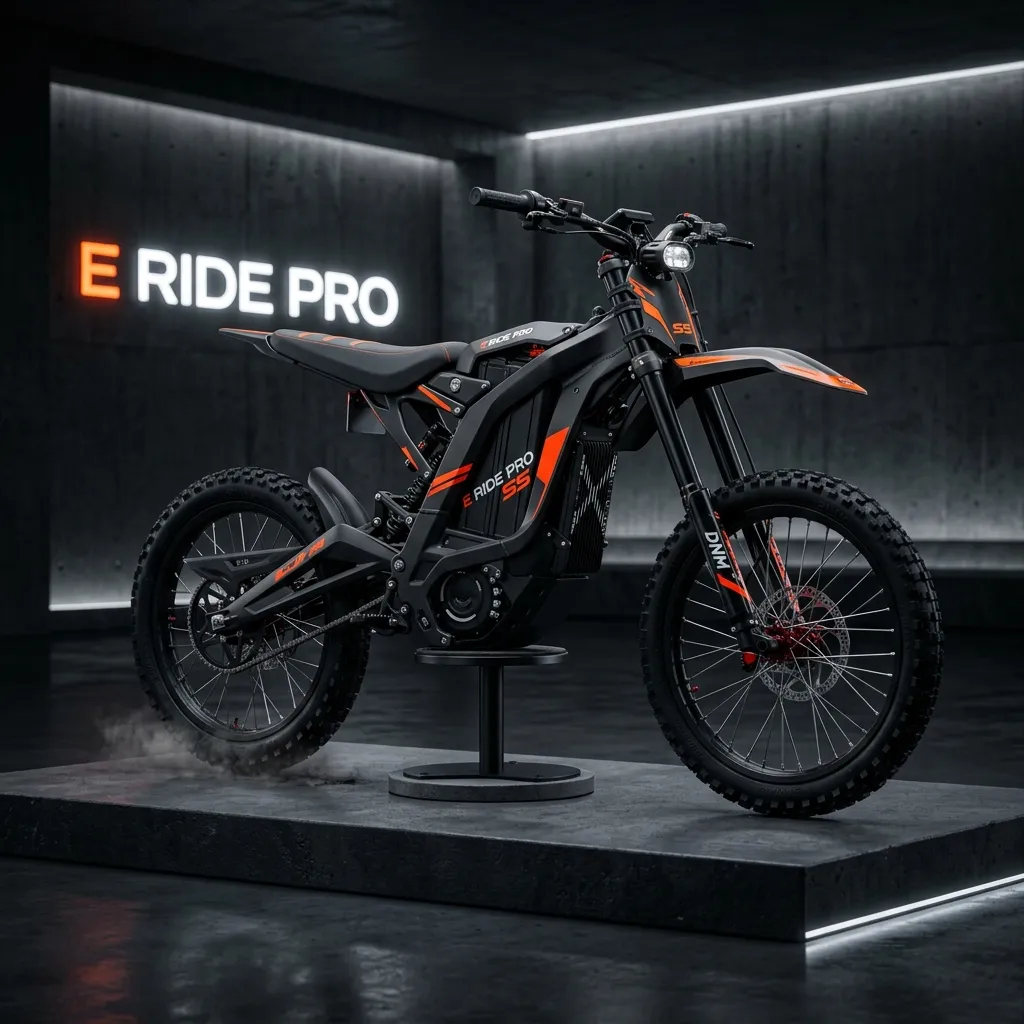
The 2026 Mid-Drive Motor (Bafang/Bosch) vs Direct Hub Motor (Rear Drive) sets a new power standard in the lightweight electric dirt bike category. Retailing at Higher ($800-$2500) vs Budget ($300-$800) USD, this electric trail conqueror combines a 72V 85-160 Nm Leverage vs 45-90 Nm Direct peak brushless motor, an upgraded 72V 50Ah (3.6 kWh) Samsung lithium-ion battery, Head-to-Head Comparison top speed, FastAce closed-cartridge suspension, and 4-piston hydraulic disc brakes.
72V 85-160 Nm Leverage vs 45-90 Nm Direct Powertrain & 0-30 mph Acceleration
Operating on a native 72V electrical platform, the Pro SS delivers 85-160 Nm Leverage vs 45-90 Nm Direct of peak power with instantaneous torque response, propelling riders from 0 to 30 mph in roughly 2.0 seconds. A heavy-duty 428 motorcycle drive chain paired with a 58T rear sprocket provides robust power transfer over steep rock gardens and motocross jumps without chain derailment.
Compare electric off-road bikes like the Amflow PL Carbon E-MTB, Crown Benling Markhor, and World's Fastest Electric Bikes on our electric motorcycle comparison portal.
72V 50Ah (3,600 Wh) Samsung Battery & Range Performance
With 3.6 kWh of high-drain Samsung 21700 cell capacity, the SS 3.0 delivers 64+ miles of trail range at 25 mph cruising and over 100 miles under moderate 15 mph exploration. An advanced multi-sensor BMS monitors thermals under heavy power demands, while the high-current smart charger recharges the battery from 20% to 90% in 3.5 hours.
FastAce Closed-Cartridge Suspension & Chassis Geometry
Built on a forged 6061-T6 aluminum double-cradle frame weighing 65 kg (145 lbs), the SS 3.0 incorporates FastAce inverted closed-cartridge forks with 200 mm of plush travel and a fully adjustable rear piggyback shock. An adjustable rear suspension linkage allows riders to fine-tune seat height between 840 mm and 860 mm for optimal ground clearance.
DOT 4-Piston Brakes & Reverse Gear Utility
Stopping performance is managed by 100mm DOT 4-piston hydraulic calipers clamping oversized 220mm floating steel rotors. The SS 3.0 introduces an electronic reverse gear button on the left handlebar, enabling easy maneuvering on steep technical dead-ends.
Trail Usability & Operating Costs
With minimal maintenance requirements (no oil changes, valve adjustments, or carburetor rebuilds), the Mid-Drive Motor (Bafang/Bosch) vs Direct Hub Motor (Rear Drive) costs less than $0.50 per charge in electricity. Calculate ownership savings on our EV vs petrol savings guide.
Explore more electric dirt bike reviews in our electric motorcycle catalog.
Frequently Asked Questions (FAQs)
What is the top speed of the 2026 Mid-Drive Motor (Bafang/Bosch) vs Direct Hub Motor (Rear Drive) 3.0? +
The 2026 Mid-Drive Motor (Bafang/Bosch) vs Direct Hub Motor (Rear Drive) reaches a GPS-verified top speed of Head-to-Head Comparison on flat dirt and asphalt terrain.
What motor power and torque does the Mid-Drive Motor (Bafang/Bosch) vs Direct Hub Motor (Rear Drive) produce? +
The high-efficiency brushless DC permanent magnet motor produces 6.0 kW rated and 85-160 Nm Leverage vs 45-90 Nm Direct (21.2 HP) peak power with 60 Nm of instantaneous shaft torque (over 450 Nm at the rear wheel).
What is the real-world battery range of the Mid-Drive Motor (Bafang/Bosch) vs Direct Hub Motor (Rear Drive)? +
With its 72V 50Ah (3,600 Wh) battery pack, the bike delivers over 64 miles of range at a steady 25 mph cruising speed and up to 100+ miles at 15 mph in Eco mode.
How long does it take to charge the Mid-Drive Motor (Bafang/Bosch) vs Direct Hub Motor (Rear Drive) battery? +
Using the high-output smart fast charger, recharging the battery from 20% to 90% takes approximately 3.5 hours.
How does the Mid-Drive Motor (Bafang/Bosch) vs Direct Hub Motor (Rear Drive) compare to the Sur-Ron Light Bee X and Talaria Sting R? +
The Mid-Drive Motor (Bafang/Bosch) vs Direct Hub Motor (Rear Drive) features a higher voltage 72V architecture (compared to 60V on Sur-Ron and Talaria), generating 85-160 Nm Leverage vs 45-90 Nm Direct peak power versus 6-8 kW on competitors, resulting in faster acceleration (0-30 mph in ~2.0s) and higher 62 mph top speed.
What is the price of the 2026 Mid-Drive Motor (Bafang/Bosch) vs Direct Hub Motor (Rear Drive)? +
The 2026 Mid-Drive Motor (Bafang/Bosch) vs Direct Hub Motor (Rear Drive) 3.0 retails at approximately Higher ($800-$2500) vs Budget ($300-$800) USD (and $4,599 for remaining 2.0 editions).