Best EV Scooty Under ₹1 Lakh in India
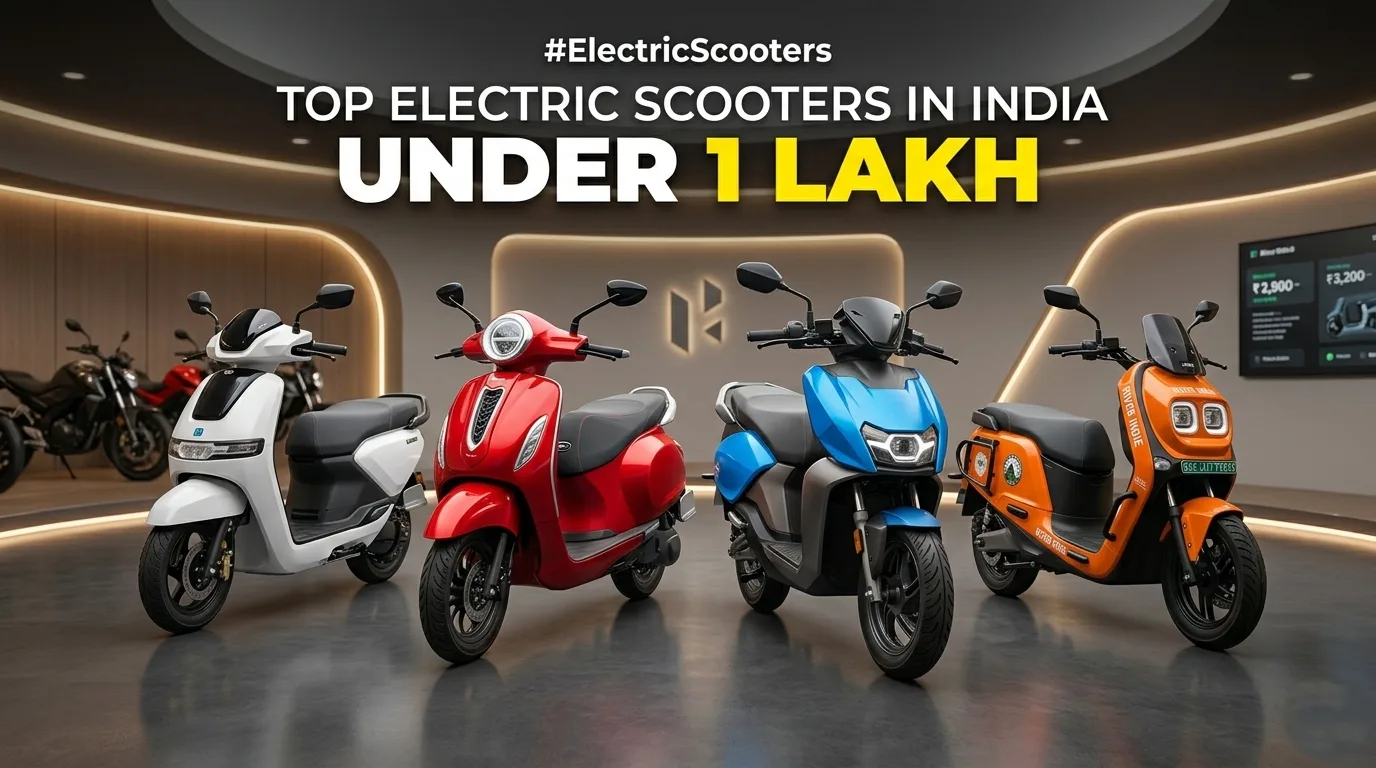
We ranked, tested, and compared the top 6 electric scooters in this segment — so you don’t overpay by a single rupee. Real specs, real savings, zero fluff.
With petrol hovering above ₹110/litre and the government’s PM E-DRIVE scheme making subsidies easier to claim, 2026 is the most financially compelling year to switch to an electric scooter. But the ₹1 lakh segment is crowded — Ola, Bajaj, Hero, Ather, TVS and Ampere are all competing for your wallet with wildly different strengths.
We cut through the noise. This guide ranks the best EV scooties under ₹1 lakh based on real-world range, build quality, after-sales service, software reliability and value for money — not just brochure specs.
Running costs for EV scooters are just ₹0.15–0.50/km versus ₹5–7/km for petrol alternatives. A 40 km/day commuter saves over ₹65,000 in fuel alone over 3 years.
1. Why Buy an EV Scooty Under 1 Lakh in India in 2026?
Three forces have converged to make this the best time to buy an electric scooter in this segment:
The Subsidy Stack is Real
The PM E-DRIVE scheme (successor to FAME-II) provides ₹2,500 per kWh of battery, capped at ₹10,000 per vehicle. Layer this on top of state incentives — Gujarat (₹10,000), Maharashtra (₹5,000), Delhi (₹10,000 scrappage bonus) — and 100% road tax waivers in 5 states, and you could realistically save ₹15,000–₹25,000 off the sticker price depending on your state.
The Technology Has Matured
Unlike 2022, when range anxiety was justified, sub-₹1 lakh scooters today offer 80–242 km of range, 4G connectivity, OTA software updates, anti-theft systems, and fast-charging. The Ola S1 X Gen 3 charges 0–80% in under 4 hours at home. Hero Vida VX2 Plus can charge both removable batteries simultaneously in under 6 hours.
Service Networks Have Expanded
Bajaj has 1,500+ Chetak service touchpoints. Hero Vida benefits from 5,000+ Hero MotoCorp outlets. TVS iQube is serviced at any of 6,500+ TVS centres. The “no nearby service centre” excuse no longer holds up in 2026.
Prices shown are ex-showroom. On-road prices vary by state due to road tax, registration, and insurance. Always use our calculator below to get your true cost. State EV policies are subject to revision — verify with your dealer before booking.
2. Top 6 EV Scooty Under 1 Lakh — Ranked & Reviewed (2026)
Our ranking weighs range (30%), value for money (25%), build quality (20%), after-sales service (15%), and smart features (10%).
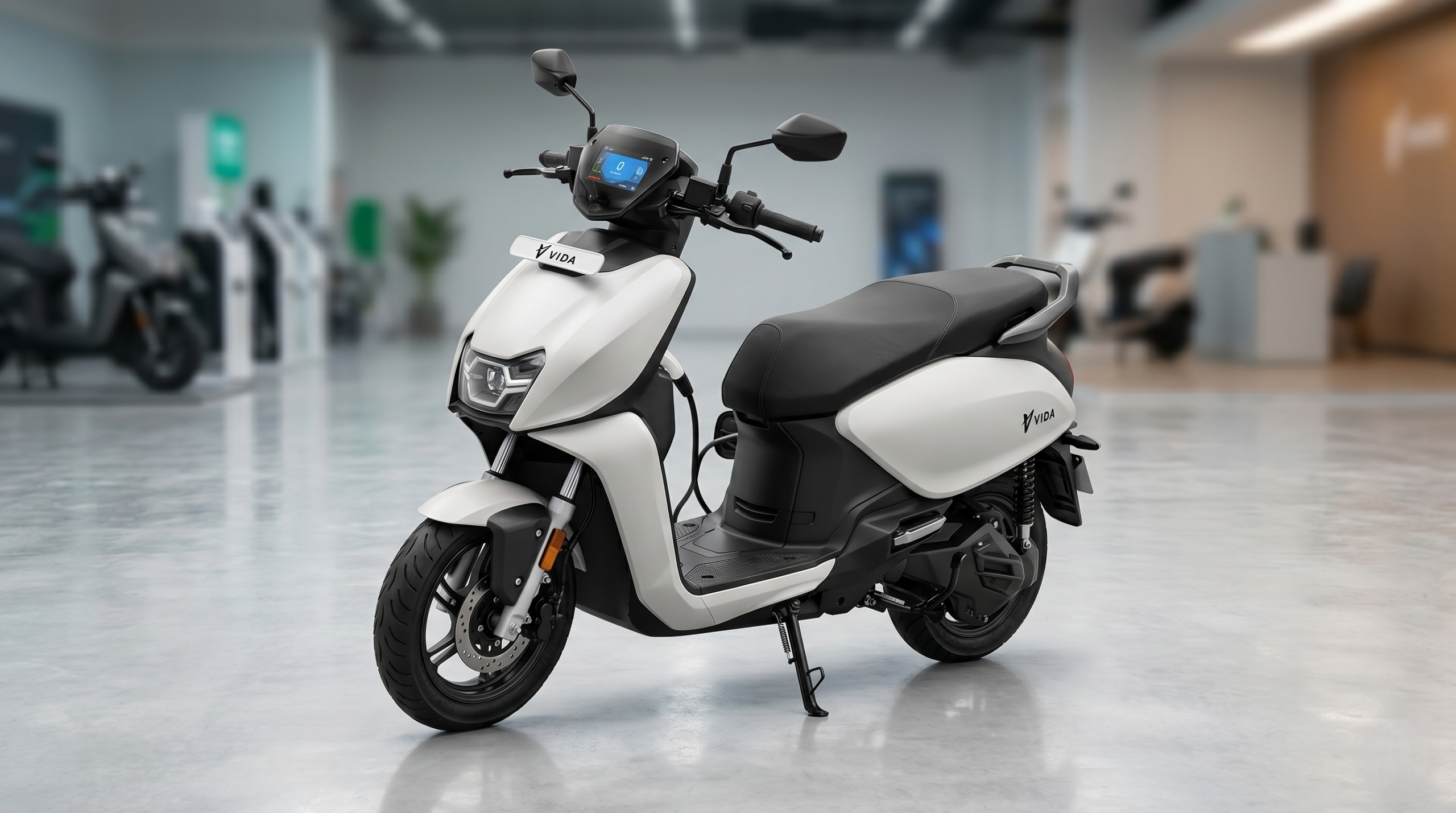
Hero Vida VX2 Plus
₹94,800 ex-showroom | BaaS from ₹44,990 + ₹1.24/km
The Hero Vida VX2 Plus is the most complete package under ₹1 lakh. With 142 km IDC range (real-world ~110 km), dual removable 1.7 kWh batteries, and access to Hero MotoCorp’s unmatched 5,000+ service network, it solves the two biggest EV objections — range anxiety and service uncertainty — in one shot.
✓ Pros
- Removable batteries — charge anywhere
- Largest service network in India
- BaaS option slashes upfront cost
- Fast-charge capability (62 min to 80%)
- 34L boot — largest in class
- 5-year battery warranty
✗ Cons
- Top speed capped at 80 km/h
- Hero’s EV reputation still maturing
- Heavy at ~118 kg
- App connectivity not as polished as Ather
Best for: Families, daily commuters, anyone who prioritises range, serviceability, and lowest cost of ownership.
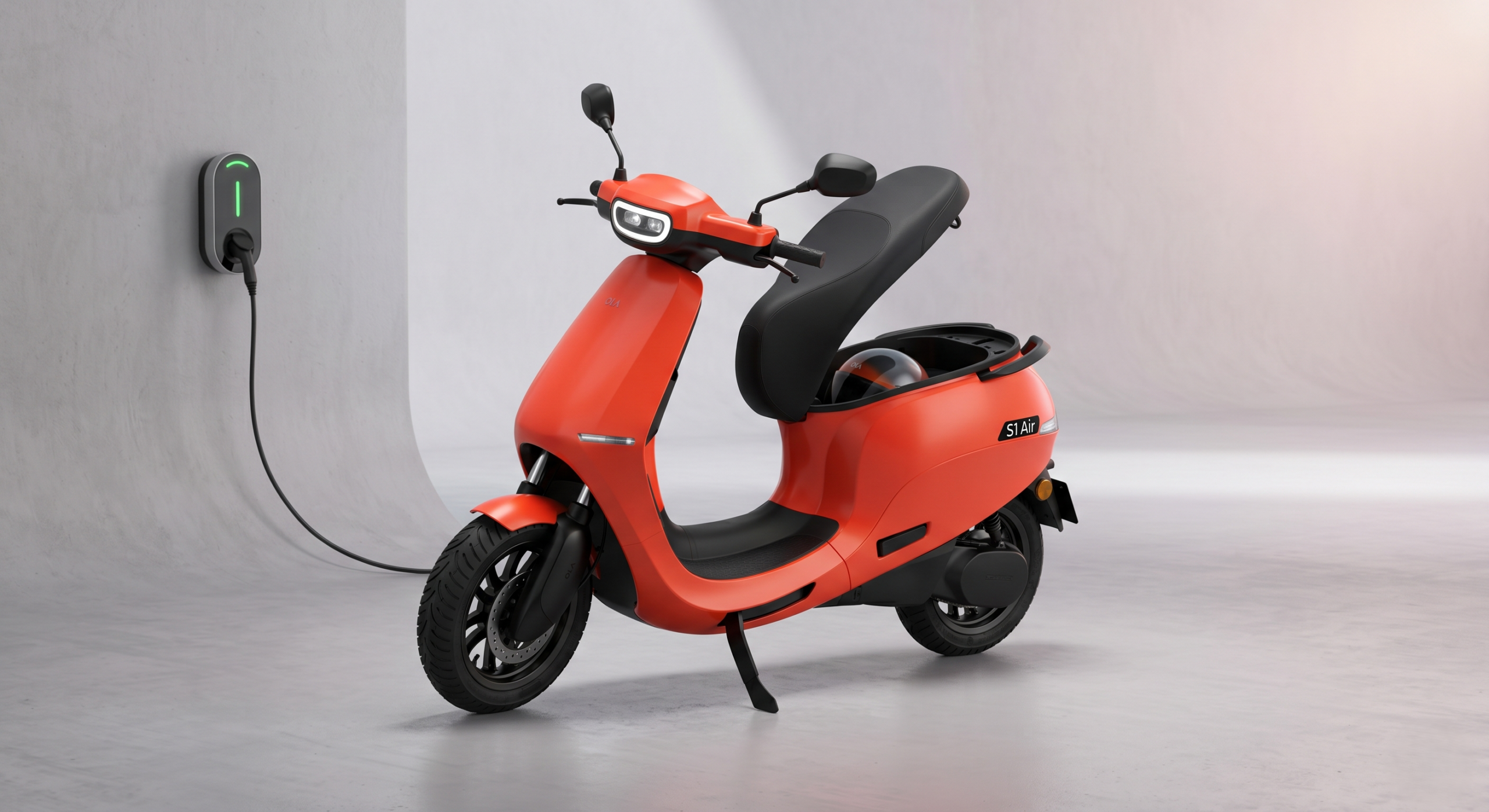
Ola S1 X (3 kWh)
₹79,999 ex-showroom
The Ola S1 X Gen 3 delivers a jaw-dropping 242 km IDC range at under ₹80,000 — nothing else in this price band comes close. The mid-drive motor, 4G connectivity, OTA updates, and Ola’s growing Hypercharger network make it the right pick for performance-focused urban riders. Service quality has been uneven historically, but is improving in 2026.
✓ Pros
- Best-in-class range (242 km IDC)
- Blazing acceleration — 0–40 in 2.7s
- Hypercharger fast-charge network
- Gen 3 mid-drive motor efficiency
- Regular OTA updates
✗ Cons
- Plastic body — less premium feel
- After-sales service inconsistent
- Historical software bugs
- Lower resale value
Best for: Riders who prioritise range and performance above all else, and who live near an Ola service centre.
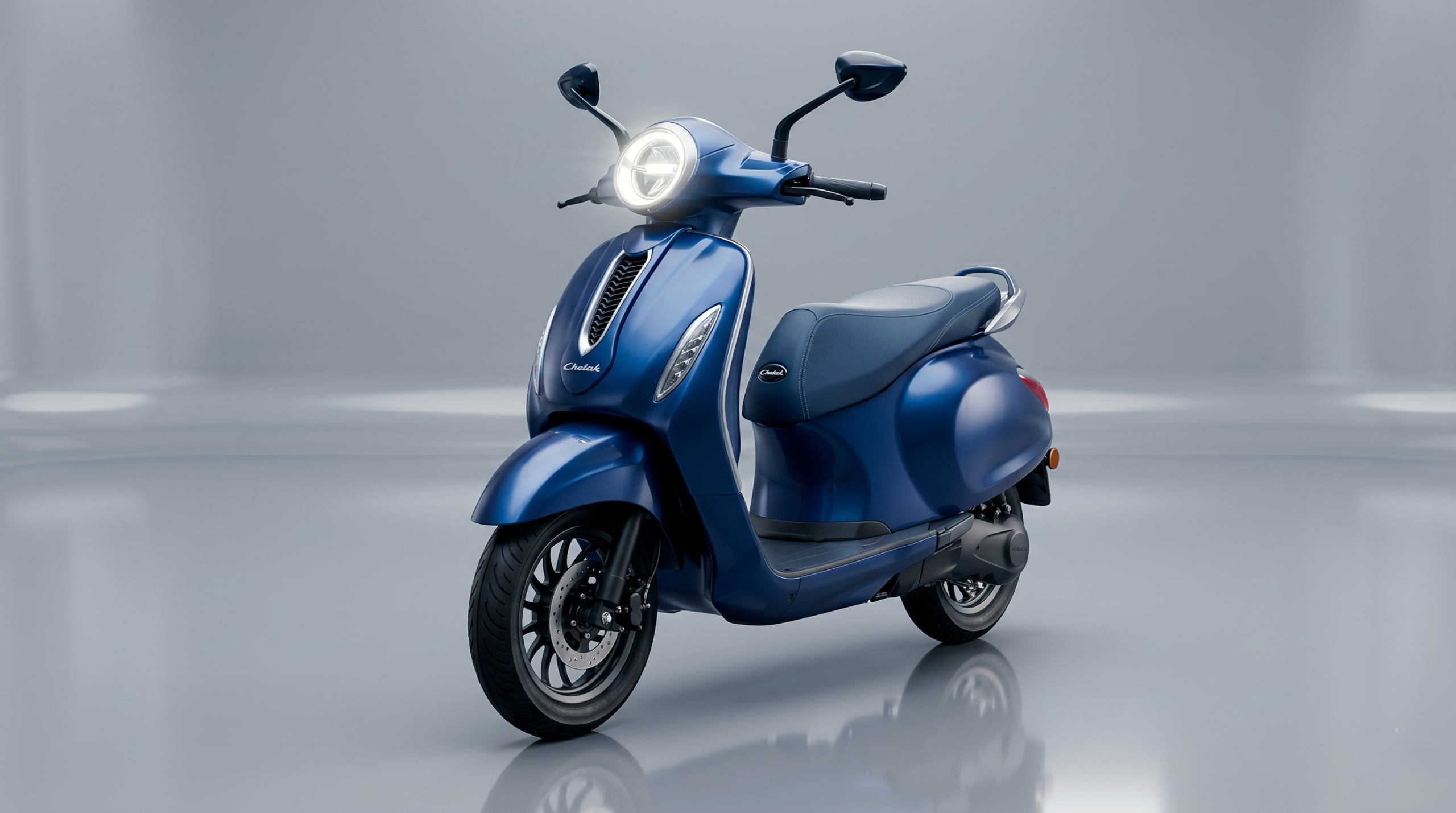
Bajaj Chetak C25
₹91,399 ex-showroom
Launched in January 2026, the Bajaj Chetak C25 is the cheapest premium EV scooter in India with a genuine metal monocoque body — not plastic. Rated IP67 for dust and water resistance, it comes with hill hold assist and Bajaj’s rock-solid reliability legacy. The 113 km range is conservative, but the 1,500+ service network and build longevity make it a compelling long-term buy.
✓ Pros
- Metal body — lasts longer, premium look
- IP67 rated — monsoon-proof
- 1,500+ Bajaj Chetak service points
- Hill hold — great for hilly cities
- Bajaj brand trust and resale value
✗ Cons
- 65 km/h top speed — slowest here
- 113 km range — below segment average
- Heaviest at 134 kg
- Conservative — no OTA updates
Best for: Buyers who want a durable, reliable, long-lasting EV and are comfortable with moderate range and speed.
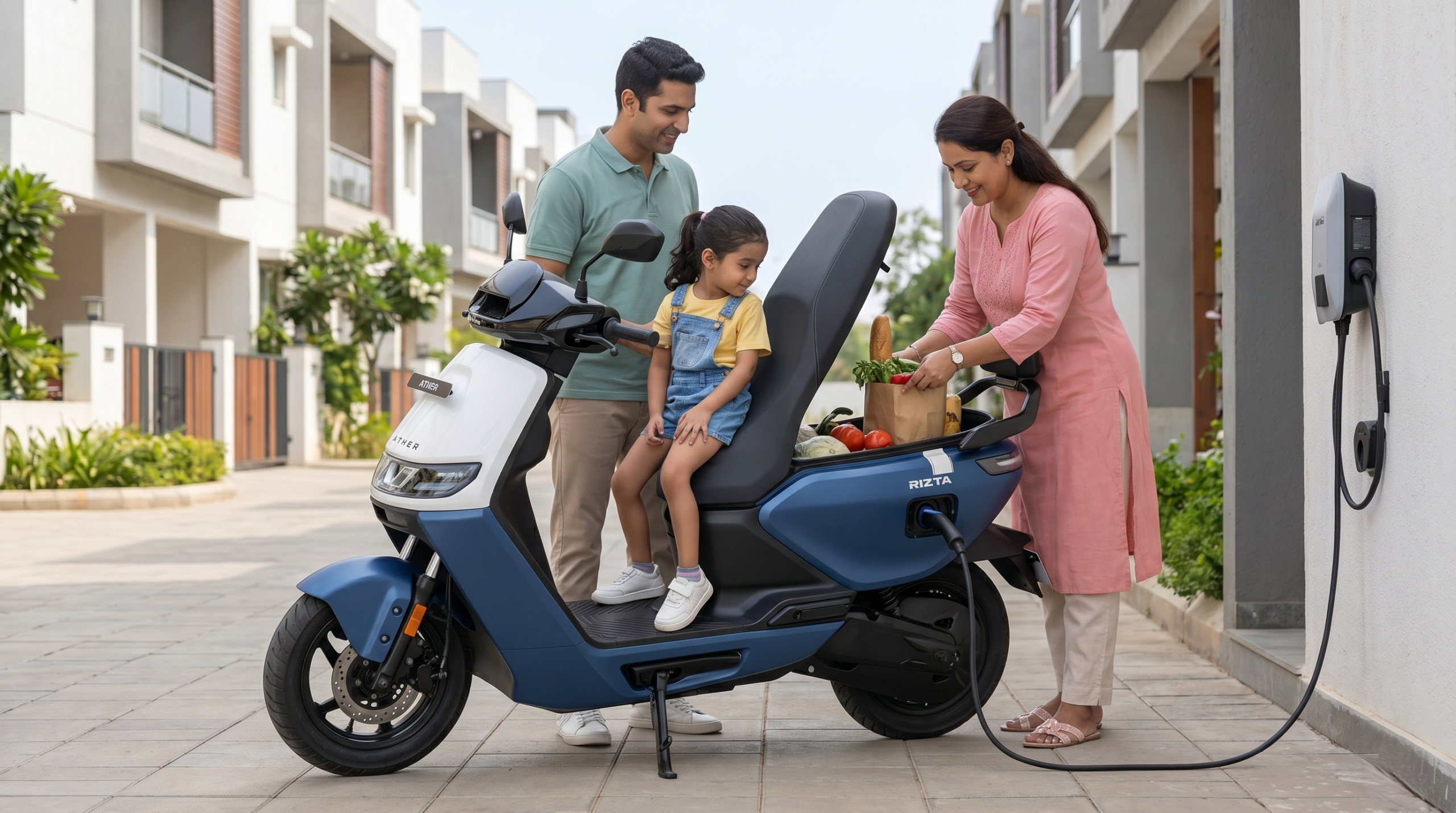
Ather Rizta S
₹75,999 ex-showroom
The Ather Rizta S is purpose-built for Indian families. It features a wide, long seat for two-person comfort, excellent storage, and Ather’s best-in-class software. The 1,500+ Ather Grid fast-charging points across India make longer trips feasible. At ₹75,999 it’s one of the most accessible entries to the Ather ecosystem, though the 2.9 kWh battery gives a moderate 123 km IDC range.
✓ Pros
- Best software experience in segment
- 1,500+ Ather Grid fast-chargers
- Wide family seat — pillion comfort
- OTA updates — improves over time
- Navigation, crash alerts, anti-theft
✗ Cons
- Slow home charging (8h+ full)
- Service quality inconsistent in some cities
- Parts availability can lag
Best for: Tech-savvy families and professionals who value software quality, fast-charger network, and comfortable pillion riding.
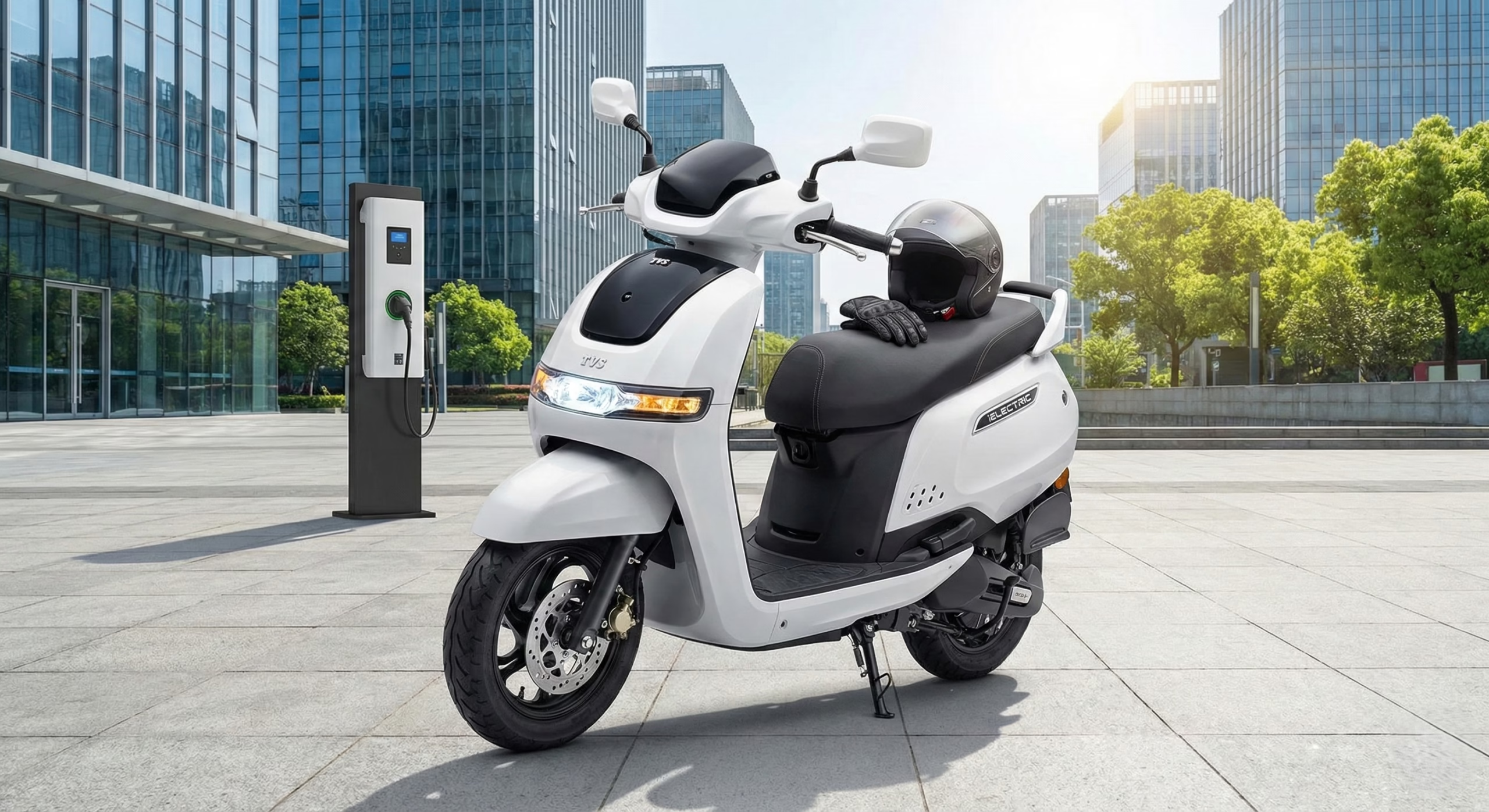
TVS iQube S
₹92,247 ex-showroom
The TVS iQube S packs more features than anything else at this price — a 7-inch TFT touchscreen, Bluetooth music control, social media notifications, crash alerts, Q-Park Assist, and anti-theft. TVS’s 6,500+ service centres are the largest network here. The sub-100 km real-world range is the main drawback, but for feature lovers it’s hard to beat.
✓ Pros
- Largest service network (6,500+ outlets)
- Feature-richest display in class
- Crash alerts & Q-Park Assist
- Established TVS reliability
- Bluetooth music + navigation
✗ Cons
- Real-world range under 85 km
- Slightly overpriced vs range offered
- Heavier than some rivals
Best for: Tech enthusiasts who want every smart feature and prioritise service accessibility over range.
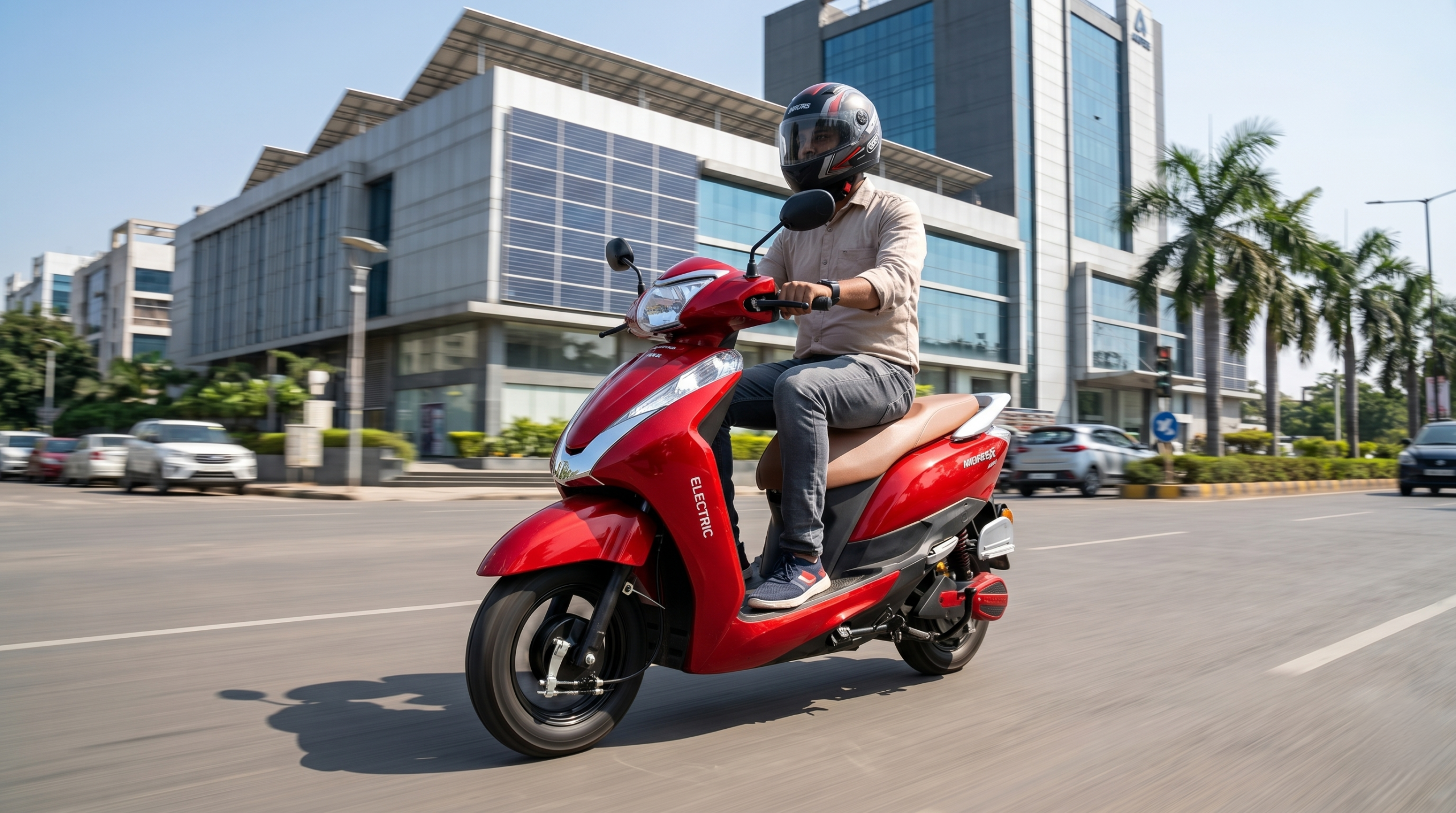
Ampere Magnus EX
~₹84,000 on-road (Delhi)
Backed by Greaves Cotton, the Ampere Magnus EX punches above its weight at ~₹84,000 on-road. With 70+ km real-world range, LED lighting, a digital display, and combined braking, it’s a competent urban commuter. Build quality and boot space are average, but for budget-first buyers who just need reliable A-to-B transport, it delivers.
✓ Pros
- Affordable city runabout
- Greaves Cotton (reliable backing)
- Combined braking system
- Full LED lighting
✗ Cons
- Average boot space
- Limited service network vs rivals
- No smart features / app connectivity
- Brand awareness still building
Best for: Pure budget buyers in tier-2/3 cities who need simple, affordable daily transport with no frills.
3. EV Scooty Under 1 Lakh — Head-to-Head Comparison Table
All prices are ex-showroom. On-road prices vary by state; use the calculator below for your exact city. For the latest government EV incentives, see the FAME India official portal.
| Model | Price (Ex-SW) | IDC Range | Battery | Top Speed | Service Pts | Rating |
|---|---|---|---|---|---|---|
| Hero Vida VX2 Plus | ₹94,800 | 142 km | 3.44 kWh (2×) | 80 km/h | 5,000+ | |
| Ola S1 X (3 kWh) | ₹79,999 | 242 km | 3 kWh | 90 km/h | 500+ | |
| Bajaj Chetak C25 | ₹91,399 | 113 km | 3 kWh | 65 km/h | 1,500+ | |
| Ather Rizta S | ₹75,999 | 123 km | 2.9 kWh | 80 km/h | 1,500+ (Grid) | |
| TVS iQube S | ₹92,247 | ~100 km | 3.04 kWh | 82 km/h | 6,500+ | |
| Ampere Magnus EX | ~₹76,000 | 80 km | Li-Ion | 70 km/h | 400+ |
IDC (Indian Driving Cycle) range figures are test-track results at controlled temperatures. Expect 65–75% of IDC range in real-world urban conditions, depending on riding mode, load, and terrain. The Ola S1 X’s 242 km IDC typically yields 160–180 km in city riding.
4. Market Analysis: Who’s Winning the Sub-₹1 Lakh Battle?
India’s sub-₹1 lakh EV scooter segment is a four-horse race in 2026. Here’s how the brands stack up across the metrics that matter most.
🏪 Market Share (2026 Sales Data)
Source: Vahan registration data, Q1 2026. Ola crossed 10 lakh total deliveries by March 2026.
🔧 Service Network Strength
Service network is critical — especially for first-time EV buyers in tier-2 and tier-3 cities.
📱 Smart Features Score (out of 10)
🔋 Value Per kWh (Range / Rupee)
Ola S1 X delivers unrivalled range per rupee in 2026.
Competitive Landscape Summary
Ola Electric leads in volume and raw performance metrics. TVS and Bajaj dominate service accessibility. Hero Vida is rapidly gaining ground with the BaaS model and removable-battery innovation. Ather holds the premium software crown. The market is mature enough that there is no single bad option — the right choice depends entirely on your commute distance, city, and priorities.
5. Fuel Savings Calculator
⚡ How Much Will You Save by Switching?
Enter your commute details to see your real 3-year savings when switching from a petrol scooter to one of these EVs.
Your Estimated 3-Year Savings 🎉
6. Buying Guide: What to Look For
1. Real-World Range vs IDC Range
Always divide IDC range by 1.35–1.5 for a realistic daily estimate. If you commute 35 km daily, a scooter claiming 120 km IDC (≈80 km real) is enough — but one claiming 80 km IDC (≈53 km real) is too risky. The Hero Vida VX2 Plus and Ola S1 X are the safest choices for 40+ km daily commutes.
2. Service Network is Non-Negotiable
A great scooter becomes a paperweight if the nearest service centre is 100 km away. Check the brand’s service locator before you book. For tier-2 and tier-3 cities, TVS iQube and Hero Vida are the safest bets by far.
3. Consider Battery-as-a-Service (BaaS)
Hero Vida VX2 is available via BaaS at just ₹44,990 — you pay ₹1.24/km for battery usage instead of buying the battery upfront. For budget-constrained buyers doing under 30 km/day, BaaS can be cheaper overall for 3–5 years.
4. Check Subsidy Eligibility First
Before finalising a model, confirm PM E-DRIVE subsidy eligibility with the dealer. Not all variants of all models qualify. The battery must typically be above a minimum capacity, and the vehicle must be ARAI certified and RTO registered (not low-speed/L2 category).
5. On-Road vs Ex-Showroom
Add 8–15% on top of ex-showroom for a rough on-road estimate. In subsidy-rich states (Delhi, Maharashtra, Gujarat), subtract the applicable incentives. Use the state subsidy table in our companion EV subsidy guide for exact calculations.
7. Frequently Asked Questions
Which is the best electric scooter under ₹1 lakh in India in 2026?
The Hero Vida VX2 Plus (₹94,800) is the best overall choice, combining 142 km range, removable batteries, and Hero’s 5,000+ service network. For maximum range, the Ola S1 X (₹79,999) delivers 242 km IDC. For the most durable build, the Bajaj Chetak C25 (₹91,399) wins with its metal monocoque body.
What is the real-world range of EV scooters under ₹1 lakh?
Expect 65–75% of the IDC (brochure) range in real urban conditions. The Ola S1 X (242 km IDC) delivers ~160–180 km in city use. The Hero Vida VX2 Plus (142 km IDC) gives ~100–115 km. The Bajaj Chetak C25 (113 km IDC) returns ~75–85 km. Range drops further in hilly areas, cold weather, or with a heavy pillion.
How much government subsidy is available on these scooters in 2026?
The PM E-DRIVE central scheme offers ₹2,500 per kWh of battery, capped at ₹10,000 per vehicle — applied directly by the dealer. On top of this, state-level incentives are available: Gujarat offers ₹10,000, Maharashtra ₹5,000, Delhi ₹10,000 (scrappage-linked), and Rajasthan ₹2,500. Road tax is 100% waived in Delhi, Maharashtra, Karnataka, Tamil Nadu, and Rajasthan. Combined savings can reach ₹15,000–₹25,000 depending on your state.
What is BaaS (Battery-as-a-Service) and should I opt for it?
Battery-as-a-Service lets you buy the scooter at a much lower price (without the battery), then pay a per-kilometre fee for battery usage. Hero Vida VX2 is available via BaaS at ₹44,990 upfront + ₹1.24/km. It makes sense if your daily commute is under 25–30 km and you want to minimise upfront cost. For higher-mileage commuters, buying the full scooter outright is cheaper in the long run.
Which EV scooter has the best after-sales service in India?
TVS iQube has the widest service network at 6,500+ outlets — any TVS service centre can handle iQube repairs. Hero Vida benefits from 5,000+ Hero MotoCorp service points. For metros and tier-1 cities, Ather’s 1,500+ Grid charging stations are excellent, but service centres are fewer. Ola’s service network is improving but remains inconsistent outside major cities.
How much does it cost to charge an EV scooter per day?
At typical Indian electricity rates (₹6–8/unit), charging a 3 kWh battery costs ₹18–24 for a full charge. For a 40 km/day commuter using a scooter with 0.3 kWh/10km efficiency, the daily electricity cost is roughly ₹7–10 — compared to ₹100+ for a petrol scooter at ₹112/litre.
Should I buy now or wait for newer models in late 2026?
If you’re riding a petrol scooter today, every month you delay costs you ~₹3,000–₹4,000 in fuel. The sub-₹1 lakh segment is mature — incremental improvements are happening, but no revolutionary launches are confirmed for this price band in H2 2026. The Ather EL Scooter is expected at ~₹90,000, but launch timelines remain uncertain. If you need a scooter now, buy now — especially with current subsidies in place.