Honda Electric Scooters 2026 in India & Pakistan: New Models, Real Prices & What Actually Changed
Honda’s first-gen EVs — Activa e: and QC1 — failed India’s market badly enough that production was halted by mid-2025. Now Honda is back with its J1H platform model targeting late 2026, a refreshed Icon e strategy for Pakistan, and a new Activa e: 2.0 on the horizon. This is what serious buyers need to know before spending in 2026.
India’s electric scooter market crossed 1.5 million units annually by early 2026. Honda’s first attempt — the Activa e: and QC1 launched in early 2025 — stumbled on range shortfalls, infrastructure gaps, and pricing that didn’t justify the compromise. Both models had production halted by mid-2025. Now Honda is rebuilding. The J1H platform next-gen scooter is targeting a late-2026 India launch with higher localisation and a better battery. In Pakistan, Atlas Honda continues selling the Icon e, launched in 2025 at PKR 419,900, as the country’s only Honda EV. This 2026 update covers what happened to the first-gen models, what is confirmed for the new ones, and whether any Honda EV is worth buying right now.
The 30-Second Verdict
Are Honda’s electric scooters worth buying in 2026?
The Activa e: and QC1 — Honda’s first-gen India EVs launched in 2025 — were commercially miscalculated. Real-world range gaps, a dangerous 50 km/h top speed on the QC1, zero underseat storage on the Activa e:, and battery-swap infrastructure limited to three cities killed demand. Honda officially paused production of both by mid-2025. In Pakistan, the Icon e continues at PKR 419,900 and remains a defensible choice only for buyers near Honda dealerships in major cities.
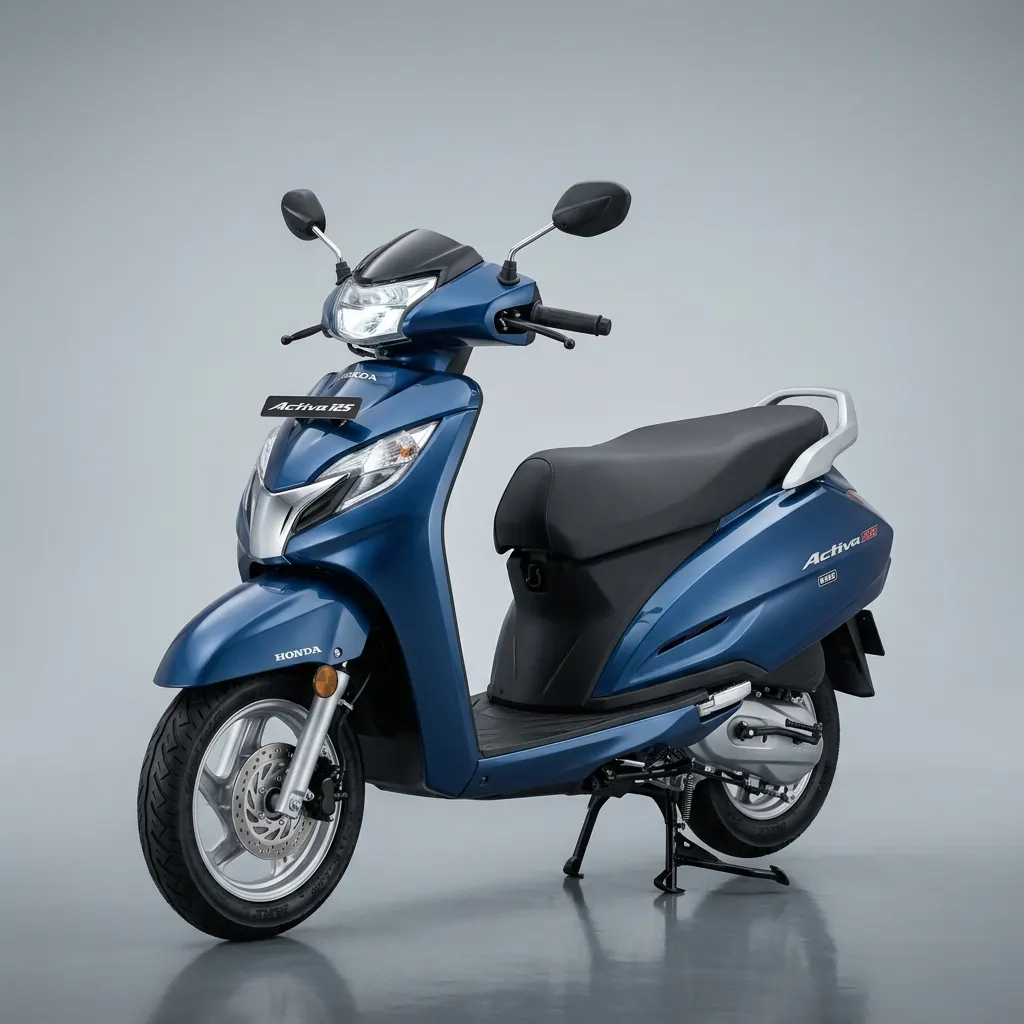
For 2026, the most important Honda EV story is the upcoming J1H platform model for India, expected late 2026, which is being designed with higher localisation, improved range targeting 120+ km real-world, and LFP battery chemistry to address the exact failures of the first generation. Wait for it if you can. If you must buy now, the Icon e in Pakistan is the only current Honda EV worth considering — and only in Lahore, Karachi, or Islamabad.
All Three Honda EV Models at a Glance
- 6 kW PMSM motor, 22 Nm torque
- Dual swappable 1.5 kWh batteries (3 kWh total)
- Claimed 102 km / Real-world 70–80 km
- Top speed: 80 km/h
- 7-inch TFT, Honda RoadSync connectivity
- No underseat storage (batteries stored there)
- Status 2026: Production halted — awaiting next-gen replacement
- 1.8 kW hub motor, 77 Nm torque
- Fixed 1.5 kWh battery, home charger included
- Claimed 80 km / Real-world 55–65 km
- Top speed: 50 km/h only — safety concern
- 5-inch LCD, no DTE indicator, no connectivity
- 26-litre underseat storage
- Status 2026: Production halted — not recommended
- 1200W hub motor
- Fixed lithium-ion battery (IP67-rated)
- Claimed 150 km / Real-world 80–95 km
- Top speed: ~75 km/h
- Digital meter, phone charging slot
- Underseat storage compartment
- Status 2026: Available — defensible for major city buyers
- New J1H platform — higher localisation
- LFP battery chemistry expected (3,000+ cycle life)
- Target real-world range: 110–120 km
- Fixed battery with home charging — no swap dependency
- Underseat storage retained
- Direct rival to TVS iQube and Bajaj Chetak 2026
- Status 2026: In development — late 2026 launch target
Spec Sheet vs. Real World: The Master Table
| Specification | Honda Claims | Real-World Reality | Impact on Commuter |
|---|---|---|---|
| Activa e: Range | 102 km (IDC) | 70–80 km city mixed | 25–30% shortfall from claim; battery swap stations mandatory for longer commutes |
| QC1 Range | 80 km (IDC) | 55–65 km real-world | Inadequate for commutes over 30 km one way; range anxiety in Standard mode |
| Icon e Range (Pakistan) | ~150 km (claimed) | 80–95 km estimated city | Sufficient for daily city commuting; not viable for intercity use without planning |
| QC1 Top Speed | 50 km/h | 50 km/h actual — no more | Dangerously slow in Indian city traffic averaging 40–60 km/h; risk of being rear-ended |
| Activa e: Top Speed | 80 km/h | 78–82 km/h actual | Adequate for city use; no highway cruising above 60 km/h without range penalty |
| QC1 Charge Time | 4.5 hr to 80%; 6h50m to 100% | 6h50m confirmed | Charging overnight is mandatory; not viable if you need a midday top-up |
| Activa e: 0–60 km/h | 7.3 seconds | Matches in testing | Competitive with petrol 110cc scooters; sufficient for city traffic merging |
| QC1 Econ Mode Usability | Extended range mode | 30 km/h max — unusable | Multiple reviewers called Econ mode a traffic hazard; Standard mode must be used constantly |
| QC1 Brakes | 130mm front + 110mm rear drum | Rear CBS is overly sharp | Rear brake calibration causes sudden rear wheel lock-up; dangerous for Honda’s stated target audience of new and senior riders |
| Activa e: Storage | Practical commuter design | Zero underseat storage | Batteries occupy underseat compartment entirely; cannot carry a bag, groceries, or half-helmet |
| Icon e Price (Pakistan) | PKR 419,900 | PKR 25,000–50,000 above comparable EVs | Brand premium without meaningfully superior components versus local EV competitors |
Real-World Performance Analysis
Activa e: Motor and Speed Reality India
The Activa e:’s 6 kW Permanent Magnet Synchronous Motor is the standout technical achievement in Honda’s EV lineup. With 22 Nm of torque and a 0–60 km/h time of 7.3 seconds, it performs comparably to a petrol 110cc scooter and holds its own in Bengaluru and Delhi city traffic. The three ride modes — Eco, Standard, and Sport — work as intended. Sport delivers the full torque response; Standard is the sensible daily setting. Consistent reports from early Activa e: owners in all three launch cities confirm the motor behavior is predictable and confidence-inspiring. Honda’s quality of ride and suspension tuning, widely praised by reviewers, gives the Activa e: a genuinely comfortable feel over broken surfaces — something the brand clearly did not compromise on.
Where the Activa e: falls short is infrastructure dependency. The swappable battery system requires access to Honda Power Pack Energy swapping stations. In Phase 1, these stations exist only in Delhi, Mumbai, and Bengaluru — and coverage within those cities is uneven. Riders who cannot swap batteries daily must charge at home, which means finding space under the seat does not exist, since both 1.5 kWh battery packs sit in the underseat compartment. This is the Activa e:’s most damaging design compromise for a practical commuter.
QC1 Speed Problem: This Is Not a Minor Issue India
The QC1’s 50 km/h top speed is not a specification detail — it is a safety problem in the context of real Indian city traffic. Multiple independent first-ride reviews noted that riding in Standard mode on Bengaluru’s main roads required constant awareness of vehicles closing from behind at 60–70 km/h. The QC1 cannot overtake quickly enough to create safe gaps in traffic. This is the most critical flaw in the model, and Honda’s own stated target audience — young first-time riders and senior users — may be least equipped to manage this risk.
Icon e in Pakistan: Range and Real Conditions
The Honda Icon e in Pakistan is based on the same platform as Honda’s Indonesian Icon e launch from October 2024, fitted with a 1200W hub motor and an IP67-rated fixed battery. Atlas Honda has not published detailed range figures for Pakistani conditions, but the Indonesian launch data and the Icon e’s sister models suggest real-world city range of 80–95 km — adequate for daily commuting in Lahore, Karachi, or Islamabad for most riders. The 3 to 3.5 hour charge time on a standard wall outlet requires overnight charging as a habit. No DC fast charging is available for this model. At PKR 419,900, the Icon e is the most expensive commonly available electric scooter in Pakistan’s market, but it carries Honda’s full dealership warranty and service network, which is a genuine differentiator in a market where after-sales support for EVs is inconsistent.
Build Quality and Known Issues
Honda’s reputation for build quality is genuinely reflected in all three EV models. Panel fitment, paint quality, and switchgear feel are consistently praised across owner reviews. The Activa e:’s 7-inch TFT screen with RoadSync connectivity is the most sophisticated instrument cluster in Honda’s South Asian EV lineup. The QC1’s negative LCD is significantly less impressive — it lacks a Distance to Empty (DTE) indicator, which means riders must mentally estimate remaining range from a State of Charge percentage. This is a bewildering omission in a 2025 electric scooter at Rs. 90,000.
The QC1’s battery charges via a 330-watt off-board charger that takes 6 hours 50 minutes from empty to full. This is slow even by the standards of budget EVs in India. TVS iQube charges to full in roughly 4 hours. The QC1’s charger rating is a deliberate cost-reduction decision, not a technical constraint — and it materially affects daily usability. In Pakistan, the Icon e’s charging infrastructure is equally standard; Honda has not introduced fast-charging capability.
The most significant reliability-related complaint from Activa e: owners in Bengaluru involves the battery swap station availability. If a swap station near the rider’s route is offline or out of charged packs, the Activa e: becomes range-limited on that day with no workaround. This is an infrastructure problem, not a vehicle defect, but it is a real ownership risk that Honda has not adequately communicated to buyers. Reports from August 2025 indicate Honda paused both the Activa e: and QC1 production, citing weak sales driven by precisely these range, infrastructure, and pricing concerns.
Who Should Absolutely NOT Buy a Honda EV Right Now
Skip all Honda EVs currently if:
- You live outside Delhi, Mumbai, or Bengaluru and want the Activa e: — the battery swap network does not exist in your city yet.
- You are a delivery rider doing 80+ km daily — neither the QC1 nor the Icon e offers reliable range for income-dependent use at this workload.
- You buy the QC1 expecting to keep pace with normal city traffic — its 50 km/h ceiling is a daily safety compromise, not a minor inconvenience.
- You need underseat storage from the Activa e: — the batteries live there, and the scooter carries nothing except what fits in a small front pocket.
- You are in a secondary Pakistani city without a Honda dealership — the Icon e’s main advantage over Jolta or Metro disappears without Honda service access.
- You want the best EV value at this price in India — TVS iQube 2.2 kWh costs Rs. 99,000 and offers better range, more features, higher top speed, and faster charging than the QC1 for Rs. 9,000 more.
- You are unwilling to pay a brand premium — at comparable price points, local competitors offer LFP batteries and longer-cycle lifespans that Honda’s standard Li-ion chemistry cannot match.
Brutally Honest Pros and Cons
Honda Activa e: India
Advantages
- 6 kW motor delivers genuine Activa-level performance feel
- Honda’s build quality and ride comfort are class-leading
- 7-inch TFT with RoadSync connectivity is genuinely premium
- Swappable batteries eliminate charging downtime for swap-network users
- Honda dealer network provides reliable after-sales access
Disadvantages
- Real-world range is 70–80 km, not the claimed 102 km
- Zero underseat storage — batteries occupy the entire compartment
- Battery swap infrastructure limited to 3 cities in Phase 1
- Standard Li-ion chemistry, not LFP — faster degradation in summer heat
- Production halted mid-2025 due to weak sales and unresolved range concerns
Honda QC1 India
Advantages
- 26-litre underseat storage fits a half-helmet and daily groceries
- Home charging without needing any swap infrastructure
- Honda build quality and fit and finish feel premium for the price
- Lightweight and easy to maneuver for new and senior riders
- Comfortable suspension handles city road imperfections well
Disadvantages
- 50 km/h top speed is a safety hazard in Indian city traffic conditions
- Real-world range is 55–65 km, not the claimed 80 km
- 6 hours 50 minutes for a full charge is unacceptably slow
- No DTE display — riders must estimate range from SOC percentage only
- Econ mode at 30 km/h makes the scooter unusable and dangerous in traffic
Honda Icon e Pakistan
Advantages
- Atlas Honda’s dealership network provides genuine after-sales support
- IP67-rated battery handles Pakistan’s monsoon season reliably
- ~75 km/h top speed is adequate for Pakistani urban road speeds
- Honda brand trust and warranty clarity superior to local EV brands
- Flat floorboard and underseat storage serve daily commuter needs
Disadvantages
- PKR 419,900 price is PKR 25,000–50,000 above comparable local EVs
- No fast charging; overnight wall outlet charging is mandatory
- Estimated real-world range of 80–95 km, not the higher claimed figure
- Standard Li-ion chemistry, not LFP; summer heat degrades faster
- Limited long-term owner data available as of mid-2025 launch
Honda EV vs Main Rivals
| Factor | Honda Activa e: (India) | TVS iQube 3.4 kWh | Honda Advantage? |
|---|---|---|---|
| Motor Power | 6 kW peak | 4.4 kW continuous / 11 kW peak | No — iQube peaks higher |
| Claimed Range | 102 km | 145 km | No — TVS claims more |
| Battery Chemistry | Standard Li-ion | LFP | No — LFP lasts longer in heat |
| Underseat Storage | None (batteries there) | Standard storage available | No — iQube has storage |
| Brand Trust & Service | Honda dealer network | TVS dealer network | Equal — both have strong networks |
| Price (India, base) | Rs. 1,18,147 | Rs. 1,09,999 approx | No — Activa e: costs more |
| Infrastructure dependency | Battery swap network required | Home charging standard | No — iQube is more independent |
The verdict against TVS iQube is not kind to Honda. At a lower price, the iQube 3.4 kWh delivers a higher claimed range, LFP chemistry, underseat storage, and home charging capability — all without requiring a battery swap station. Bajaj Chetak is similarly competitive. The Activa e:’s singular advantage is the Honda nameplate and ride quality, which for a segment of buyers will always command a premium. But on pure value, Honda’s first-generation EVs do not win this fight.
Honda’s 2026 EV Roadmap: What’s Coming Next
Honda’s response to the 2025 EV failures is now confirmed. The company is developing the J1H platform electric scooter for India — a ground-up redesign that addresses every major complaint from the Activa e: and QC1. The J1H model is expected to feature higher component localisation (targeting 80%+ local content to comply with India’s FAME and PLI requirements), a fixed LFP battery removing the swap-station dependency, and a real-world range targeting 110–120 km. Industry sources indicate a late 2026 India launch at a price point between Rs. 1,10,000 and Rs. 1,30,000 — directly competitive with TVS iQube and Bajaj Chetak’s 2026 variants.
In Pakistan, Atlas Honda is expected to introduce a higher-capacity Icon e variant in late 2026, addressing the charging port waterproofing issues flagged by owners and potentially upgrading to a 1500W motor for improved highway performance. No official announcement has been made as of May 2026, but Honda’s global EV acceleration plan — targeting 30 EV models by 2030 — strongly suggests Pakistan will receive an updated model within 12–18 months of the current Icon e launch.