
Battery-as-a-Service (BaaS) in 2026: EV Two-Wheeler Leasing Economics, Upfront Cost Reductions & Total Cost of Ownership
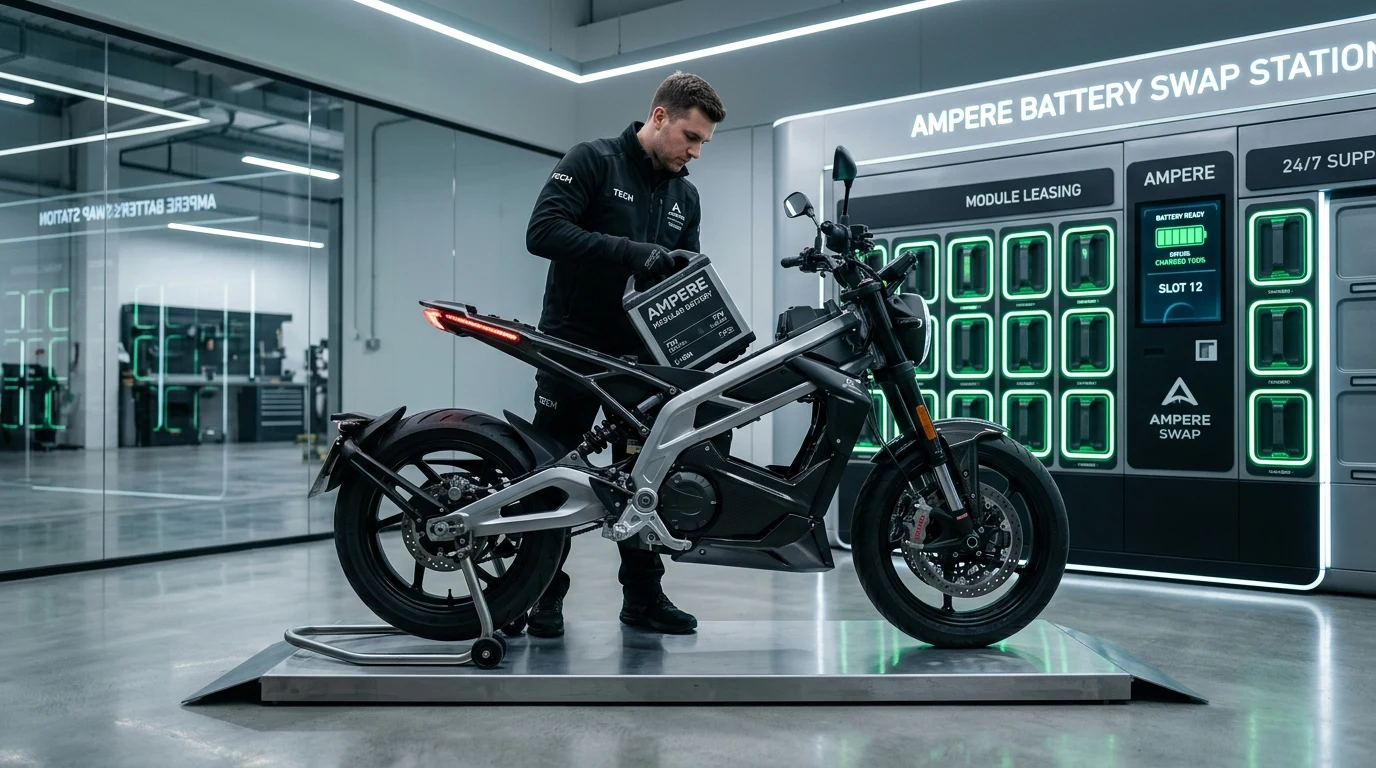
Battery-as-a-Service (BaaS) decouples the physical chassis from the high-cost lithium traction pack in electric motorcycles and scooters. By transforming the battery from a heavy upfront capital expenditure into an operating subscription model, BaaS slashes initial vehicle purchase prices by 35% to 45%, mitigates long-term cell degradation anxiety, and establishes a standardized lifecycle ecosystem for fast swapping and secondary grid storage.
The Strengths
- Decouples battery cost (typically 40% of vehicle sticker price) making premium EVs affordable at petrol vehicle parity
- Eliminates long-term lithium battery degradation and unexpected pack replacement costs for the vehicle owner
- Enables rapid 2-minute battery swapping across urban energy networks without waiting for AC/DC plug charging
- Includes continuous remote battery management system (BMS) cloud telemetry and preventative health safety monitoring
- Qualifies for lower registration and road tax calculations in several jurisdictions calculating value on bare vehicle chassis
The Compromises
- Ongoing monthly subscription payments accumulate over a 6 to 8-year ownership cycle exceeding outright pack cost
- Defaulting on monthly subscription fees triggers remote electronic immobilization of the vehicle battery management system
- Resale values on secondary markets require the prospective buyer to assume and qualify for the ongoing lease contract
BaaS Financial Architecture, Chemistry Management & Telemetry
Subscription modeling, AIS-156 safety compliance, and cloud BMS state-of-health tracking
Total Cost of Ownership (TCO) Telemetry: BaaS vs Outright Buy vs Petrol Commuter
5-Year (60,000 km) cost comparative model based on standard daily commuter mileage
Standardized Pack Form Factors, Thermal Chambers & Quick-Dock Connectors
Universal mounting cradles, IP67 waterproof seals, and heavy-duty blind mate power connectors
Chassis & Cycle Parts Specifications
- Standardized modular battery casing conforming to AIS-156 Phase 3 thermal and impact mandates
- Blind-mate high-current copper alloy connectors engineered for over 10,000 insertion and removal cycles
- Heavy-duty pneumatic battery retention latches with secondary electromagnetic locking pins
- Integrated aluminum heat spreaders and Phase Change Material (PCM) thermal barriers inside each sub-pack
- Dual-point CAN bus data connection transmitting live cell voltages directly to the vehicle dashboard
Subscription Mobile App, Battery Health Telemetry & Swap Locators
Real-time SoC tracking, nearby automated kiosk routing, and billing integration
Cockpit, Electronics & Ergonomics Features
- Mobile application displaying live battery state of charge (SoC), internal temperature, and state of health (SoH)
- Turn-by-turn navigation directing rider to automated swapping stations with reserved charged battery packs
- Integrated digital wallet supporting automated monthly recurring lease debiting and usage-based billing
- Over-the-Air (OTA) battery management firmware updates pushing thermal threshold optimizations directly to the pack
- Instant tamper alert notification if unauthorized removal or voltage drop is detected outside designated kiosks
Complete 30-Point Technical Specification Matrix
Comprehensive engineering metrics, mechanical parameters, and dimensions.
1. BaaS Commercial, Legal & Financial Terms
Powertrain & Electrical Hardware
Energy Storage & Charging
2. Battery Pack Engineering & Swapping Mechanics
Chassis & Suspension
Braking & Wheel Hardware
3. Vehicle Integration & Fleet Ecosystem
Smart Electronics & Ergonomics
Commercial Data & Warranty
BaaS Battery-as-a-Service (2026): The Comprehensive Verdict
Buy If You Want
- Urban commuters wanting to switch to an electric two-wheeler with minimal initial down payment
- Commercial delivery riders traveling 80+ km daily who benefit from rapid swapping instead of charging downtime
- Budget-conscious buyers concerned about long-term battery degradation and high replacement bills
- Fleet operators needing predictable operational expense modeling without upfront capital lockup
Skip If You Need
- Rural riders living far from urban battery swapping kiosks or authorized dealer maintenance depots
- Long-term owners intending to keep the motorcycle for 10+ years without recurring monthly subscriptions
- Custom motorcycle builders wanting to modify vehicle electrical architecture or battery wiring
BaaS In-Depth: Economic Modeling, Swapping Infrastructure & Second-Life Recycling
The upfront purchase price of an electric two-wheeler has historically been dominated by the lithium-ion traction battery, which accounts for 35% to 50% of the bill of materials. In 2026, the widespread introduction of Battery-as-a-Service (BaaS) programs by major manufacturers and specialized energy networks has transformed this equation. By selling the vehicle rolling chassis without the pack and offering the battery on an operating lease, initial showroom prices drop dramatically, bringing electric two-wheelers into direct price parity with traditional 110cc to 160cc petrol motorcycles.
1. The Financial Equation: Outright Capital Expenditure vs Operating Lease
When a buyer purchases an electric motorcycle outright with a built-in 4.0 kWh battery pack, they bear the full capital depreciation, financing interest, and long-term degradation risk. Under a BaaS model, the buyer finances only the rolling chassis (typically reducing the vehicle price by Rs 40,000 to Rs 80,000 depending on pack size) and pays a monthly subscription fee ranging from Rs 1,200 to Rs 2,400. This monthly fee covers battery depreciation, insurance, software monitoring, and unlimited or quota-based energy swapping. For diagnostic checks on motor components, read our Planetary Gear Material Guide.
2. Swapping Infrastructure & Cloud BMS Thermal Safety
BaaS models rely heavily on automated battery swap stations or smart home-docking subscription systems. Modern swap stations adhere to strict AIS-156 Phase 3 safety standards, utilizing climate-controlled charging compartments that regulate cell temperatures during recharge at optimal 0.5C rates. This controlled environment prevents thermal runaway and extends cell lifespan to over 2,500 full cycles. The onboard cloud Battery Management System continuously measures internal resistance, voltage balance, and operating temperatures. Learn more about charging degradation in our Fast Charging & Battery Degradation Guide.
3. Second-Life Energy Storage & Closed-Loop Recycling
A major environmental and financial advantage of BaaS is centralized lifecycle stewardship. When a battery pack degrades below 75% State of Health (SoH), it is retired from two-wheeler traction duty and repurposed into stationary Battery Energy Storage Systems (BESS) for commercial solar microgrids and telecom towers. Once reaching end-of-life, packs are processed in specialized hydrometallurgical recycling facilities to recover 98% of lithium, cobalt, nickel, and copper. Compare electric models in our Bike Comparison Tool, calculate running costs in our EV vs Petrol Calculator, or view our complete index in the Master Reviews Directory.
🌿 Related Reviews & Ownership Guides
Frequently Asked Questions
BaaS is a business model where you purchase the electric motorcycle or scooter without the battery at a discounted price, and lease the battery pack through a monthly subscription or pay-per-swap energy plan.
BaaS reduces the upfront sticker price by 35% to 45% (typically saving Rs 35,000 to Rs 75,000), allowing premium electric motorcycles to sell at parity with entry-level petrol bikes.
Under a BaaS contract, the leasing provider guarantees battery health (typically above 75% State of Health). If the pack degrades or experiences cell failure during normal use, it is swapped or replaced at zero cost to the owner.
Most manufacturers and leasing entities offer buyout options where riders can purchase the battery pack outright after 24, 36, or 48 months at its depreciated residual book value.
BaaS protects the motorcycle resale value because the secondary buyer does not face battery degradation risk. The new buyer simply transfers the battery subscription contract to their name.
If monthly payments lapse beyond the standard grace period (usually 15 days), the leasing provider can remotely restrict motor output or immobilize battery power via the cloud-connected BMS until payment is resolved.