
E-Bike Brake Pad Glaze & Downhill Heat Fade: Sintered Metallic vs Resin vs Ceramic Telemetry
Heavy electric bicycles carrying high kinetic momentum generate extreme disc temperatures exceeding 400°C on downhill descents, causing organic resin pads to vaporize and glaze into frictionless glass. This technical guide analyzes friction coefficient (μ) thermal curves, 2.3mm heavy-duty rotor heat sinking, bed-in physics, and pad deglazing methods.
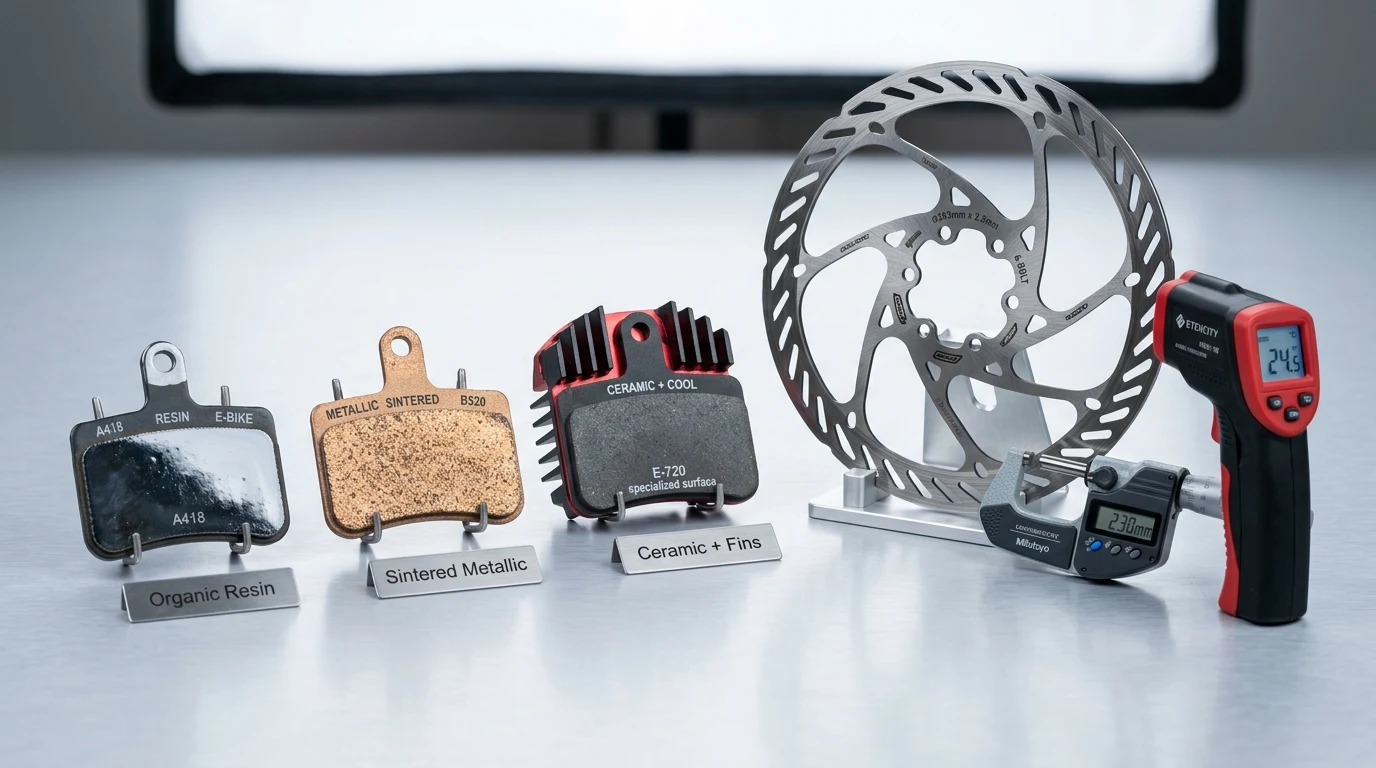
The Strengths
- Sintered metallic and finned ceramic pads completely eliminate scary downhill brake fade on long alpine descents
- 2.3mm heavy-duty disc brake rotors resist lateral warping and absorb 45% more thermal heat than thin bicycle rotors
- Ceramic composite compounds deliver quiet wet-weather stopping power without metallic screeching or rotor gouging
- Proper 30-cycle bedding-in procedure permanently prevents high-pitch brake squeal and lever vibration shutter
- Straightforward DIY deglazing process restores glazed pads to full stopping power using 180-grit abrasive paper
The Compromises
- Sintered metallic pads wear down standard soft steel rotors twice as fast, requiring heat-treated hardened rotors
- Metallic pad copper backing plates conduct heat directly into caliper pistons, risking hydraulic fluid boil if un-finned
- Organic resin pads glaze rapidly when dragged down continuous steep descents with rider loads exceeding 100 kg
Tribological Compound Formulations & Thermal Conduction Physics
Copper-bronze sintering, aramid-carbon fibers, phenolic resin binder sublimation, and heat sinks
Friction Coefficient Curves, Downhill Dyno Fade & Deceleration Telemetry
Dynamometer friction testing across temperature sweeps from 20°C ambient to 500°C extreme load
2.3mm Rotor Standards, 4-Piston Calipers & Bed-In Transfer Layers
Heavy e-bike rotor standards, hydraulic fluid boiling points, and caliper piston thermal barriers
Chassis & Cycle Parts Specifications
- Upgrade from standard 1.8mm bicycle rotors to 2.3mm heavy-duty e-bike rotors (Magura MDR-P, TRP R1, Hope V4)
- 4-piston hydraulic calipers with ceramic or phenolic insulating pistons preventing heat transfer to mineral oil
- 30-cycle bed-in protocol: 30 controlled decelerations from 25 km/h to 5 km/h without coming to a complete standstill
- Minimum rotor wear thickness limits: Discard rotors when worn below 1.5mm (for 1.8mm rotors) or 1.9mm (for 2.3mm rotors)
- Stainless steel floating rotor carrier designs allowing radial expansion without lateral disc dish warping
Deglazing Protocols, Mineral Oil Boiling Diagnostics & Squeal Elimination
Field maintenance, emery paper resurfacing, and brake fade emergency management
Cockpit, Electronics & Ergonomics Features
- DIY Pad Deglazing: Sanding shiny glazed pad surface on 180-grit emery paper placed on a flat glass plate
- Rotor Surface Conditioning: Scrubbing rotor brake track with clean isopropyl alcohol and fine Scotch-Brite pad
- Brake Fluid Boil Diagnostics: Spongy lever pulling completely to the handlebar on descents indicates boiled fluid
- Caliper Alignment: Visual centering of brake pads with 0.3mm gap on each side to eliminate constant drag rub
- Emergency Cadence Downhill Braking: Alternating front and rear brake applications to allow cooling intervals
Complete 30-Point Technical Specification Matrix
Comprehensive engineering metrics, mechanical parameters, and dimensions.
1. Pad Compound & Material Specifications
Powertrain & Electrical Hardware
Energy Storage & Charging
2. Rotor Dimensions, Thermal Heat Sinking & Telemetry
Chassis & Suspension
Braking & Wheel Hardware
3. Economic Metrics, Pad Longevity & Best Use Cases
Smart Electronics & Ergonomics
Commercial Data & Warranty
Metallic vs Resin vs Ceramic Brake Pads: The 2026 Verdict
Buy If You Want
- E-bike riders experiencing loss of braking power and shiny, mirror-like glazed pads on downhill runs
- Heavy e-cargo bike operators carrying delivery payloads exceeding 150 kg requiring maximum stopping bite
- All-weather winter commuters riding through rain, slush, and road grit who need instant wet braking
- Riders upgrading to 2.3mm thick heavy-duty disc brake rotors to eliminate heat warping and vibration shudder
Skip If You Need
- Ultralight road e-bikes ridden exclusively on flat, dry paved paths where resin pads provide adequate soft bite
- Riders using entry-level soft stamped steel rotors that carry explicit Resin Pads Only laser warnings
E-Bike Brake Glaze & Heat Fade: Dyno Telemetry, Compound Physics & Deglazing Guide
Kinetic energy increases linearly with vehicle mass, but with the square of velocity (KE = 1/2 mv²). A 30 kg electric bike traveling at 45 km/h with an 85 kg rider carries over four times the kinetic energy of a traditional pedal bicycle. When decelerating down a steep mountain pass, all of that kinetic energy is converted into pure thermal friction at the tiny 30x15mm contact patch between the brake pad and disc rotor, generating flash temperatures exceeding 450°C.
1. The Glazing Phenomenon: How Organic Pads Turn to Glass
Standard factory-fitted brake pads are composed of organic fibers held together by phenolic resin binders. When rotor temperatures surpass 280°C during prolonged downhill braking, the organic binders begin to vaporize and migrate to the friction surface, cooling into a hard, polished, glass-like glaze layer. Once glazed, the friction coefficient (μ) collapses from 0.48 down to a dangerous 0.18, causing the brake lever to feel rock-hard while the bicycle fails to stop. Calculate your descending kinetic energy with our Range Calculator.
2. Metallic vs Ceramic Compounds: Downhill Dyno Telemetry
Laboratory dyno tests reveal the dramatic difference between pad chemistries under sustained thermal load. Sintered metallic pads (fused copper-bronze matrix) maintain consistent 0.46 μ friction up to 600°C with zero fade, making them the gold standard for downhill e-MTB and heavy commercial cargo. Ceramic composite pads with integrated aluminum cooling fins provide the ideal compromise: high 480°C fade resistance, low rotor abrasion, and near-silent operation in wet conditions. Compare braking components in our Bike Comparison Tool.
3. 2.3mm Rotor Standards & The 30-Cycle Bed-In Protocol
Modern e-bike manufacturers are rapidly transitioning from legacy 1.8mm bicycle rotors to 2.3mm heavy-duty rotors (such as the Magura MDR-P and TRP R1), which absorb 45% more thermal energy before transferring heat into caliper pistons. To prevent glazing and squeal from day one, every new pad set must be bedded in: perform 30 controlled decelerations from 25 km/h down to 5 km/h to deposit an even microscopic transfer layer onto the steel rotor track. Explore our full technical library in the Master Reviews Directory.
🌿 Related Reviews & Ownership Guides
Frequently Asked Questions
Brake pad glazing is caused by excessive heat (above 280°C) during continuous dragging of brakes on downhill runs. The high temperature boils the organic resin binders inside the pad, creating a smooth, glassy, low-friction surface that makes the brakes feel hard but ineffective.
Remove the glazed pads and rub them in a figure-eight pattern on 180-grit abrasive emery paper placed on a flat glass plate until the shiny glaze is gone and matte friction material is exposed. Clean the steel rotor track with isopropyl alcohol before reinstalling.
Yes. Sintered metallic pads handle temperatures up to 600°C without fading, provide instant bite in rain and mud, and last 2 to 3 times longer than resin pads on heavy e-bikes.
Loud squealing is almost always caused by improper bedding-in (which leaves an uneven, patchy transfer layer on the rotor) or microscopic oil/degreaser contamination on the pads.
Standard bicycle rotors are 1.8mm thick and warp easily under heavy e-bike braking. E-bike specific 2.3mm rotors contain 45% more steel mass, absorbing significantly more heat, preventing lateral distortion, and extending pad life.
Accelerate to 25 km/h on a flat, clean surface and apply moderate, steady brake pressure to slow down to 5 km/h without coming to a complete stop. Repeat this process 30 times for each brake to build an even microscopic friction transfer layer.